
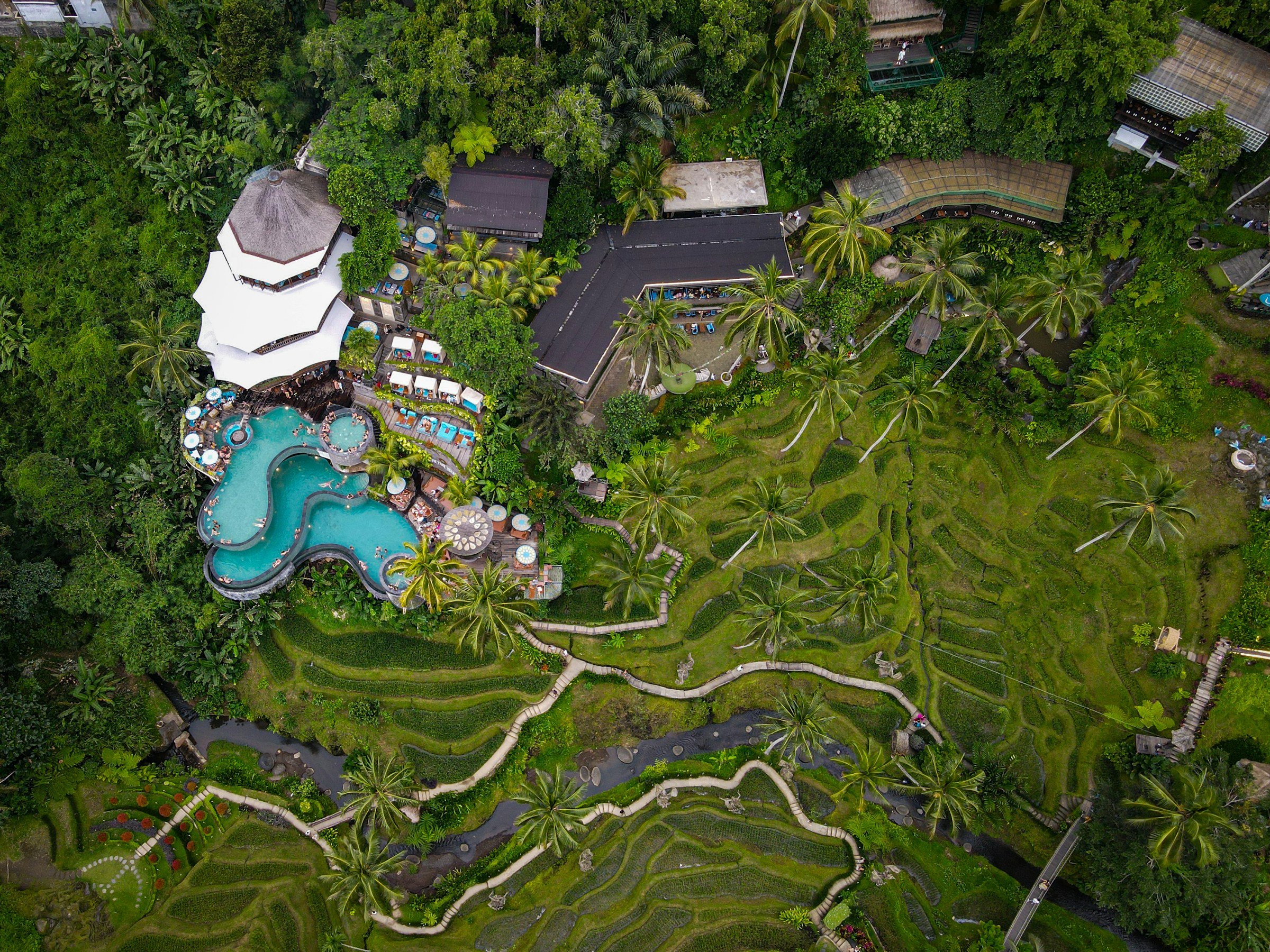
For years, renting out a villa in Bali worked on a handshake: list it on Airbnb, collect the payouts, and hope nobody asked for paperwork. That era ended in 2026. Since the end of March, villas that cannot show a business licence are being taken off the big booking platforms, the province has hardened its rules on nominee ownership, Airbnb has changed the way it charges hosts, and the tax rules for small businesses have been rewritten. None of this is a ban on short-term rentals. It is the end of the grey market, and it changes what a rental villa is worth.
We run a hospitality company in Lombok and work with owners on both islands, so we have spent the year answering the same questions again and again. This guide puts the answers in one place: what changed and when, which licences a rental villa needs, which business code to use, how foreign owners can stay on the right side of the law, what the taxes are, and what to check before you buy a villa sold as an “income property”. It is written for owners and buyers, not for lawyers, and it ends with a checklist you can work through this week.
In this guide14 sections
- —The short version
- —What actually happened in 2026
- —Is Airbnb banned in Bali?
- —The licences a rental villa needs
- —Which business code: villa, homestay or hotel?
- —Foreign owners: what is safe and what is not
- —Zoning: the problem a licence cannot fix
- —Taxes on a rental villa in 2026
- —The Airbnb fee change you should not ignore
- —What about Lombok and the rest of Indonesia?
- —If you are buying a villa sold as an income property
- —Your compliance checklist
- —Frequently asked questions
- —Run it properly from day one
The short version
- Airbnb is not banned in Bali. What is being removed are listings that cannot show a valid business registration.
- Since 31 March 2026, rental properties in Bali are expected to display a business identification number (NIB) and a business classification code (KBLI) on their listings. Listings without them have been deactivated on the major platforms.
- The right business code matters. Villa, homestay and hotel codes carry different requirements, and some of them are reserved for Indonesian micro and small businesses.
- Foreigners cannot hold the licence personally. The defensible routes are a foreign-owned company (PT PMA) under a code open to foreign capital, or a properly licensed Indonesian management company under a written agreement.
- Nominee arrangements are now a criminal risk in Bali under a 2026 provincial regulation.
- The 10% regional tax on accommodation applies to every booking, including those made through platforms.
- Airbnb’s single host-only fee of 15.5% has replaced the old split fee for most hosts, which cuts payouts unless you reprice.
What actually happened in 2026
The change did not come from one law but from several moves landing in the same year. Indonesia’s online licensing system, OSS, has been the gateway for every business permit since the Omnibus Law reforms. In 2025 the government reorganised risk-based licensing through Government Regulation 28 of 2025 and rolled out a new set of business classification codes, KBLI 2025. Accommodation codes were renumbered and tightened, and a generic trading or services code is no longer accepted as cover for running a rental.
At the same time, the Bali provincial government decided to use the booking platforms as its enforcement point. After meetings between the governor and the platforms, rental properties in Bali were given until 31 March 2026 to show their NIB and KBLI on their listings. Local press and industry associations reported deactivations of unlicensed listings after the deadline. For owners, the practical effect is simple: without a licence your villa is no longer visible to the guests who book online, which in Bali means most of them.
The third piece is Bali Provincial Regulation 4 of 2026, adopted early in the year. It targets land held through a nominee — the “pinjam nama” arrangement in which an Indonesian citizen holds land or a licence on behalf of a foreigner — and tightens control on converting productive agricultural land. Nominee structures were already void under national law; the provincial regulation adds penalties. Anyone who bought or operates a villa that way should take advice now rather than wait for a dispute.
Is Airbnb banned in Bali?
No. This is the most common misunderstanding of the year, partly because the governor spoke publicly about a crackdown and some headlines turned that into “Bali bans Airbnb”. The platforms are operating normally and licensed villas continue to take bookings. The governor’s administration has discussed further regulation of the “villa economy”, and there is talk of a dedicated short-term rental category and of an industry-led villa classification scheme, but at the time of writing these are proposals rather than rules. What exists today is enforcement of licences that were always required.
The distinction matters if you are buying. A seller who says “Airbnb is finished in Bali, so the price reflects that” is as wrong as one who says “nobody checks licences”. The right question is whether the specific villa can be licensed, in its specific zone, under the right business code, and by whom.
The licences a rental villa needs
Licensing in Indonesia is risk-based: the business code you register determines the risk level, and the risk level determines which documents and verifications you need. For a villa or small hotel the core documents are these.
| Document | What it is | Why it matters now |
|---|---|---|
| NIB | The business identification number generated by OSS. It also registers the business for customs and social insurance. | The number the platforms ask you to display. It must belong to the business that actually operates the rentals. |
| KBLI code | The business classification attached to your NIB, for example 55193 (villa), 55130 (homestay or pondok wisata), 55120 (budget hotel), 55194 (aparthotel), 55199 (other short-term accommodation). | The code must match what you do. A villa rented nightly under a trading code will not pass. |
| Standard certificate | Proof that the business meets the standards attached to its risk level. | For some codes and scales, the NIB alone is not enough to operate. |
| PBG and SLF | The building approval (which replaced the old IMB) and the certificate of functional worthiness issued after inspection. | Older villas often hold only an IMB for a house. Using it for tourist accommodation may need a change of function. |
| NPWPD | The regional taxpayer number for declaring the 10% tax on accommodation. | Needed even if every booking comes through a platform. |
The Ministry of Tourism has also issued guidance, Circular Letter 4 of 2025, reminding accommodation businesses that registration and regional tax obligations apply to properties sold through digital platforms. Airbnb’s own help pages for Indonesia now walk hosts through the same steps: choose the right accommodation code, obtain the NIB, register for the regional tax and pay it.
Which business code: villa, homestay or hotel?
This is where most foreign owners get stuck. Under Indonesia’s investment rules, several accommodation codes — including the villa and homestay (pondok wisata) categories — are reserved for Indonesian micro, small and medium businesses and cooperatives. A foreign-owned company cannot register them, however much it invests. Foreign-owned projects therefore operate under codes that are open to foreign capital, typically hotel categories, and those codes bring their own requirements on scale, standards and classification.
| Your situation | Typical route | Watch out for |
|---|---|---|
| Indonesian owner renting one villa | Individual or small business registration under the villa or homestay code | Zoning and building approval for tourist use; regional tax registration. |
| Foreign owner of one or two villas | A licensed Indonesian management company operates the villa under a written management agreement | The agreement, the NIB holder, the platform account and the money flow must tell the same story. Avoid “renting” a licence. |
| Foreign investor building a cluster or boutique hotel | Own PT PMA under a code open to foreign investment | Investment and capital thresholds; building and classification standards attached to the code. |
Codes and their openness to foreign investment can change, and the KBLI 2025 renumbering means older advice may quote the wrong numbers. Before you file, ask your notary in writing which current code fits your concept, whether it is open to foreign ownership at your scale, and what risk level and standards it carries.

Foreign owners: what is safe and what is not
A foreign individual cannot hold freehold land in Indonesia or hold a business licence for a rental in their own name. Over the years that pushed many buyers into arrangements that looked convenient and were never legal: land in the name of an Indonesian partner, a licence borrowed from a friend’s company, rental income paid into a personal account. In 2026 each of those is a liability.
- Safe: a leasehold registered with a notary, with renewal terms fixed in the contract, and the villa operated by a licensed management company under a written agreement that sets out fees, reporting and who holds the licence.
- Safe: a PT PMA holding a building right (HGB) and operating under a business code open to foreign investment, with its own NIB, bank account and tax registrations.
- Not safe: any structure where an Indonesian holds land, shares or a licence “for” you, whatever side letters say. These agreements are void, and in Bali they now carry penalties.
- Not safe: listing your villa under someone else’s NIB without an agreement that reflects reality. If the platform, the regency or a buyer asks who operates the property, the answer must match the documents.
The capital rules for foreign-owned companies were also revised in 2025: under BKPM Regulation 5 of 2025, a PT PMA needs a total investment plan above IDR 10 billion per business line and location, with minimum paid-up capital of IDR 2.5 billion. For accommodation, the value of land and buildings counts towards the investment figure. Our Indonesia Villa & Hotel Investor Checklist 2026 walks through structure, land rights and licences in the order you need them.
Zoning: the problem a licence cannot fix
A licence attaches to a business at a location, and the location must allow tourist accommodation under the regency’s spatial plan. In OSS this is checked through the spatial-use conformity approval (KKPR), which comes before the other permits. Villas built on protected agricultural land, in green belts or in purely residential zones can find that no business code will pass, however good the paperwork looks otherwise. Industry sources report that authorities are cross-checking listing locations against zoning maps; whether or not that is systematic yet, it is the direction of travel.
If you are buying, ask for the KKPR or zoning confirmation before anything else. If you already own a villa in a doubtful zone, get a licensing consultant to assess it now: the answer determines whether the villa is an income property or a private home, and that changes its value.
Taxes on a rental villa in 2026
| Tax | Rate | Who pays and how |
|---|---|---|
| Regional tax on accommodation (PBJT) | Up to 10% of what the guest pays; 10% in the main tourist regencies | Charged to the guest, collected by the operator and paid to the regency, usually monthly. Applies to platform bookings too. |
| Income tax, individuals and small businesses | 0.5% of turnover under the small-business regime | Government Regulation 20 of 2026 (amending PP 55/2022) limits the 0.5% final tax to individuals, one-person PTs and cooperatives with turnover up to IDR 4.8 billion. |
| Corporate income tax | 22% of taxable profit | Regular PTs, including PT PMAs, should plan on the standard regime. |
| Tax on land and building rent | 10% final | Withheld by a company that pays rent to a landowner, for example on a villa lease. |
| Employee income tax and social insurance | Monthly withholding and BPJS contributions | Applies as soon as you employ staff. |
Guests also pay Bali’s own foreign tourist levy of IDR 150,000 per person on arrival, but that is collected by the province from the traveller, not by you. It is still worth mentioning in your pre-arrival message; guests appreciate the reminder.
The Airbnb fee change you should not ignore
While the licensing story made headlines, a quieter change hit payouts. Airbnb has moved hosts from the old split fee — about 3% for the host and a separate service fee shown to the guest — to a single host-only fee of 15.5% of the booking subtotal. Hosts using property management or channel management software were switched first, from October 2025, and most other hosts followed through 2026. Guests now see one total price, which makes your headline rate look higher next to the old listings, and your payout falls unless you adjust.
On a night sold for IDR 3,000,000 including tax, the host-only fee is IDR 465,000. Set the regional tax aside and the property keeps about IDR 2.26 million. The same night sold through Booking.com at a 15% commission on the price before tax leaves about IDR 2.32 million, and a direct booking at a 5% discount, after payment fees, leaves about IDR 2.5 million. That gap is why licensed villas with their own website and repeat guests are pulling ahead in 2026.
What about Lombok and the rest of Indonesia?
The licensing framework — OSS, NIB, KBLI codes, building approvals and the regional tax — is national, so the same documents are required in Lombok, the Gili Islands, Labuan Bajo or anywhere else. What is specific to Bali is the provincial push to enforce through the platforms and Regulation 4 of 2026. In our experience in Lombok, enforcement is less visible today, but the platforms operate nationally and regencies are keen to collect the regional tax, so we advise owners to assume the Bali approach will spread and to get compliant while it is still a choice.
If you are buying a villa sold as an income property
The 2026 changes have created two markets: villas that can be licensed and villas that cannot. Agents rarely make the difference clear. Before you sign anything, ask for the following and have them checked by your own notary, not the seller’s.
- The land certificate and its type (freehold, HGB, or the lease and the owner’s certificate behind it), checked at the land office.
- Zoning confirmation for tourist accommodation (KKPR or the regency’s spatial plan).
- The building approval: PBG and SLF, or an IMB with confirmation that tourist use is permitted.
- The NIB and KBLI the villa currently operates under, and who holds them.
- Regional tax returns and payment receipts for the last twelve months.
- Real booking data exported from the platforms or channel manager, not a spreadsheet of projected occupancy.
- Any management agreement in force, and what happens to it on sale.
A villa with all of this in order is worth more than an identical one without it, and the gap is widening. If the numbers only work with unlicensed operation and no tax, they do not work.
Your compliance checklist
- Confirm the zoning of the plot allows tourist accommodation.
- Decide the structure: your own company, or a licensed management company with a written agreement.
- Choose the KBLI code that matches how the villa is actually rented, and check it is open to the owner you have.
- Obtain or update the NIB on OSS, and complete any standard certificate verification.
- Check the building approval covers tourist use; start a PBG or SLF process if needed.
- Register for the regional tax (NPWPD) and set up monthly returns.
- Put the same legal name on the NIB, the platform accounts and the payout bank account.
- Add the licence details to every listing and keep PDF copies ready for platform support.
- Reprice for Airbnb’s host-only fee and compare net revenue by channel.
- Review insurance, staff registration and the way rental income reaches the company’s books.
Running the numbers? See our guide to Bali villa rental yields and ROI in 2026, with worked scenarios.
Frequently asked questions
My listing was deactivated. Can I get it back?
Generally yes, once the licence details are in place and match the account. Obtain or correct the NIB and KBLI, make sure the legal name on the platform account and payout account is the licence holder’s, then contact the platform’s support with the documents.
Can I rent my villa for long stays only and avoid all this?
Monthly and yearly residential leases are treated differently from nightly tourist accommodation, but a “long stay” that is really a series of short tourist stays is still accommodation. If you advertise on short-stay platforms, assume the accommodation rules apply.
Does the 10% tax apply if I already include it in my price?
Yes. Including it in the price is fine, but you then owe 10/110 of the room revenue to the regency. Many hosts quote tax-inclusive prices on platforms and set that share aside every month.
Is it worth buying a rental villa in Bali in 2026?
It can be, but only on the basis of a licensable property and realistic numbers: net revenue after commissions and tax, real low-season occupancy, payroll at 2026 wages, and maintenance in a tropical climate. Our villa and boutique hotel financial model lets you test exactly that before you commit.
Run it properly from day one
Compliance keeps your villa online; it does not fill it. We wrote The Villa & Boutique Hotel Revenue Playbook 2026 for owners and managers in Bali and Lombok who want to get both right: the licences that keep you listed, the real cost of each booking channel, a full pricing method, reviews, direct bookings, staff, maintenance and the monthly numbers, with a 90-day launch plan and templates you can use straight away.
If you would rather talk your situation through, book a free 15-minute call and tell us where the villa is, how it is owned today and how you rent it.
This article is general information, not legal or tax advice. Rules and enforcement change; confirm your position with a notary, a licensing consultant and a registered tax consultant before acting. Checked October 2026.
Newsletter
New stays and deals, once a month
Our latest hotel guides, new destinations and selected partner deals in Southeast Asia. No spam, unsubscribe anytime.