
Yogyakarta, or Jogja, is where most travellers meet Javanese culture. A sultan still reigns from the palace, gamelan is played there most mornings, and two great temple complexes stand within an hour’s drive. The city is cheap, but the temples are not, and the best sights lie far apart. This guide picks 15 things worth your time, grouped by area, with the price we found for each and its drawbacks.
In this guide15 sections
- —The 15, at a glance
- —Best things to do in Yogyakarta, by area
- —The city: Kraton, Taman Sari and Malioboro
- —Temples: Borobudur, Prambanan and around
- —Volcanoes and nature
- —Crafts, food and evenings
- —Day trips
- —What it costs: a quick table
- —Getting around
- —When to go
- —Scams, safety and etiquette
- —Entry rules for Indonesia in 2026
- —A four-day plan
- —Practical tips
- —Frequently asked questions
The 15, at a glance
- The Kraton, the sultan’s palace, city centre — low cost, 1.5 to 2 hours
- Taman Sari water castle, Kraton district — low cost, 1 to 1.5 hours
- Malioboro and Beringharjo market, city centre — free, 2 hours
- Borobudur, Magelang — high cost, half a day
- Prambanan and Sewu, east of the city — high cost, 2 to 3 hours
- Ratu Boko at sunset, above Prambanan — high cost, 1.5 hours
- The Ramayana ballet, Prambanan — low to mid cost, an evening
- A Mount Merapi jeep tour, Kaliurang — mid cost, half a day
- Jomblang cave, Gunungkidul — mid to high cost, most of a day
- A batik class, in the city — low to mid cost, 2 to 5 hours
- A silver workshop, Kotagede — mid cost, 3 hours
- Gudeg and an angkringan night, city centre — low cost, an evening
- Wayang kulit at Sonobudoyo museum, by the palace square — low cost, 1.5 hours
- Timang beach and its gondola, south coast — mid cost, a full day
- The Dieng Plateau, Central Java — mid to high cost, a very long day
How we chose and how to read the prices: we kept what still earns its place once you count the drive, the heat and the fee. We checked prices in November 2026. They are foreign-adult prices in rupiah (IDR), with US dollars at roughly Rp 17,000 to the dollar. Foreigners pay far more than Indonesians at the big temples. Where sources disagreed, we give a range.
Best things to do in Yogyakarta, by area
The city: Kraton, Taman Sari and Malioboro
The Kraton, the sultan’s palace
City centre · Rp 25,000 (about US$1.50) · 1.5 to 2 hours · arrive by 9 am, Tuesday to Sunday
The palace of the Yogyakarta sultans is a walled compound of open pavilions, courtyards and small museums. Between 9 and 11 am, Tuesday to Sunday, a different art is staged each day in the Srimanganti pavilion: gamelan, dance, puppets or sung poetry. The show is part of the ticket.
Why go: a living court, not a museum piece, for the price of a coffee.
Worth knowing: it closes in the early afternoon, at 2 or 2.30 pm depending on the source, and all day on Mondays. Much of the compound is private, and labels are thin, so a palace guide helps; agree the tip first. Touts outside say it is closed.
Taman Sari water castle
Ten minutes’ walk from the Kraton · Rp 25,000 (about US$1.50) · 1 to 1.5 hours · at 9 am
An 18th-century pleasure garden built for the sultan, with bathing pools behind tall carved gateways. Nearby lanes lead to a ruined underground mosque. It opens from 9 am to 3 pm.
Why go: the most photogenic corner of the old city.
Worth knowing: the pools are small and fill with visitors by 10 am. Men who attach themselves as guides expect payment, and some lead you to a batik shop.
Malioboro and Beringharjo market
Tugu station to the palace square · free · 2 hours · early morning or after dark
Malioboro is the city’s main street. Halfway down, Beringharjo is the old covered market, with batik on the ground floor and spices, snacks and herbal jamu further in.
Why go: Jogja’s daily life in one walk, and fair prices for batik if you bargain.
Worth knowing: it is crowded and loud. A full ban on motor vehicles was planned for November 2026, but the mayor said on 7 November that it could not start yet. Cars are still kept out at set times. Printed cloth is often sold as hand-drawn batik.
Temples: Borobudur, Prambanan and around
Borobudur
Magelang, 1 to 1.5 hours north-west · grounds Rp 400,000–412,500 (US$24–25); climb Rp 455,000 (about US$27) · half a day · the first session
The largest Buddhist monument in the world is a stone hill of nine levels, wrapped in carved panels. Two tickets exist. The ground ticket lets you walk around the base only. The temple structure ticket lets you climb with a guide, in woven upanat sandals that you keep. The climb is capped at 1,200 people a day in timed sessions, so book online before your trip.
Why go: nothing else in Indonesia matches its scale.
Worth knowing: it is the most expensive sight in this guide, and the top stupa stays closed. Sources disagree on Mondays; several say the climb is then closed. The official sunrise visit costs Rp 1,000,000 (about US$59), for 100 people a day. The cheap alternative is Punthuk Setumbu hill, where foreigners paid Rp 50,000 at last report; the temple is a distant shape in the mist. Nearby Mendut temple shut for restoration in August 2026 and may stay closed until August 2027.
Prambanan and Sewu
17 km east of the centre · Rp 375,000–400,000 (US$22–24) · 2 to 3 hours · from 3 pm
A 9th-century Hindu complex of tall, pointed towers, the tallest dedicated to Shiva. Sewu, a large Buddhist temple, stands in the same park, a walk or a shuttle ride north, and is often empty.
Why go: more graceful than Borobudur, and closer to town.
Worth knowing: the main courtyard is closed on Mondays for upkeep. There is little shade, and the gates shut at 5 pm, so the sun sets after you have left.
Ratu Boko at sunset
A hilltop 3 km south of Prambanan · US$25 (about Rp 425,000) · 1.5 hours · arrive by 4.30 pm
The remains of a walled 8th-century compound: a stone gateway, terraces and bathing pools, spread over a grassy plateau. The site stays open until about 6 pm.
Why go: the best sunset near the city, with Prambanan below.
Worth knowing: there is little to see beyond the gateway, so the price is steep. Cloud often hides the sun in the wet months.
The Ramayana ballet
Prambanan theatre · Rp 150,000–450,000 (US$9–26) · 2 hours · Tuesday, Thursday or Saturday, 7.30 pm
A large cast of dancers and a gamelan orchestra perform the Ramayana story without words. From May to October the stage is outdoors, with the lit temple behind it. From November to April the show moves into a hall.
Why go: Javanese court dance on a grand scale.
Worth knowing: the indoor season loses the temple backdrop. The schedule changes, so confirm the dates.
Volcanoes and nature
A Mount Merapi jeep tour
Kaliurang or Kaliadem, 1 hour north · about Rp 350,000–650,000 (US$21–38) per jeep, up to four people · 1.5 to 3 hours plus the drive · early morning
Open jeeps drive the lower slopes hit by the 2010 eruption. Stops include a house museum of melted objects and the Kaliadem bunker. On the way back, the Ullen Sentalu museum in Kaliurang gives guided tours of Javanese court life for Rp 50,000 to 100,000.
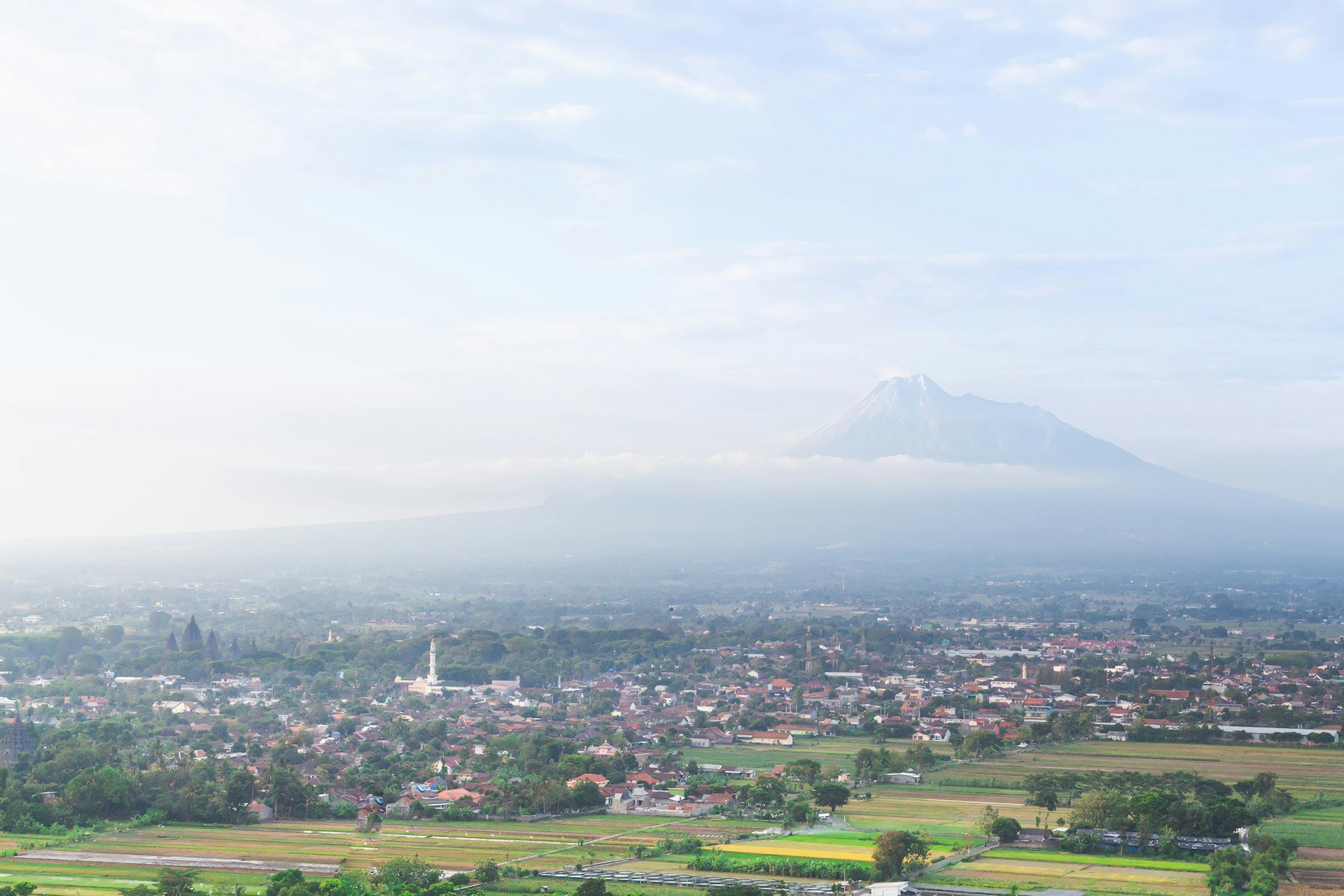
Why go: on a clear morning the smoking cone is very close.
Worth knowing: Merapi has been at alert level 3 of 4 since November 2020, and was still there on 15 November 2026. Summit hikes are closed, and jeeps stay outside an exclusion zone of up to seven kilometres. One operator adds a Rp 150,000 park fee for foreigners. Cloud covers the summit by mid-morning.
Jomblang cave
Gunungkidul, about 1.5 hours south-east · Rp 500,000 (about US$29) · most of a day · be there before 9 am
You are lowered by rope into a sinkhole about 60 metres deep, with forest at the bottom. A muddy tunnel then leads to a second shaft, where a column of sunlight falls from the roof. A local report in November 2026 gave a cap of 100 visitors a day.
Why go: the beam of light, which appears around 10 am to noon on sunny days.
Worth knowing: no sun means no beam, and nobody refunds you. The crew hauls you back up by hand, slowly.
Crafts, food and evenings
A batik class
Workshops in the south of the city · about Rp 50,000–325,000 (US$3–19) · 2 to 5 hours · morning
Batik is drawn in hot wax with a small copper pen, the canting, then dyed. Short classes cover a handkerchief-size piece. One five-hour course we priced cost Rp 325,000, and a two-hour class sold online started at about US$12.
Why go: a good wet-afternoon plan, and you keep what you make.
Worth knowing: the cheapest sessions skip the dyeing or do it for you.
A silver workshop in Kotagede
Kotagede, south-east of the centre · Rp 500,000–550,000 (US$29–32) · 3 hours · morning
Kotagede was the first capital of the Mataram kingdom and is still the silversmiths’ quarter. At the workshop we priced, a smith helps you saw, solder and polish a ring. The fee included five grams of silver.
Why go: a souvenir with a story, and old lanes to explore afterwards.
Worth knowing: filigree, the local speciality, is too fine for beginners. Many big showrooms on the main road pay commission to drivers.
Gudeg and an angkringan night
Wijilan street and around Tugu station · gudeg about Rp 15,000–50,000 (US$1–3) a plate · an evening · after 7 pm
Gudeg is young jackfruit stewed for hours in coconut milk and palm sugar, served with rice, egg and chicken. Later, sit at an angkringan, a street cart selling tiny rice parcels from about Rp 3,000, and order kopi joss: coffee with a lump of glowing charcoal dropped in.
Why go: the cheapest good evening in the city.
Worth knowing: gudeg is very sweet, and not everyone likes it. The price depends on the topping, so ask before you order.
Wayang kulit at Sonobudoyo museum
North side of the palace square · museum Rp 20,000 (about US$1.20); show Rp 20,000–50,000 · 1.5 hours · 8 pm
The museum holds a fine collection of Javanese masks, kris and puppets, and stages shadow-puppet theatre in the evening. One puppeteer voices every character while a gamelan plays.
Why go: a short version of an art that normally runs all night.
Worth knowing: it is performed in Javanese, with no translation. Sources disagree on the show price and on which nights it runs, so check the museum’s schedule. The museum is closed on Mondays.
Day trips
Timang beach and its gondola
Gunungkidul coast, 2.5 to 3 hours south-east · gondola Rp 150,000–250,000 (US$9–15) · a full day · morning
Lobster fishermen built a wooden seat on ropes to reach a rock offshore. Visitors now ride it above the surf, pulled by hand.
Why go: a wild piece of coast, and a ride you will not find elsewhere.
Worth knowing: the last stretch is too rough for cars. A jeep costs about Rp 350,000 to 450,000 return for up to four people. The gondola is home-made, and big swells stop it. Parangtritis, the beach nearest the city, is for walking only: swimming is banned because of the currents.
The Dieng Plateau
Central Java, 3 to 4 hours north-west · private tours from about US$65 (Rp 1,100,000) per person · 11 to 14 hours · leave by 6.30 am
A cool volcanic plateau at about 2,000 metres, with small 8th-century Hindu temples, a steaming crater and a coloured lake among potato fields. The tour we priced included a car, a driver and entry fees.
Why go: mountain air and scenery unlike the lowlands.
Worth knowing: you spend six to eight hours in the car for about four at the sights. Sunrise tours leave around midnight. It is cold and often foggy.
What it costs: a quick table
| Activity | Price when we checked | Good to know |
|---|---|---|
| The Kraton | Rp 25,000 | Closed Mondays; morning shows included |
| Taman Sari | Rp 25,000 | Open 9 am to 3 pm |
| Malioboro and Beringharjo | Free | Bargain for batik |
| Borobudur | Rp 400,000–412,500 grounds; Rp 455,000 to climb | 1,200 climbers a day; book ahead |
| Prambanan and Sewu | Rp 375,000–400,000 | Main courtyard closed Mondays |
| Ratu Boko | US$25 (about Rp 425,000) | Open until about 6 pm |
| Ramayana ballet | Rp 150,000–450,000 | Indoors from November to April |
| Merapi jeep tour | Rp 350,000–650,000 per jeep | Sunrise about Rp 900,000 |
| Jomblang cave | Rp 500,000 | Daily cap; needs sun |
| Batik class | Rp 50,000–325,000 | Length varies widely |
| Silver workshop | Rp 500,000–550,000 | Five grams of silver included |
| Gudeg and angkringan | Rp 15,000–50,000 a plate | Cash only |
| Wayang kulit, Sonobudoyo | Rp 20,000 museum; Rp 20,000–50,000 show | Confirm the nights |
| Timang beach gondola | Rp 150,000–250,000 | Jeep access extra |
| Dieng Plateau | From about US$65 per person, private | Three to four hours each way |
Getting around
Grab and Gojek cover the city for very little; expect the equivalent of a dollar or two for most rides. Trans Jogja buses cost about Rp 2,700 with a card or e-wallet and about Rp 3,500 in cash. Line 1A runs from Malioboro to Prambanan.
For Borobudur, Merapi, the caves and the coast, hire a car with a driver. One local firm quoted Rp 700,000 to 900,000 (US$41–53) for a 12-hour day, with fuel and parking included.
Trains link Yogyakarta with Jakarta, Solo and Surabaya; book popular services a few days ahead. From the airport, the train to Tugu station is the easy choice. The regular service costs Rp 20,000 or less and the express from Rp 40,000. In September 2026 the last train left the airport at 8.55 pm.
When to go
May to October is dry. Mornings are clear, Merapi shows more often and the ballet plays outdoors. July and August are the busiest months. The rains run from about November to March, heaviest in January and February. Showers usually arrive after lunch, so do outdoor sights early.
Scams, safety and etiquette
Yogyakarta is safe, and most trouble is petty. The standard trick is the batik exhibition that supposedly ends today, or the helpful stranger who says the palace is shut. Both lead to a gallery with inflated prices.
Dress modestly at the Kraton and at temples. One guide lists shorts, short skirts, caps and sunglasses as not allowed inside the palace. Do not climb on temple stones or touch the reliefs. Check Merapi’s alert level before a jeep trip, and stay out of the sea on the south coast.
Entry rules for Indonesia in 2026
Most nationalities buy a visa on arrival, at the airport or online as an e-VOA. It cost Rp 500,000 (about US$29) when we checked in November 2026, and it allows 30 days, extendable once. On 12 August 2026 the immigration service proposed raising it to Rp 750,000 online and Rp 1,000,000 at the airport. We found no confirmed start date, so check before you pay. Your passport needs six months’ validity. Travellers must also fill in the free All Indonesia arrival declaration in the three days before landing and show its QR code.
A four-day plan
- Day 1, the city: the Kraton at 9 am for the performance, then Taman Sari. Malioboro and Beringharjo late in the day, gudeg and an angkringan at night.
- Day 2, Borobudur: the first climbing session you can book, back by mid-afternoon, then a batik class or the wayang show.
- Day 3, Merapi and Prambanan: a jeep tour at dawn, a rest, Prambanan from 3 pm, then Ratu Boko at sunset or the ballet.
- Day 4, your choice: Jomblang cave, or Kotagede’s silver workshops and a slow afternoon. Add a fifth day for Dieng or Timang.
Practical tips
- Book Borobudur first. The climbing quota fills, so fix that slot and plan around it.
- Watch Mondays. The Kraton and Sonobudoyo close, and the big temples restrict access.
- Carry cash in small notes. Markets, carts and jeep drivers rarely take cards.
- Start early. The palace shuts by mid-afternoon and the temples are hot by 11 am.
Frequently asked questions
What is Yogyakarta best known for?
Borobudur and Prambanan, the sultan’s palace, batik and a sweet jackfruit stew called gudeg.
How many days do you need in Yogyakarta?
Three full days cover the city and both temple complexes. Four add Merapi or Jomblang cave without rushing.
Can you still climb Borobudur?
Yes, with a temple structure ticket. It cost Rp 455,000 for foreign adults when we checked, and only 1,200 people a day may climb, so book ahead.
Is Yogyakarta expensive?
Daily costs are low, but temple tickets are not. Borobudur, Prambanan and Ratu Boko together cost a foreign adult about US$75.
Is a Mount Merapi jeep tour safe?
The volcano is at alert level 3 of 4. Jeeps keep outside the exclusion zone, and routes change with the alert. Check the status on the day.
Next, pick a base: see where to stay in Yogyakarta. Heading east, read where to stay for Mount Bromo and Ijen, then the best things to do in Bali and where to stay in Bali.
Prices, opening hours, fees and rules were checked in November 2026 and change often; confirm details before you go. Our recommendations are editorial and never paid for.
Newsletter
New stays and deals, once a month
Our latest hotel guides, new destinations and selected partner deals in Southeast Asia. No spam, unsubscribe anytime.