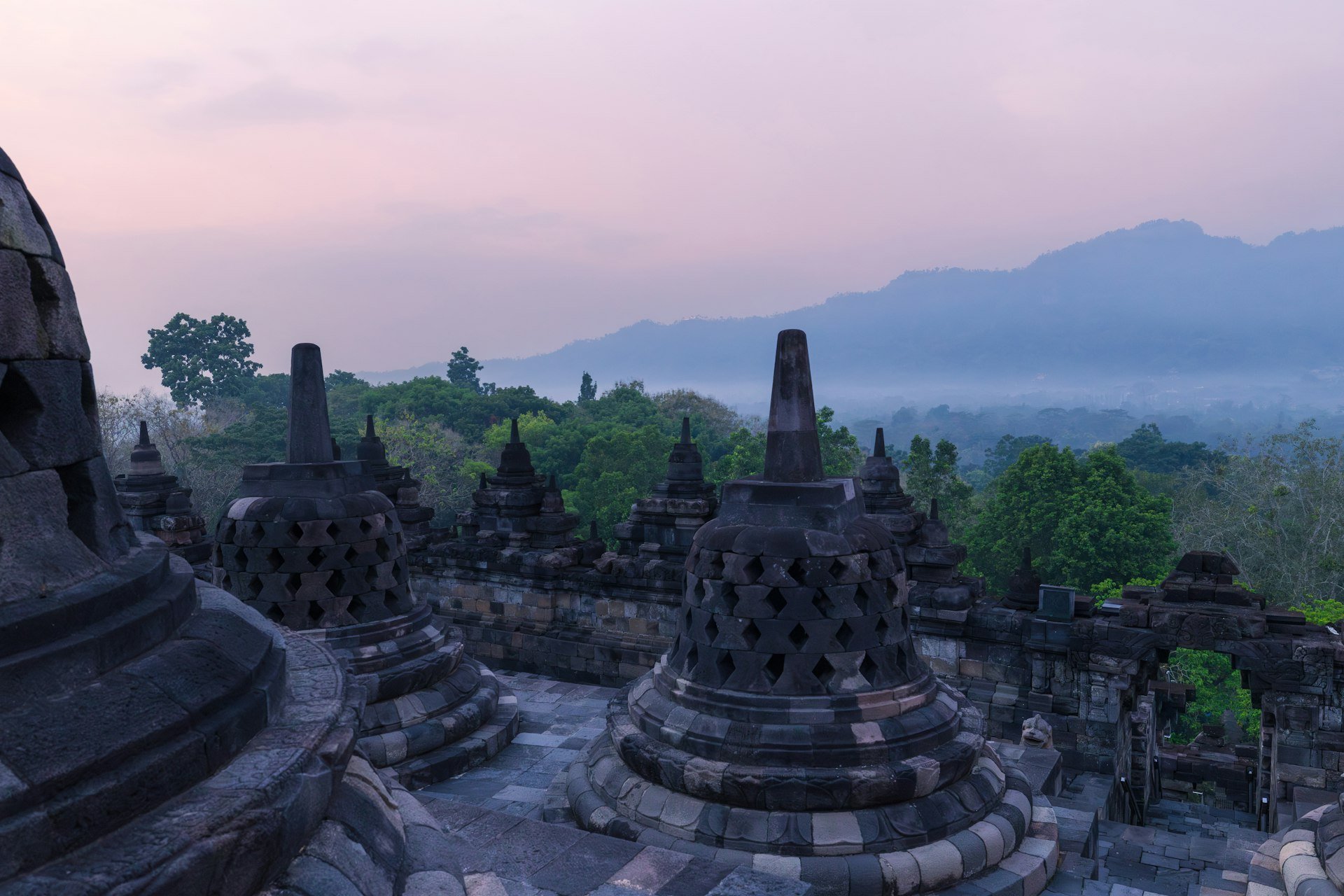
Yogyakarta, which everyone calls Jogja, is the cultural heart of Java. A sultan still lives in the palace at its centre, and two of Southeast Asia’s great monuments are close by: Borobudur and Prambanan. The city is cheap and friendly, but it sprawls, so your base matters. This guide explains each area honestly and picks ten hotels worth booking for the 2026–27 season, with what guests praise and complain about, plus current ticket prices, transport costs and entry rules.
In this guide17 sections
- —The ten, at a glance
- —Where to stay in Yogyakarta: the areas explained
- —Malioboro and the centre
- —Kraton and Taman Sari
- —Prawirotaman and around
- —West of the Kraton
- —North Yogya
- —Borobudur
- —Prambanan
- —Getting there and getting around
- —What to do, and what it costs
- —When to go
- —Scams and safety
- —Entry rules for Indonesia in 2026
- —A four-day plan
- —Practical tips
- —Frequently asked questions
The ten, at a glance
- The Phoenix Hotel Yogyakarta, north end of the centre — 105 rooms, upper mid-range
- Omah Siliran Heritage, inside the Kraton walls — 8 rooms, mid-range
- Adhisthana Hotel, Prawirotaman — about 50 rooms, budget
- Greenhost Boutique Hotel, Prawirotaman — about 96 rooms, mid-range
- Jogja Village, just south of Prawirotaman — 24 rooms, budget to mid-range
- YATS Colony, west of the Kraton — about 30 rooms, mid-range
- Rumah Mertua Heritage, north Yogya — about 17 rooms, mid-range
- Plataran Borobudur, Borobudur — about 20 villas and rooms, luxury
- Amata Borobudur Resort, near Mendut and Borobudur — small resort, mid-range
- Abhayagiri – Sumberwatu Heritage Resort, hills above Prambanan — small resort, mid-range
How we chose and how to read the prices: we looked for small, independent hotels with strong guest scores and read the dated reviews ourselves rather than the automatic summaries. The Phoenix and Greenhost are larger than our usual picks. Scores are Trip.com guest scores out of ten. Treat a score built on a dozen reviews with care. Trip.com’s “average from” figures often sit far above real rates, so we give price bands. Rates climb in July and August, around Eid and at New Year. We convert at roughly Rp 17,000 (IDR) to the US dollar.
Where to stay in Yogyakarta: the areas explained
| Area | Best for | From the airport | Watch out for |
|---|---|---|---|
| Malioboro and the centre | First-timers, shopping, trains | About 40 minutes by airport train to Tugu station | Crowds, touts and traffic noise |
| Kraton and Taman Sari | History, quiet lanes, guesthouses | Train to Tugu, then 10–15 minutes by car | Few restaurants at night; batik touts |
| Prawirotaman | Cafés, pools, travellers’ scene | Train to Tugu, then 15–20 minutes by car | Touristy; live music and construction noise |
| Tirtodipuran | Design shops, galleries, coffee | Train to Tugu, then 15–20 minutes by car | Few hotels; busy on weekends |
| North Yogya (Jl. Kaliurang, Sleman) | Calm, gardens, Merapi trips | About 1 hour 15 to 1 hour 30 by car | Far from the Kraton; traffic into town |
| Borobudur and Magelang | Temple at dawn, rice fields | About 1 hour 15 by direct bus or car | Remote; you eat at your hotel |
| Prambanan | Temples and the Ramayana ballet | About 1 hour 30 to 2 hours by car | Little to do after dark |
Malioboro and the centre
Jalan Malioboro runs south from Tugu railway station to the palace square, past batik shops and Beringharjo market. The airport train ends here and temple buses leave nearby, so it suits a short stay. It is also the loudest, most crowded part of the city. A plan to close Malioboro to vehicles from November 2026 was still being finalised when we checked, so ask your hotel where cars can drop you.
Kraton and Taman Sari
South of Malioboro, the walled palace district is a village inside the city, with low houses and lanes too narrow for cars. The sultan’s palace and the Taman Sari water castle are both here. Restaurants are few and close early, and batik touts are busy here.
Prawirotaman
About two kilometres south of the palace, Prawirotaman is the travellers’ quarter: a few streets of small hotels with pools, cafés, tour desks and bars with live music. It is the most comfortable base for most visitors, and good value. Rooms facing the street can be noisy.
Tirtodipuran
Jalan Tirtodipuran is the next street west of Prawirotaman, across Jalan Parangtritis. Old batik houses here have become galleries, concept stores and good restaurants. Most people sleep in Prawirotaman and walk over.
North Yogya: Jalan Kaliurang and Sleman
The north of the city climbs gently towards Mount Merapi. It is greener, with university districts, malls and garden hotels along Jalan Kaliurang and Jalan Palagan. It suits longer stays and travellers with a driver; the palace is 20 to 40 minutes away.
Borobudur and Magelang
Borobudur is about 40 kilometres north-west of the city, in Central Java province. Sleeping nearby lets you reach the temple before the day-trippers. The setting is rural, with few restaurants outside the hotels.
Prambanan
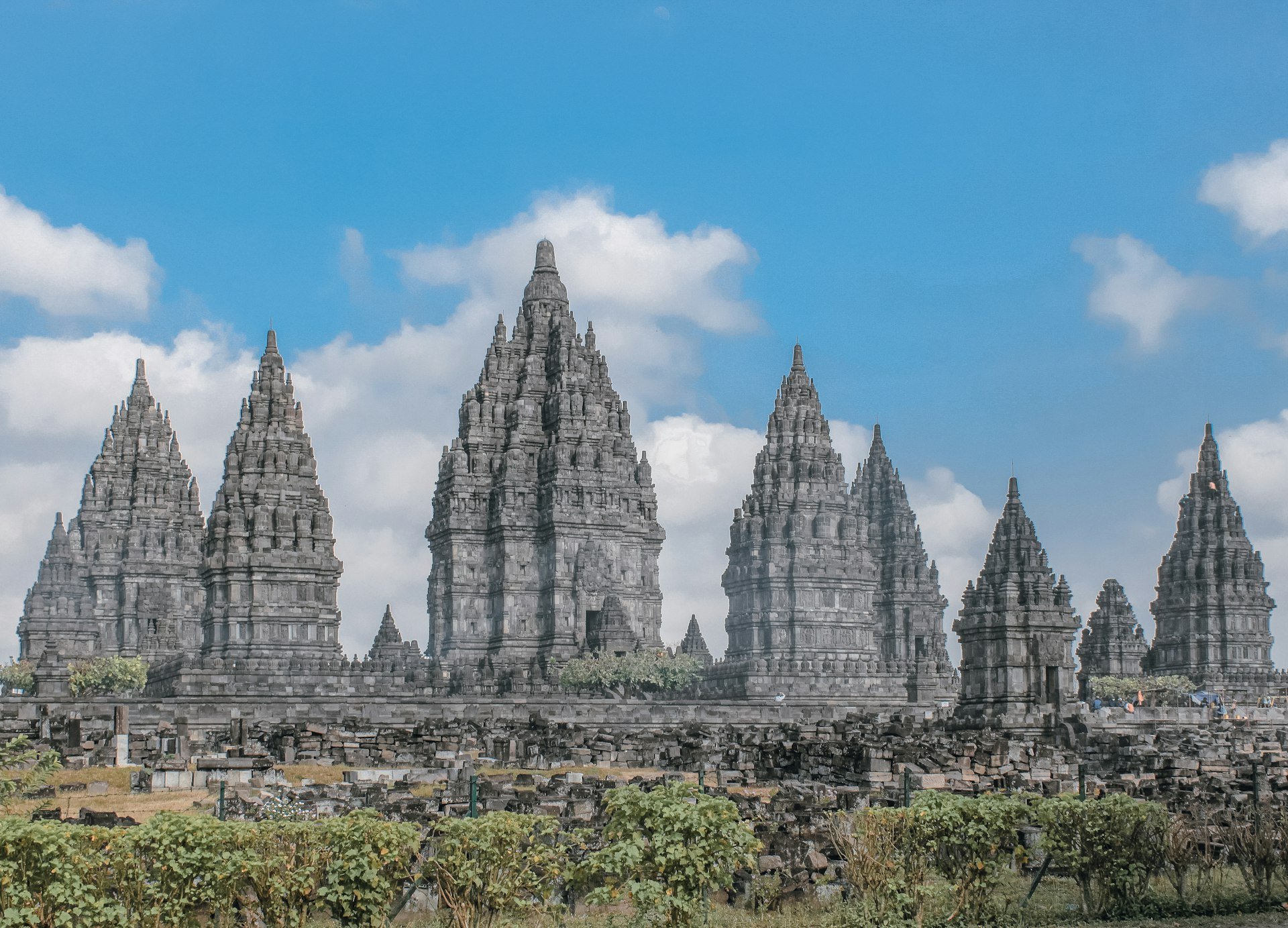
Prambanan is about 17 kilometres east of the centre. A few resorts sit in the hills south of the temple, near the Ratu Boko ruins. It works for one night around the Ramayana ballet; for longer, the city is more practical.
Malioboro and the centre
The Phoenix Hotel Yogyakarta
Jl. Jenderal Sudirman, near the Tugu monument · 105 rooms · upper mid-range · guest score 9.0 (Trip.com, 214 reviews)
The city’s grand old hotel, in a colonial-era house with a courtyard pool. Long an MGallery hotel, it is now listed under Accor’s Handwritten Collection.
Why we like it: real heritage atmosphere, warm staff and a generous breakfast, close to the station.
Worth knowing: guests in 2026 describe some rooms as small and dated, and street-facing rooms as noisy at night; one reported a cracked basin and another a view over a petrol station.
Kraton and Taman Sari
Omah Siliran Heritage
Jl. Siliran Lor, inside the Kraton walls · 8 rooms · mid-range · guest score 9.2 (Trip.com, 42 reviews)
A small guesthouse opened in 2022 in a Javanese house with a pool, a short walk from the palace.
Why we like it: a pool and real calm in the old palace district, at a fair price.
Worth knowing: rooms are not large; recent guests mention mosquitoes, stained sheets, an odd smell in one room and walls that need a fresh coat of paint.
Prawirotaman and around
Adhisthana Hotel
Jl. Prawirotaman 2 · about 50 rooms · budget, with rates from about US$25 (Rp 425,000) on quiet dates · guest score 8.7 (Trip.com, 48 reviews)
A cheerful budget hotel built around a pool, with a popular Indonesian restaurant, Warung Lawas.
Why we like it: a good pool, friendly staff and solid food for very little money.
Worth knowing: rooms are small with little storage, ground-floor rooms open onto a busy pool, and guests have reported slamming doors and construction noise.
Greenhost Boutique Hotel
Jl. Gerilya, off Prawirotaman 2 · about 96 rooms · mid-range · guest score 9.3 (Trip.com, 123 reviews)
An eco-minded design hotel opened in 2014, with raw concrete, hanging plants and an indoor pool.
Why we like it: a strong breakfast, helpful staff, free water refills and cafés on the doorstep.
Worth knowing: Wi-Fi comes and goes, some guests hear their neighbours, mosquitoes gather in the open areas at dusk, and a few find the building starting to show its age.
Jogja Village
Jl. Menukan, five minutes’ walk south of Prawirotaman · 24 rooms · budget to mid-range · guest score 9.5 (Trip.com, 48 reviews)
A garden inn from 1995, formerly Dusun Jogja Village Inn and refreshed in 2024, with a large pool in a tropical garden and a restaurant.
Why we like it: it feels like a small resort in the middle of the city, and guests call it excellent value.
Worth knowing: it is an old property: past reviews mention a musty smell, broken lamps and slow hot water, and a 2024 guest wanted a renovation and a better breakfast.
West of the Kraton
YATS Colony
Jl. Patangpuluhan, Wirobrajan · about 30 rooms · mid-range · guest score 8.8 (Trip.com, 13 reviews)
A low-rise design hotel around a long pool and garden, with a café and a concept store. The Kraton is about ten minutes away by car.
Why we like it: striking architecture, greenery and a peaceful pool away from the tourist streets.
Worth knowing: there is no lift, one 2026 guest found ants in the room and another found breakfast dishes served cold and the welcome a little cool.
North Yogya
Rumah Mertua Heritage
Jl. Palagan Tentara Pelajar, Sleman · about 17 rooms · mid-range · guest score 9.0 (Trip.com, 9 reviews)
A family-run garden hotel in Javanese style, with a pool and a restaurant, in a quiet lane in the north of the city.
Why we like it: personal service, a lovely garden and staff who arrange drivers and tours with care.
Worth knowing: rooms beside the dining area are not soundproofed, one guest noticed a strong mothball smell, and two reviewers found the dinner bland. You need a car to reach the centre.
Borobudur
Plataran Borobudur
Tanjungan village, Borobudur · about 20 villas and rooms · luxury · guest score 9.4 (Trip.com, 47 reviews)
A hillside resort of Javanese wooden villas, many with private pools, looking across the Borobudur valley.
Why we like it: views, space and service that guests call first-rate, with free activities and a hilltop restaurant.
Worth knowing: it is expensive, and not everyone feels it is worth it. In 2026 guests mentioned building work, mosquitoes, road and music noise, a cold indoor pool and slow service at busy times.
Amata Borobudur Resort
Near Mendut temple, about 10 minutes’ drive from Borobudur · small resort · mid-range · guest score 9.5 (Trip.com, 56 reviews)
A small resort opened in 2014 beside a stream, with a pool and a restaurant.
Why we like it: a peaceful riverside setting, kind staff and good food at a sensible price.
Worth knowing: facilities are limited to a pool and a garden, so children may get bored; one guest found the television small, and early check-in is not always possible.
Prambanan
Abhayagiri – Sumberwatu Heritage Resort
Sumberwatu hill, about 10 minutes’ drive south of Prambanan · small resort · mid-range · guest score 9.3 (Trip.com, 19 reviews)
Javanese-style villas and rooms on a hill near the Ratu Boko ruins, opened in 2012 and renovated in 2023, with a pool, horses and archery.
Why we like it: views of Prambanan and Mount Merapi from the terrace, and free activities for children.
Worth knowing: one guest in 2026 had a shower that flooded the bathroom floor, another felt the restaurant food needed work, and the hill is isolated without a car.
Getting there and getting around
Yogyakarta International Airport (YIA) is in Kulon Progo, about 45 kilometres west of the city. The airport train is the best way in. When we checked, the regular service to Tugu station cost Rp 20,000 (about US$1.20) and the faster YIA Xpress Rp 40,000–50,000 (US$2.40–3), with a journey of around 35 to 40 minutes and trains from early morning until about 9 pm. Foreign cards do not always work for tickets, so carry cash. A car takes 60 to 90 minutes and costs many times more. DAMRI buses run from the airport to Borobudur for about Rp 100,000 (US$6).
Trains are the pleasant way to arrive overland. Jakarta to Yogyakarta takes roughly six to eight hours, and Surabaya about four to five on the faster services. Popular trains sell out, so book a few days ahead. In town, Grab and Gojek are cheap and reliable: a short motorbike ride costs around Rp 15,000 (about US$1), and a car across the centre a few dollars. Trans Jogja city buses charge a flat fare of about Rp 3,600 and reach Prambanan, slowly, with one change.
What to do, and what it costs
| Sight | Price for foreign adults (when we checked) | Tip |
|---|---|---|
| Borobudur, temple ground ticket | Rp 412,500 (about US$24) | Gardens and base of the monument only; no climbing |
| Borobudur, temple structure ticket | Rp 455,000 (about US$27) | Includes the guided climb; daily quota, book ahead |
| Prambanan | Rp 400,000 (about US$23) | Go late afternoon; main courtyard closed for upkeep on Mondays |
| Kraton (sultan’s palace) | Rp 25,000 (about US$1.50) | Mornings only, roughly 8.30 am–12.30 pm; shorter on Fridays and Saturdays |
| Taman Sari water castle | Rp 25,000, plus a small camera fee | Open about 9 am–3 pm; go early for empty pools |
| Ramayana ballet at Prambanan | Rp 150,000–450,000 (US$9–26) | Tuesday, Thursday and Saturday at 7.30 pm |
Borobudur: the two tickets and the climbing rules
Climbing Borobudur is now strictly limited to protect the stone. The ground ticket lets you walk around the monument but not on it. To go up, you need the temple structure ticket. Only 1,200 people a day are allowed, in eight one-hour sessions of 150 from 9 am to 5 pm. You climb with a guide in a group of up to twenty, wearing the woven upanat sandals handed out at the entrance, and the top stupa stays off limits. Morning sessions sell out days or weeks ahead on the official site, ticket.borobudurpark.com. Climbing is normally not offered on Mondays. Official sunrise visits cost about Rp 1,000,000 (US$59) with breakfast, for 100 people a day. Sinar Jaya buses run from Malioboro to Borobudur for Rp 20,000.
Mount Merapi jeep tours and volcano status
Merapi, 30 kilometres north of the city, is one of the world’s most active volcanoes. It has been at alert level 3 of 4 (Siaga) since November 2020, and was still there in early November 2026, with daily lava avalanches on the south-west flank. The authorities ask people to stay three to seven kilometres from the summit, depending on the side. Jeep tours from Kaliurang and Kaliadem run outside that zone. Expect about Rp 450,000–650,000 per jeep (US$26–38) for up to four people, and around Rp 900,000 for sunrise. Routes change with the alert level, and summit hikes are closed.
When to go
The dry season, from about May to October, is the best time: clear mornings, open-air ballet and easy temple visits. July and August are the busiest and most expensive months. The rains run from roughly November to March, heaviest in January and February. Showers usually come in the afternoon, so start early; hotel rates are lower.
Scams and safety
Yogyakarta is a safe city, and most trouble is small. The classic trick is the batik “art school” or “government exhibition”. A friendly stranger says a student show ends today, or that the palace is closed, and walks you to a gallery selling printed cloth at many times its value. Buy batik at fixed-price shops or at a working workshop.
Becak drivers offering a very cheap ride often detour to commission shops, and unofficial “guides” at Taman Sari expect a tip, so agree it first. Traffic is the main real danger. Rent a scooter only with a valid motorcycle licence.
Entry rules for Indonesia in 2026
Most visitors need a visa on arrival. When we checked in November 2026, it cost Rp 500,000 (about US$29) at the airport or online as an e-VOA at evisa.imigrasi.go.id. It allows 30 days, extendable once. In August 2026 the immigration service announced a rise to Rp 750,000 for the e-VOA and Rp 1,000,000 on arrival. No start date had been published by early November, so check before you pay. Your passport needs six months’ validity. Every traveller must also complete the free All Indonesia arrival declaration within three days before landing and show its QR code on arrival. Use only the official sites.
A four-day plan
- Day 1: the Kraton in the morning, Taman Sari and the lanes around it, then Malioboro.
- Day 2: Borobudur with a pre-booked climbing slot. Nearby Mendut temple is closed for restoration until 2027.
- Day 3: a Merapi jeep tour early, then Prambanan at sunset and the Ramayana ballet.
- Day 4: a batik or silver workshop in Kotagede, then Tirtodipuran’s galleries and a plate of gudeg, the city’s sweet jackfruit stew.
Practical tips
- Book the Borobudur climb first, then build the rest of the trip around that slot.
- Avoid Mondays for the temples and afternoons for the Kraton.
- Carry cash in small notes. Many warungs and ticket desks do not take foreign cards.
- Start early. By 11 am the temples are hot.
Frequently asked questions
What is the best area to stay in Yogyakarta for first-timers?
Prawirotaman suits most visitors, with small pool hotels and good cafés. Choose Malioboro for one or two nights if you arrive by train.
Is it better to stay in Yogyakarta or near Borobudur?
Stay in the city and add one night near Borobudur if you want the temple early. A day trip also works well.
Can you still climb Borobudur?
Yes, with a temple structure ticket. It costs about Rp 455,000 for foreign adults and is limited to 1,200 people a day, so book online in advance.
How do I get from Yogyakarta airport to the city?
Take the airport train from YIA to Tugu station. It takes 35 to 40 minutes and costs Rp 20,000 to 50,000.
Is Mount Merapi safe to visit?
The volcano is at alert level 3 of 4, with an exclusion zone of up to seven kilometres. Jeep tours operate outside that zone; check the status before you go.
Travelling on through Indonesia? Read our guides to Bali, Lombok and Labuan Bajo and Komodo.
We may earn a commission when you book through the links on this page, at no extra cost to you. Our picks are editorial and never paid for. Prices, scores, fees and rules were checked in November 2026 and change often; confirm details when you book.
Newsletter
New stays and deals, once a month
Our latest hotel guides, new destinations and selected partner deals in Southeast Asia. No spam, unsubscribe anytime.