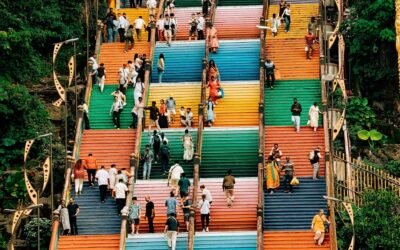
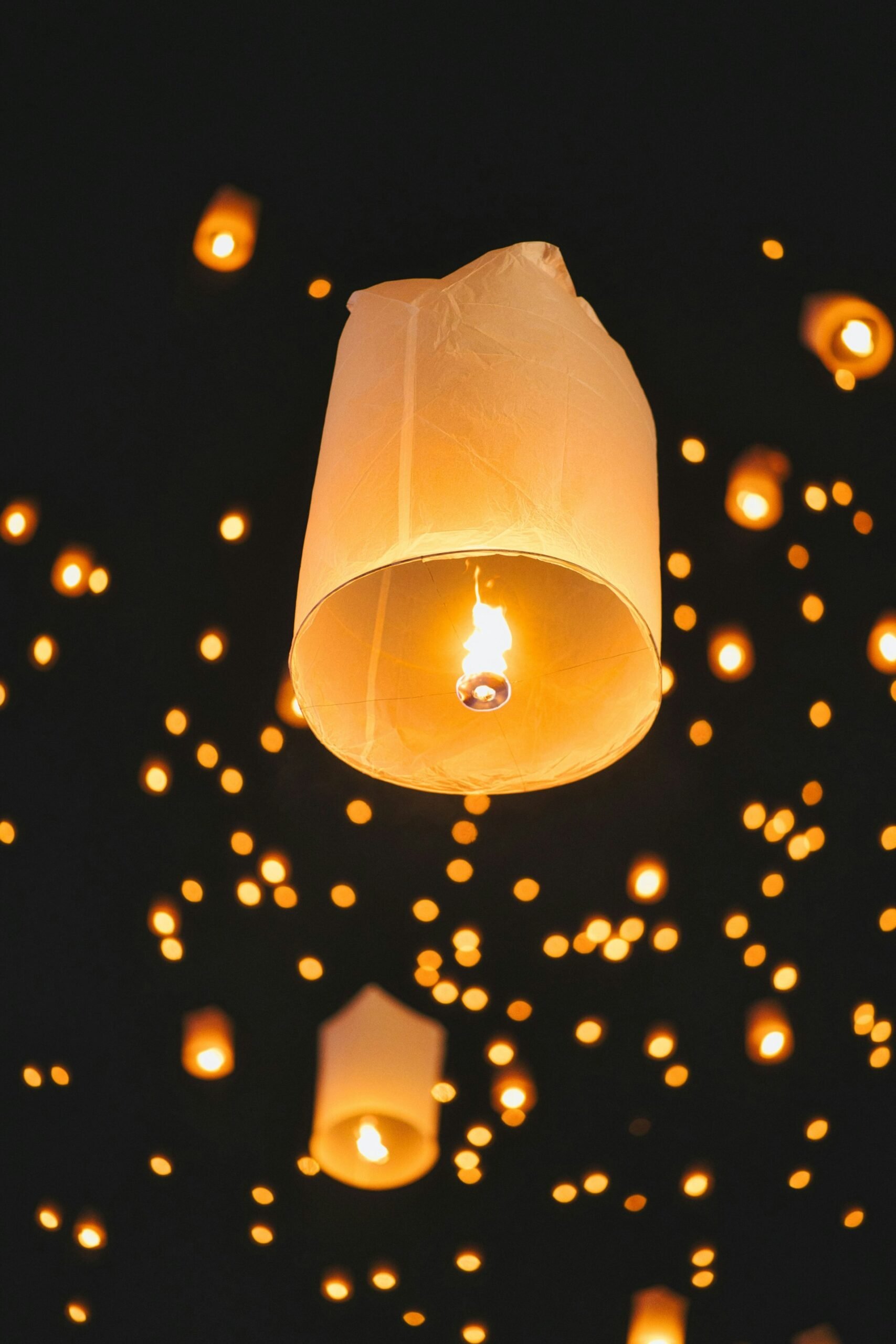
Chiang Mai is northern Thailand’s cultural capital: a walled old city with more than 300 temples, mountains covered in forest just outside town, night markets, excellent food and a slower pace than Bangkok. It is also the place to be in late November, when thousands of lanterns rise into the sky for Yi Peng.
This guide covers the best things to do in Chiang Mai in 2026, from temples and markets to mountain trips, ethical elephant experiences and the best day trips, with this year’s festival dates, entrance fees and the burning-season rules that should shape when you visit.
In this guide24 sections
- —Chiang Mai in 2026: what to know first
- 01See Yi Peng, the lantern festival
- 02Explore the temples of the Old City
- 03Climb to Wat Phra That Doi Suthep
- 04Visit Doi Inthanon, Thailand’s highest mountain
- 05Shop the night markets and walking streets
- 06Eat your way through northern Thai food
- 07Take a cooking class
- 08Meet elephants, ethically
- 09Climb the Sticky Waterfall
- 10Go into the countryside: Mae Kampong and the Mae Taeng valley
- 11Take a day trip to Chiang Rai
- 12Head for Pai
- 13Learn something new
- 14Relax in a café or a garden
- 15Discover Lamphun and Wiang Kum Kam
- 16Visit the art and craft scene
- —Chiang Mai with children
- —Sample itineraries
- —When to go
- —Where to stay
- —Getting there and around
- —Practical tips
- —Frequently asked questions
Chiang Mai in 2026: what to know first
- Yi Peng and Loy Krathong: in 2026 the lantern festival falls on 24 and 25 November, with Loy Krathong on 24 November.
- Burning season: from about February to April, with a peak in March, smoke from agricultural fires and forest fires can make the air unhealthy. In 2026 an open-burning ban ran from 1 January to 31 May.
- Entrance fees: Doi Inthanon National Park costs 300 baht for foreign adults; Doi Suthep–Pui National Park is 100 baht; and the White Temple in Chiang Rai has charged foreigners 200 baht since 1 January 2026.
- Best time to visit: November to January brings cool, dry weather and green landscapes after the rains.
01See Yi Peng, the lantern festival
If you are in Chiang Mai in late November, Yi Peng is the highlight of the year. Over two nights, the city fills with candles, decorated temples and parades, and lanterns are released into the night sky. Krathongs, small floating offerings made of banana leaves and flowers, are set afloat on the Ping River for Loy Krathong.
Mass lantern releases are now tightly controlled because of fire risk and air traffic. The famous photographs of thousands of lanterns rising at once are taken at organised, ticketed events outside the city. In 2026, the CAD Khantoke event offered ticketed releases priced from 4,900 to 16,900 baht. Book well ahead, and be wary of cheap “lantern festival” tickets sold online by unknown resellers.
You do not need a ticket to enjoy the festival. Walk around Tha Phae Gate and the Old City, watch the parades, visit Wat Phan Tao and Wat Chedi Luang lit by candles, and float a krathong on the river near Nawarat Bridge.
02Explore the temples of the Old City
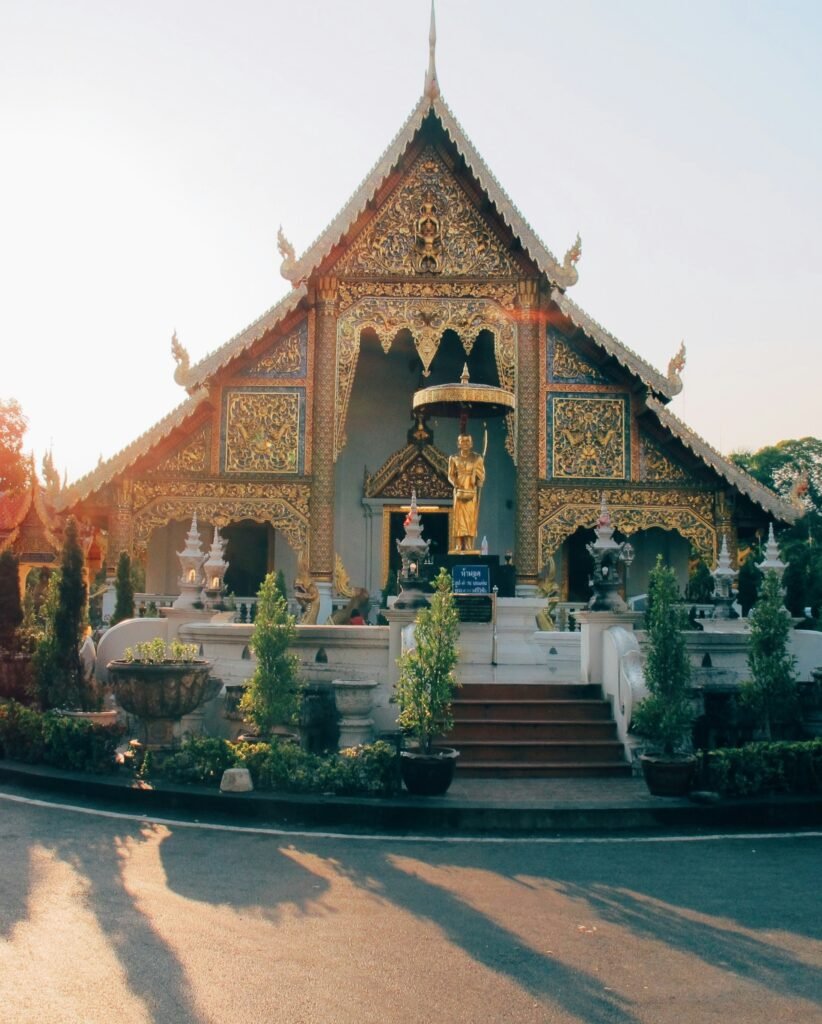
The square, moated Old City is easy to explore on foot or by bicycle. Three temples stand out:
- Wat Chedi Luang, with the huge ruined chedi that once held the Emerald Buddha. In the afternoon, “monk chats” let you talk with novice monks about Buddhism and life in the temple.
- Wat Phra Singh, the city’s most revered temple, with beautiful Lanna-style wooden halls and murals.
- Wat Phan Tao, a small teak temple next to Wat Chedi Luang, especially beautiful in the evening.
Outside the walls, Wat Umong is a peaceful forest temple with old tunnels, and Wat Suan Dok has white chedis with a view of Doi Suthep. Wat Sri Suphan, the “silver temple”, is covered in silver work; note that women are not allowed inside the ordination hall.
03Climb to Wat Phra That Doi Suthep
On the mountain above the city, Wat Phra That Doi Suthep is Chiang Mai’s most famous temple, with a golden chedi and views across the valley on clear days. Climb the 306 steps flanked by naga serpents, or take the funicular. Go early to beat the crowds, or late afternoon for the light. Further along the road, Bhubing Palace, the royal winter residence, has gardens open to visitors, and the Hmong village of Doi Pui offers a glimpse of hill-tribe life, although it is now quite commercial.
The surrounding Doi Suthep–Pui National Park charges 100 baht for foreign visitors at some points, and has hiking trails and waterfalls. The Monk’s Trail, a forest path from the edge of the city to Wat Pha Lat, a quiet temple beside a stream, is a lovely walk of about an hour.
04Visit Doi Inthanon, Thailand’s highest mountain
Doi Inthanon rises to 2,565 m, about two hours’ drive south-west of the city. A day trip usually combines the summit area, often cool and misty; the twin royal pagodas with their gardens, which charge a separate fee; and waterfalls such as Wachirathan and Sirithan. The Kew Mae Pan nature trail along a ridge is one of the best short hikes in Thailand, open in the dry season, usually with a local guide. Entry to the national park costs 300 baht for foreign adults. Bring a warm layer from December to February: early mornings at the top can be close to freezing.
05Shop the night markets and walking streets
- Sunday Walking Street: Ratchadamnoen Road through the Old City closes to traffic on Sunday afternoons and evenings for one of Thailand’s best markets, with crafts, clothing and street food in temple courtyards.
- Saturday Walking Street: on Wualai Road, south of the Old City, known for its silversmiths.
- Night Bazaar: every night on Chang Klan Road, more touristy but fun, with food courts and handicrafts.
- Warorot Market: the local market by the river, perfect for dried fruit, northern sausages and spices.
06Eat your way through northern Thai food
Chiang Mai’s food is different from the dishes you know from Bangkok. Try khao soi, egg noodles in a rich coconut curry broth topped with crispy noodles; sai oua, herby northern sausage; nam prik noom, a green chilli dip eaten with vegetables and pork crackling; and khan toke, a traditional set dinner on low tables. The Nimmanhaemin area, around Nimman Road, is the centre of cafés, bars and modern restaurants, while the Old City and Chang Phueak gate have legendary street food.
07Take a cooking class
Chiang Mai is the cooking-class capital of Thailand. Most schools collect you from your hotel, take you to a market to choose ingredients, and teach you to cook four or five dishes, often on an organic farm outside the city. You leave with a recipe book and a full stomach. Half-day and full-day classes are available, and vegetarian options are easy to arrange.
08Meet elephants, ethically
Elephant tourism has changed. Riding and shows are now widely seen as harmful, and responsible visitors choose sanctuaries where elephants are observed, fed and walked with rather than ridden. Elephant Nature Park, north of the city, is the best-known rescue centre. Wherever you go, check that there is no riding, no bathing in crowded pools for photos, no performance, and that groups are small. The best places publish their policies clearly.
09Climb the Sticky Waterfall
The Bua Thong waterfall, about an hour north of Chiang Mai, is nicknamed the Sticky Waterfall because its limestone rocks are covered in a mineral crust that is not slippery. You can walk straight up the cascades with bare feet. It sits in a pretty forest park and makes an easy half-day trip by car or scooter.
10Go into the countryside: Mae Kampong and the Mae Taeng valley
Mae Kampong is a mountain village east of the city, known for its wooden houses, coffee plantations and homestays, with zip-lining nearby. The Mae Taeng valley in the north offers rafting on bamboo rafts, white-water rafting in the wet season, trekking and visits to hill-tribe villages. Choose community-based tours where the money stays with the villagers.
11Take a day trip to Chiang Rai
Chiang Rai, about three hours by road, makes a long but rewarding day trip. The White Temple (Wat Rong Khun), a dazzling modern temple designed by the artist Chalermchai Kositpipat, has charged foreign visitors 200 baht since 1 January 2026. Add the Blue Temple (Wat Rong Suea Ten) and the Black House (Baan Dam Museum). If you have time, stay a night in Chiang Rai and visit the Golden Triangle, where Thailand, Laos and Myanmar meet.
12Head for Pai
Pai is a small mountain town about three to four hours from Chiang Mai along a famously winding road. It is known for its relaxed atmosphere, hot springs, canyon sunsets and a walking-street market. It is better as an overnight stay than a day trip. If you get car-sick, take medication before the road and sit near the front of the minibus.
13Learn something new
- Muay Thai: classes and gyms welcome beginners for one session or a week of training.
- Meditation retreats: several temples, including Wat Ram Poeng and Wat Suan Dok, offer meditation courses for foreigners.
- Crafts: Bo Sang, known as the umbrella village, and San Kamphaeng, known for silk and cotton weaving, show traditional techniques.
- Thai massage: Chiang Mai has excellent massage schools, and some prisons run training programmes for women inmates, with massage shops open to the public.
14Relax in a café or a garden
Chiang Mai is one of Asia’s best cities for coffee, much of it grown in the surrounding hills. Spend an afternoon café-hopping in Nimman or the Old City, visit the Queen Sirikit Botanic Garden with its canopy walkway, or cycle around the Huay Tung Tao lake at sunset.
15Discover Lamphun and Wiang Kum Kam
South of the city, two short trips take you back before the founding of Chiang Mai. Wiang Kum Kam is an ancient city buried by floods of the Ping River and excavated in the 1980s; you can tour its brick temple ruins by horse cart or bicycle. About 30 minutes further south, the quiet town of Lamphun was the capital of the old Hariphunchai kingdom. Its main temple, Wat Phra That Hariphunchai, with a golden chedi, is one of the most important in northern Thailand, and the town feels far from the tourist trail. Both make an easy half-day trip by car or scooter.
16Visit the art and craft scene
Chiang Mai has a creative side beyond the temples. The Baan Kang Wat artists’ village near Wat Umong has small studios, cafés and a weekend market. Chiang Mai University’s art museum and independent galleries host contemporary exhibitions, and the Jing Jai Market on weekend mornings sells organic food, design objects and crafts from local makers. It is a good place to buy gifts that are not mass-produced.
Chiang Mai with children
Chiang Mai is one of the easiest places in Thailand for families. Children enjoy the Sticky Waterfall, bamboo rafting, a gentle elephant sanctuary visit, cooking classes with child-friendly dishes and the zoo at the foot of Doi Suthep. Choose a hotel with a pool, plan outings in the morning, and avoid the burning season if your children have breathing problems. Taxis and ride-hailing cars do not always have child seats, so ask in advance if you need one.
Sample itineraries
Three days
- Day 1: Old City temples on foot, a cooking class in the afternoon, Sunday Walking Street or the Night Bazaar in the evening.
- Day 2: Doi Suthep in the morning, the Monk’s Trail or Wat Umong, sunset drinks in Nimman.
- Day 3: Doi Inthanon day trip.
Five days
Add an ethical elephant sanctuary and the Sticky Waterfall on one day, and a long day trip to Chiang Rai on another, or two nights in Pai.
When to go
| Season | Months | What to expect |
|---|---|---|
| Cool and dry | November to February | Best weather, Yi Peng in November, high season |
| Hot and smoky | March to May | Heat and burning-season smoke, especially in March |
| Rainy | June to October | Green landscapes, fewer visitors, afternoon storms, waterfalls at their best |
During the burning season, check air quality before booking, especially if you have asthma or travel with children. Many residents leave the city in March. The open-burning ban helps, but air quality can still be poor on many days.
Where to stay
The Old City is ideal for first visits, with temples and markets on your doorstep. Nimmanhaemin suits travellers who want cafés, modern hotels and nightlife. The riverside area is quieter and has some of the best boutique hotels. Our guide to where to stay in Chiang Mai compares the neighbourhoods and lists our favourite hotels in each.
Getting there and around
Chiang Mai International Airport is close to the city, with flights from Bangkok of a little over an hour, as well as from Phuket, Krabi and other Asian hubs. The overnight sleeper train from Bangkok is a classic experience. In town, use ride-hailing apps, red songthaews (shared pick-ups, agree the price first) or rent a bicycle. For day trips, hiring a car with a driver is good value, especially for a family or small group. If you are combining Chiang Mai with the south, see our guides to the best things to do in Bangkok and the best things to do in Phuket.
Practical tips
- Dress for temples: shoulders and knees covered, shoes off in the halls.
- Respect religious images and monks: do not sit with your feet pointing at a Buddha image, and do not touch monks if you are a woman.
- Carry cash for markets, songthaews and national park entrance fees.
- Ride scooters only with a valid licence and a helmet. Mountain roads are steep and winding.
- Check air quality in spring and wear a proper mask on smoky days.
Frequently asked questions
When is Yi Peng 2026 in Chiang Mai?
On 24 and 25 November 2026, with Loy Krathong on 24 November.
How many days do you need in Chiang Mai?
Three days covers the city, Doi Suthep and Doi Inthanon. Five days lets you add Chiang Rai or Pai and an elephant sanctuary.
What is the burning season in Chiang Mai?
Roughly February to April, with the worst air in March, caused by agricultural and forest fires.
How much is entry to Doi Inthanon?
300 baht for foreign adults in 2026, with separate fees for the royal pagodas.
Is it worth going to Chiang Rai from Chiang Mai?
Yes, for the White Temple, the Blue Temple and the Black House, although it is a long day trip. Staying one night makes it more relaxing.
Can you still release lanterns in Chiang Mai?
Lantern releases are restricted. Large releases take place at organised, ticketed events outside the city; check local rules before releasing a lantern yourself.
Dates, fees and rules were checked in November 2026 and may change. Confirm the latest details before you travel.
Newsletter
New stays and deals, once a month
Our latest hotel guides, new destinations and selected partner deals in Southeast Asia. No spam, unsubscribe anytime.