Bangkok is good at three things: gilded temples, food at every price and a river that still works as a main road. It is also hot all year and slow to cross by car, so the order in which you do things matters as much as the list itself. This guide picks fifteen things to do, grouped by area, with the price a foreign adult pays, the time each takes and the drawback brochures leave out.
In this guide16 sections
- —The 15, at a glance
- —Best things to do in Bangkok, by area
- —Old Town and the river
- —Chinatown
- —Siam and the centre
- —Sukhumvit, Silom and the parks
- —Markets
- —Day trips
- —What it costs: a quick table
- —Getting around
- —When to go
- —Scams, dress code and etiquette
- —Entry rules for Thailand in 2026
- —A three-day plan
- —Practical tips
- —Frequently asked questions
The 15, at a glance
- Grand Palace and Wat Phra Kaew, Old Town — 500 baht, 2 to 3 hours
- Wat Pho and a massage at its school, Old Town — 300 baht plus massage, 1.5 to 2.5 hours
- Wat Arun, Thonburi riverside — 200 baht, 1 hour
- A river boat or canal longtail ride, Chao Phraya — 19 baht to about 2,000 baht, 1 to 2 hours
- Golden Mount (Wat Saket), Old Town — 100 baht, 1 hour
- National Museum, Old Town — 200 baht, 2 hours
- Muay Thai at Rajadamnern Stadium, Old Town — from about 1,000 baht, 2 to 3 hours
- Street food on Yaowarat Road, Chinatown — pay per dish, 2 hours
- Talat Noi walk, Chinatown riverside — free, 2 to 3 hours
- Jim Thompson House, Siam — 250 baht, 1.5 hours
- A rooftop bar at sunset, Silom or Sukhumvit — one cocktail, 350 to 700 baht, 1 to 2 hours
- Lumphini Park and Benjakitti Forest Park, Silom and Sukhumvit — free, 1 to 2 hours
- A Thai cooking class, Silom and elsewhere — about US$38 to US$50, 3 to 4 hours
- Chatuchak Weekend Market, north Bangkok — free entry, 3 hours
- Ayutthaya, or the Maeklong railway market with a floating market, outside the city — low fares plus temple fees, a full day
How we chose and how to read the prices: we kept the places that explain the city and added a few that cost little or nothing. Prices were checked in November 2026 and are the rates for foreign adults, in Thai baht; Thai nationals often pay less. Where sources disagreed we give a range; prices change.
Best things to do in Bangkok, by area
Old Town and the river
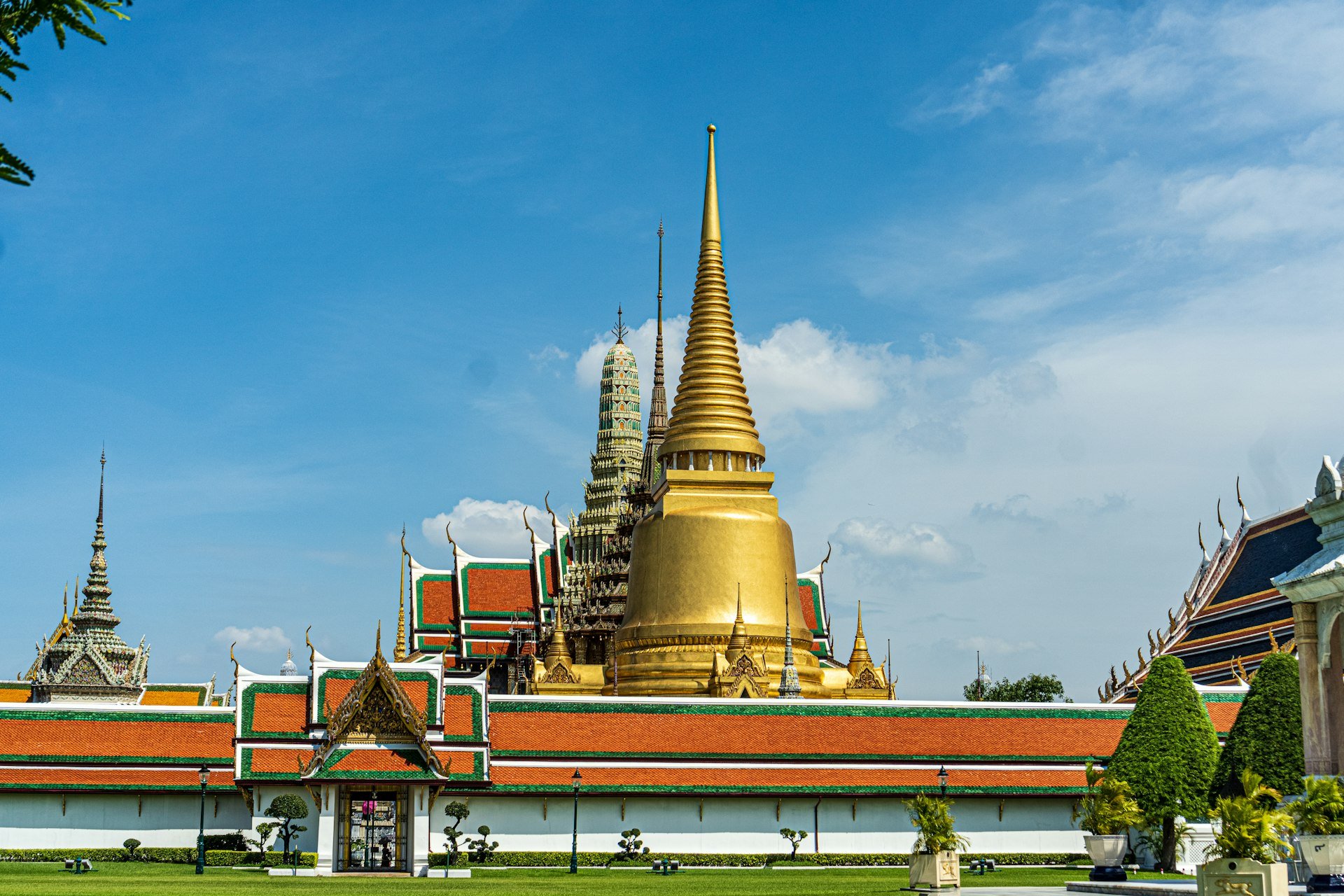
1. Grand Palace and Wat Phra Kaew
Old Town · 500 baht · 2 to 3 hours · at opening, 8.30 am
The former royal residence and the temple of the Emerald Buddha share one walled compound. Gates open daily at 8.30 am and ticket sales stop at 3.30 pm.
Why go: nothing else in Thailand matches this density of mosaic, gold leaf and mural painting.
Worth knowing: it is crowded by 10 am and has little shade. The dress code is enforced at the gate: no sleeveless tops, shorts, short skirts, torn or tight trousers.
2. Wat Pho and a traditional massage
Old Town, south of the palace · 300 baht, massage roughly 260 to 500 baht · 1.5 to 2.5 hours · late afternoon
Wat Pho holds the huge Reclining Buddha, open from 8 am to 7.30 pm, and a well-known school of Thai massage whose pavilions take walk-in clients. Prices we saw ranged from about 260 to 500 baht depending on type and length.
Why go: it is calmer than the palace next door, and the therapists are trained on site.
Worth knowing: the massage is firm, given in a shared room, and there is often a wait; put your name down first, then tour the temple. Cover shoulders and knees.
3. Wat Arun
Thonburi bank, opposite Wat Pho · 200 baht · 1 hour · late afternoon
The Temple of Dawn is a tall tower covered in pieces of porcelain, reached by a three-minute ferry from Tha Tien pier for a few baht. It opens from 8 am to 6 pm, with last entry at 5.30 pm.
Why go: the detail is best seen close up, in the last light of the day.
Worth knowing: the steps are steep and the terraces have no shade. The best view of the temple is from the opposite bank.
4. A river boat or canal longtail ride
Chao Phraya, from Sathorn pier · 19 baht to about 2,000 baht · 1 to 2 hours · early morning or after 4 pm
There are three options. The orange-flag express boat is public transport, with a flat 19-baht fare since October 2026. The blue-flag tourist boat sells a day pass, which we saw at about 150 to 200 baht. A private longtail into the Thonburi canals costs about 1,500 to 2,000 baht per boat for an hour.
Why go: the express boat is the cheapest sightseeing in the city.
Worth knowing: longtail prices are not fixed. Pier touts quote 750 to 1,000 baht per person, so agree the route, duration and total before boarding.
5. Golden Mount (Wat Saket)
Old Town, east side · 100 baht, cash · 1 hour · early morning or just before sunset
An artificial hill topped by a gold chedi, climbed by a spiral stairway of 344 steps. It is open from 7 am to 7 pm.
Why go: an open view over the Old Town, a breeze, and fewer visitors than the riverside temples.
Worth knowing: there is no lift, and the view is hazy on bad air days.
6. National Museum
Old Town, north of the palace · 200 baht · 2 hours · late morning, when it is too hot outside
A former palace holds the country’s main collection of Thai art, from Buddha images to royal funeral chariots. It opens Wednesday to Sunday from 9 am to 4 pm.
Why go: it gives the temples context and is rarely busy.
Worth knowing: it is closed on Mondays and Tuesdays, and labelling is uneven. Volunteers have long run free English tours on some weekday mornings; we could not confirm the current schedule.
7. Muay Thai at Rajadamnern Stadium
Ratchadamnoen Nok Road · about 1,000 to 2,500 baht for standard seats · 2 to 3 hours · evening
Bangkok’s oldest major boxing stadium stages fights every night, starting at 6 pm or 7 pm depending on the promoter. When we checked, third-class seats cost about 1,000 baht, club class 1,800 and ringside 2,500.
Why go: live music, ritual and a loud local crowd.
Worth knowing: Saturday shows can cost more, and the cheapest seats are far from the ring.
Chinatown
8. Street food on Yaowarat Road
Chinatown, MRT Wat Mangkon · most dishes about 50 to 200 baht · 2 hours · 6.30 pm to 10 pm
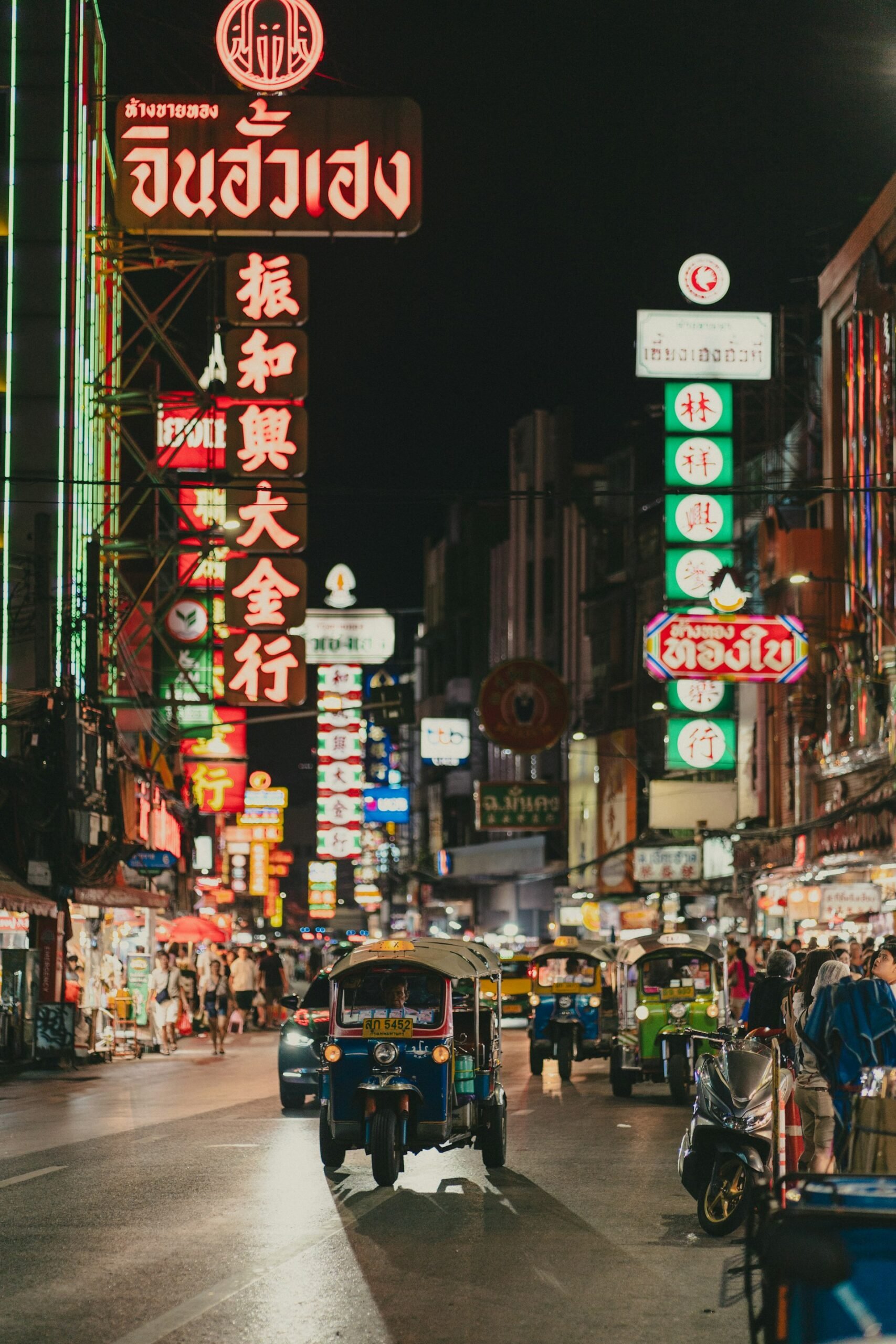
After dark, Yaowarat Road fills with stalls selling grilled seafood, peppery noodle soup, oyster omelette and mango sticky rice. Vendors set up from about 5.30 pm; the busiest hours are 7 pm to 10 pm.
Why go: the widest choice of street food in one place, under a wall of neon signs.
Worth knowing: it is crowded, loud and hot, with narrow pavements and long queues at the famous stalls. Most vendors take cash only and close for Chinese New Year.
9. Talat Noi walk
Riverside, south of Chinatown; MRT Hua Lamphong · free · 2 to 3 hours · morning
Talat Noi is a small riverside quarter of Chinese shrines, old shophouses, street art and lanes stacked with used engine parts. A simple route links the So Heng Tai mansion, the Rong Kueak shrine and the Holy Rosary Church.
Why go: it shows working, lived-in Bangkok, and costs nothing.
Worth knowing: the lanes are poorly signed, and several stops close on Mondays.
Siam and the centre
10. Jim Thompson House
Siam, BTS National Stadium · 250 baht, 150 baht for ages 10 to 21 with ID · 1.5 hours · morning
Teak houses assembled by the American who revived the Thai silk trade hold his collection of Asian art in a garden by a canal. It opens daily from 10 am to 5 pm, and the house can only be visited with a guide.
Why go: a calm hour of traditional architecture close to the malls.
Worth knowing: tours leave in groups by language, so you may wait.
Sukhumvit, Silom and the parks
11. A rooftop bar at sunset
Silom, Sathorn or Sukhumvit · cocktails about 350 to 700 baht · 1 to 2 hours · arrive by 5.30 pm
Sky Bar at Lebua is the famous one, with a one-drink minimum and cocktails at about 500 to 700 baht when we checked; Octave on Sukhumvit is cheaper, at roughly 350 to 500 baht.
Why go: the scale of the city only makes sense from above.
Worth knowing: smart-casual dress codes are enforced: no flip-flops, sportswear or sleeveless shirts. Some bars admit only over-20s and ask for a passport. Vertigo at the Banyan Tree was closed when we checked, with reopening planned for December 2026.
12. Lumphini Park and Benjakitti Forest Park
Silom and Asok; MRT Si Lom or Queen Sirikit Centre · free · 1 to 2 hours · before 8 am or after 5 pm
Lumphini is the old central park, with a lake, joggers and large water monitor lizards; it opens from 4.30 am to 9 pm. An elevated walkway leads to Benjakitti, where raised paths cross a wetland forest, open from 5 am to 9 pm.
Why go: free and green, with skyline views from the Benjakitti skywalk.
Worth knowing: the raised walkways are exposed to the sun, so avoid midday.
13. A Thai cooking class
Silom, Sathorn and the Old Town · about US$38 to US$50, roughly 1,200 to 1,700 baht · 3 to 4 hours · morning
Half-day group classes often begin at a local market; each person then cooks and eats several dishes, such as tom yum soup, pad thai and a curry made from fresh paste. Prices are from booking sites.
Why go: you take home a skill, and the meal is included.
Worth knowing: groups can reach ten to fifteen people, and often only morning sessions include the market.
Markets
14. Chatuchak Weekend Market
North Bangkok; MRT Kamphaeng Phet or BTS Mo Chit · free entry · 3 hours · Saturday or Sunday at 9 am
More than 15,000 stalls in 27 sections sell clothes, ceramics, plants, antiques and food. The full market runs on Saturday and Sunday from 9 am to 6 pm.
Why go: the range is unmatched and prices are low.
Worth knowing: the covered alleys are stifling by noon and it is easy to get lost. Bargain politely.
Day trips
15. Ayutthaya, or the Maeklong railway market with a floating market
80 to 100 km from the city · train from about 20 baht; temples 80 baht each or 300 baht for a seven-site pass · a full day · leave by 7 am
Ayutthaya, the ruined former capital, is the better day out. Trains from Krung Thep Aphiwat station take 50 to 80 minutes and third class costs about 20 baht; vans from Mo Chit were 150 to 220 baht when we checked. The other classic trip goes to Maeklong, where a market folds back from the track as trains pass (arrivals listed at 8.30 am, 11.10 am, 2.30 pm and 5.40 pm), and then to a floating market. Damnoen Saduak opens daily from about 7 am to noon but is run mostly for tour groups. Amphawa, open Friday to Sunday from the afternoon, draws Thai visitors. Taling Chan and Khlong Lat Mayom, inside Bangkok, open at weekends.
Why go: Ayutthaya has the best ruins within reach of Bangkok; Maeklong is odd and memorable.
Worth knowing: Ayutthaya’s sites are spread out and shadeless. At Damnoen Saduak, touts ask thousands of baht; fair prices we saw ran from a few hundred to about 1,000 baht per boat per hour.
What it costs: a quick table
| Activity | Price when we checked | Good to know |
|---|---|---|
| Grand Palace and Wat Phra Kaew | 500 baht | Tickets sold 8.30 am to 3.30 pm; strict dress code |
| Wat Pho | 300 baht; massage about 260 to 500 baht | Open 8 am to 7.30 pm |
| Wat Arun | 200 baht | Open 8 am to 6 pm; ferry from Tha Tien |
| River and canal boats | 19 baht express; day pass about 150 to 200; longtail about 1,500 to 2,000 per boat | Agree longtail prices first |
| Golden Mount | 100 baht | 344 steps; cash only |
| National Museum | 200 baht | Closed Monday and Tuesday |
| Muay Thai, Rajadamnern | About 1,000 to 2,500 baht | Fights nightly; Saturdays cost more |
| Yaowarat street food | About 50 to 200 baht a dish | Bring small notes |
| Talat Noi | Free | Avoid Mondays |
| Jim Thompson House | 250 baht | Guided tour only |
| Rooftop bar | About 350 to 700 baht a cocktail | Dress code; arrive before sunset |
| Lumphini and Benjakitti parks | Free | Open until 9 pm |
| Cooking class | About US$38 to US$50 | Morning classes include a market |
| Chatuchak Weekend Market | Free entry | Saturday and Sunday, 9 am to 6 pm |
| Ayutthaya; Maeklong and floating markets | Train about 20 baht; temples 80 each or 300 for seven | Amphawa runs Friday to Sunday only |
Getting around
Use rails and water whenever you can. The BTS Skytrain and the MRT cover Siam, Silom, Sukhumvit, Chatuchak and Chinatown, and the MRT reaches the Old Town at Sanam Chai, near Wat Pho. For the river, take the BTS to Saphan Taksin and board at Sathorn pier. Taxis are metered and cheap but slow in the evening rush; if a driver refuses the meter, take the next one.
When to go
November to February is the most comfortable period: mostly dry, with daytime highs in the low thirties. March to May is the hot season. Songkran, the Thai New Year water festival, falls on Tuesday 13 to Thursday 15 April 2027; expect to get soaked in the street. Rain comes from about May to October, usually as short, heavy storms.
The cool season has one drawback. Fine-dust (PM2.5) pollution often rises above safe limits between December and March, which spoils the views and matters if you have asthma. Check an air-quality app each morning.
Scams, dress code and etiquette
Bangkok’s tricks are old and predictable. Near the Grand Palace, a polite stranger may say the sight is closed and suggest a cheap tuk-tuk tour; it ends at a gem shop or a tailor. Agree boat and tuk-tuk prices before you get in.
For temples and the palace, cover shoulders and knees. Remove shoes where signs ask, never point your feet at a Buddha image. Insulting the monarchy is a criminal offence.
Entry rules for Thailand in 2026
Since 15 September 2026, visa-free entry for eligible passports has lasted 30 days instead of 60 and covers tourism only; the list was cut to about 60 countries and territories. Most visa-exempt travellers may enter by land only twice per calendar year. Every visitor must complete the free Thailand Digital Arrival Card online before each arrival. A flat 450-baht fee for foreign visitors is planned but was not being collected when we checked: it still needed cabinet approval in mid-November 2026, and officials have said it is unlikely to start before mid-2027.
A three-day plan
- Day 1, Old Town: the Grand Palace at 8.30 am, then Wat Pho and a massage. After lunch indoors, cross to Wat Arun and finish on Yaowarat Road.
- Day 2, centre: a cooking class or Jim Thompson House, midday in the Siam malls, a park after 5 pm, then a rooftop drink or Muay Thai.
- Day 3, further out: Ayutthaya by early train, or at a weekend Chatuchak at opening time, then Talat Noi and an express boat at dusk.
Practical tips
- Carry cash in small notes. Temples, boats and street stalls rarely take cards.
- Plan around the heat. See one outdoor sight before 11 am and one after 4 pm; keep museums and malls for midday.
- Group sights by area. The palace, Wat Pho and Wat Arun are one walk and one ferry apart; Sukhumvit can be an hour away.
- Check closing days. The National Museum shuts on Mondays and Tuesdays, Chatuchak is a weekend market, and Amphawa only runs Friday to Sunday.
Before you fly: check the new 30-day visa exemption and the TDAC arrival card in our guide to Thailand entry requirements in 2026.
Frequently asked questions
What are the top things to do in Bangkok for first-timers?
The Grand Palace, Wat Pho and Wat Arun, an express boat on the river, street food in Chinatown after dark and one rooftop at sunset.
How much is the Grand Palace entrance fee in 2026?
500 baht for foreign visitors, including Wat Phra Kaew and the textile museum. Wat Pho costs 300 baht and Wat Arun 200 baht.
How many days do you need in Bangkok?
Three full days cover the main temples, Chinatown and a modern district. Add a fourth for a day trip.
Which floating market is best near Bangkok?
For atmosphere, Amphawa, open Friday to Sunday. Damnoen Saduak is open daily but aimed at tour groups, with inflated boat prices. Taling Chan and Khlong Lat Mayom are the closest, at weekends.
What should I wear to temples in Bangkok?
A top with sleeves and trousers or a skirt below the knee. The Grand Palace is the strictest and also refuses tight, torn or see-through clothing.
For a base, see our guide to where to stay in Bangkok, and if you are travelling on, our guides to Chiang Mai, Phuket and Koh Samui.
Prices, opening hours, fees and rules were checked in November 2026 and change often; confirm details before you go. Our recommendations are editorial and never paid for.
Newsletter
New stays and deals, once a month
Our latest hotel guides, new destinations and selected partner deals in Southeast Asia. No spam, unsubscribe anytime.