

Thailand changed its entry rules in September 2026, and many travel sites still show the old ones. The famous 60-day visa-free stay is gone for most nationalities, the visa on arrival list has been cut to three countries, land-border visa runs are capped, and every visitor must still file the online arrival card before landing.
This guide sets out what you need to enter Thailand as a tourist in 2026, in the order you will need it: passport, visa exemption or visa, the Thailand Digital Arrival Card (TDAC), proof of funds, customs and the rules for extending or overstaying. We travel to Thailand regularly from our base in Indonesia and check these rules for our own trips.
This is general travel information, not legal or immigration advice. Thai rules change often and immigration officers have discretion at the border. Always check the official Thai government websites before you travel.
In this guide17 sections
- —What changed on 15 September 2026
- —Checklist for 2026
- 01Passport
- 02Visa exemption: who gets 30 days
- 03Visa on arrival: three countries only
- 04Staying longer: tourist visa, extension and DTV
- 05The Thailand Digital Arrival Card (TDAC)
- 06Proof of funds and onward travel
- 07Is there a tourist entry fee?
- 08Customs: money, vapes, cannabis and medicines
- 09Overstaying
- —Travelling with children
- —Combining Thailand with neighbouring countries
- —Arriving at a Thai airport: what to expect
- —Common mistakes to avoid
- —Planning your trip
- —Frequently asked questions
What changed on 15 September 2026
- The visa exemption is now 30 days, not 60. The 60-day visa-free stay introduced in July 2024 ended. From 15 September 2026, most eligible visitors can stay up to 30 days per entry.
- Fewer countries qualify. The 30-day scheme covers 60 countries and territories, down from 93 under the old 60-day scheme.
- Two nationalities get 15 days. Citizens of Mauritius and Seychelles have a separate 15-day exemption.
- Visa on arrival is now very limited. Only citizens of Azerbaijan, Belarus and Serbia can get it.
- Land entries are capped. Most visa-exempt travellers can enter by land only twice per calendar year. Flights are not capped.
- The TDAC still applies to everyone, including travellers arriving by land.
The changes were published in the Royal Gazette on 31 August 2026. If you entered Thailand before 15 September on the old scheme, you can stay until the date already stamped in your passport.
Checklist for 2026
| Step | What | Cost | When |
|---|---|---|---|
| 1 | Passport valid for six months, with blank pages | – | Before booking |
| 2 | Visa exemption (30 days) or a visa | Exemption free | Check before booking |
| 3 | Thailand Digital Arrival Card (TDAC) | Free | Within 3 days before arrival |
| 4 | Return or onward ticket | – | Show if asked |
| 5 | Proof of funds | – | Show if asked |
| 6 | Customs declaration for large amounts of cash | – | On arrival |
01Passport
Your passport should be valid for at least six months from the day you arrive, with at least one blank page (two if you need a visa on arrival). Airlines check this at check-in and can refuse to board passengers whose passports are close to expiry. A damaged passport can also cause problems at immigration.
02Visa exemption: who gets 30 days
Citizens of 60 countries and territories can enter Thailand without a visa for tourism and stay up to 30 days per entry. They include the United Kingdom, the United States, Canada, Australia, Japan, Singapore and India, as well as most European countries. The list changes from time to time, so check your nationality on the website of the Thai embassy in your country before booking.
Some countries have separate bilateral agreements with Thailand that give 90, 30 or 14 days, depending on the agreement. If your country is one of them, that agreement applies instead of the general scheme.
The exemption is for tourism only. It does not allow work, business activities or long stays, and officers can refuse entry to people who appear to be living in Thailand on back-to-back exemptions.
Visa runs and the land-border cap
From 15 September 2026, most visa-exempt travellers can enter Thailand by land no more than twice per calendar year. The cap does not apply to arrivals by air, and citizens of Malaysia, Brunei, Indonesia and Singapore are exempt. It is not clear how land entries made before 15 September count, so do not assume you have two fresh entries.
Repeated “visa runs”, by air or by land, are screened more closely. Travellers who cannot give a convincing reason for frequent entries may be refused and told to apply for a proper visa.
Note also that the land border between Thailand and Cambodia, including the Poipet crossing, has been closed since the 2025 border conflict. If you plan to combine Thailand with Angkor, fly to Siem Reap; our guide to the best things to do in Siem Reap has the details.
03Visa on arrival: three countries only
Since 15 September 2026, the visa on arrival is available only to citizens of Azerbaijan, Belarus and Serbia. It allows 15 days and costs 2,000 baht, paid in cash. Applicants need a confirmed departure within 15 days (open tickets are not accepted), proof of funds of 10,000 baht per person or 20,000 baht per family, and a recent photo. Citizens of countries that used to qualify for a visa on arrival, but are no longer on the list or the exemption list, must now apply for a visa before travelling.
04Staying longer: tourist visa, extension and DTV
Tourist visa (TR)
If you want more than 30 days, apply for a tourist visa before you travel through Thailand’s official e-visa portal, thaievisa.go.th, or at a Thai embassy or consulate. A single-entry tourist visa allows 60 days from entry and can be extended once by 30 days in Thailand. The fee is roughly 1,000 baht for a single entry, depending on the embassy and the currency. A multiple-entry tourist visa is valid for six months, with up to 60 days per entry.
Extending a visa-exempt stay
Visa-exempt visitors and tourist-visa holders can apply for one 30-day extension at a Thai immigration office. The fee is 1,900 baht, using form TM.7, and approval is at the officer’s discretion. Go a few days before your permitted stay ends, with your passport, photo, proof of address and, ideally, a booked onward flight.
Destination Thailand Visa (DTV)
The DTV, launched in July 2024, is aimed at remote workers employed abroad and people attending longer courses, such as Muay Thai or cooking. It is valid for five years, with stays of up to 180 days per entry that can be extended by another 180 days. Applicants must show at least 500,000 baht in funds, and from 31 August 2026 some embassies require additional documents, including a criminal record certificate. The DTV does not allow you to work for a Thai company or take freelance work from Thai clients.
05The Thailand Digital Arrival Card (TDAC)
The TDAC replaced the paper TM6 arrival card on 1 May 2025. Almost every non-Thai traveller must complete it before arriving, whether by air, land or sea, with only narrow exceptions such as some transit passengers and aircrew.
- Go to the official site, tdac.immigration.go.th.
- Complete it within the three days before you arrive. Submitting a day or two early is sensible.
- Enter your passport details, flight or travel details, accommodation address and health declaration.
- Save the confirmation and QR code on your phone, and take a screenshot.
- Complete a new TDAC for every entry, including after a side trip to Laos, Malaysia or Cambodia.
The TDAC is free and takes a few minutes. Copycat websites charge from about US$10 to more than US$90 for the same form, so check the address carefully. If you forget, there are TDAC kiosks at five airports: Suvarnabhumi and Don Mueang in Bangkok, Phuket, Chiang Mai and Hat Yai. Queues at these kiosks can be long, so do it before you fly.
06Proof of funds and onward travel
Thai immigration officers can ask visa-exempt visitors for proof of funds and of onward travel. Embassy guidance in 2026 mentioned 20,000 baht per person, or 40,000 baht per family. In practice, officers rarely ask tourists arriving by air with a return ticket, but checks are more common for travellers with one-way tickets, frequent entries or long previous stays. Cash, a recent bank statement or a card with a printed statement are safer than showing an app balance, which an officer may not accept.
Keep a copy of your return or onward ticket, and of your first hotel booking, on your phone.
07Is there a tourist entry fee?
Thailand has discussed a 300-baht “entry fee” for foreign tourists since 2023. In 2026 the government announced plans to apply it to air arrivals only, probably collected through the airfare, while a 150-baht fee for land and sea arrivals was put on hold. When we checked, we could not confirm that the fee was being collected, or a start date. Check the latest news before you fly; if it starts, it is likely to be included in your ticket rather than paid at the airport.
08Customs: money, vapes, cannabis and medicines
- Cash. Foreign currency worth more than US$15,000, or Thai baht above 450,000, must be declared on arrival.
- Vapes and e-cigarettes are banned. Bringing vapes, e-cigarettes or refill liquids into Thailand is illegal, and tourists have been fined or detained. Leave them at home.
- Cannabis. Thailand tightened its rules again: cannabis flower is restricted to medical use with a Thai prescription, and bringing cannabis or cannabis products into the country is not allowed.
- Alcohol and tobacco. The duty-free allowance is 1 litre of alcohol and 200 cigarettes or 250 g of tobacco.
- Medicines. Bring prescription medicines in their original packaging with a copy of the prescription. Some medicines, including strong painkillers and sleeping pills, are controlled.
- Drugs. Penalties for drug offences are very severe.
09Overstaying
The fine for overstaying in Thailand is 500 baht per day, up to a maximum of 20,000 baht. Longer overstays, or being caught overstaying rather than reporting at departure, can lead to detention, deportation and a ban on re-entering Thailand for one year or more. With the exemption now only 30 days, count your days carefully: day one is the day you arrive.
Travelling with children
Children need their own passport and their own TDAC, and they get the same visa exemption as their parents’ nationality allows. One adult can help fill in the forms, but each traveller needs a separate entry. If a child is travelling with only one parent, or with grandparents or friends, carry a signed consent letter from the absent parent and a copy of the birth certificate. It is not always requested, but airlines and immigration officers can ask for it.
Combining Thailand with neighbouring countries
Many travellers combine Thailand with Laos, Malaysia, Cambodia or Vietnam. Keep three rules in mind. First, every new entry into Thailand needs a new TDAC. Second, each entry on the exemption gives you a fresh 30 days, but frequent re-entries attract questions. Third, the two-per-year cap on land entries applies to most nationalities, so if you plan to cross into Laos or Malaysia by land more than twice, fly for some legs or get a tourist visa. Remember that the Thailand–Cambodia land border was closed in 2026, so flights are the practical way between Bangkok and Siem Reap or Phnom Penh.
Arriving at a Thai airport: what to expect
- Follow the signs to immigration and join the queue for foreign passports.
- Have your passport, TDAC confirmation and onward ticket ready.
- Your fingerprints and photo are taken, and the officer stamps your permitted stay. Check the date before you leave the desk.
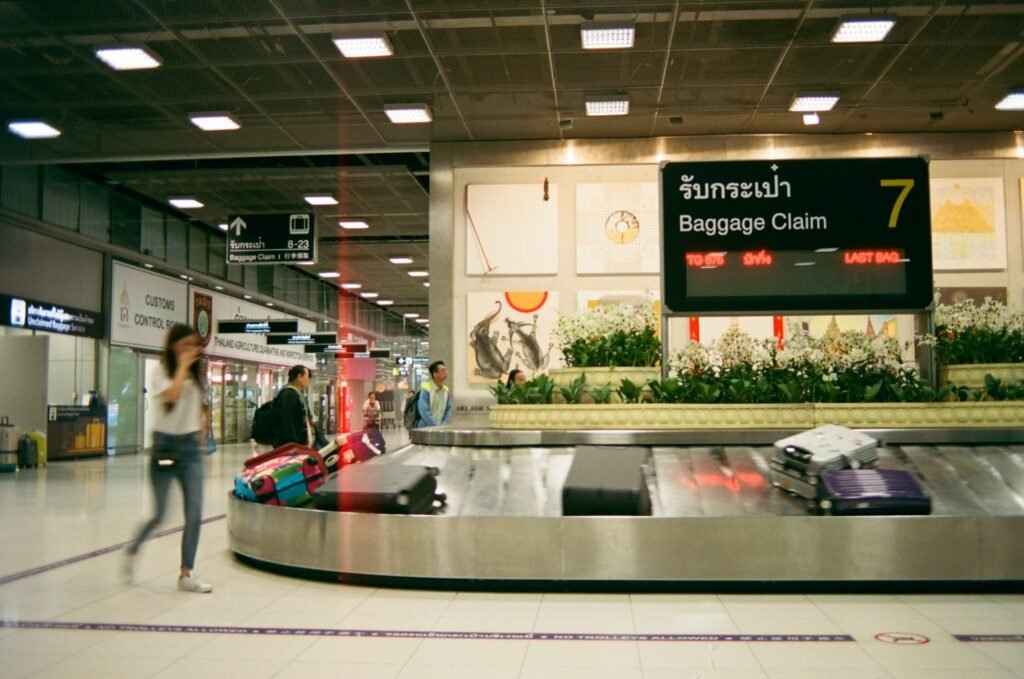
- Collect your bags and pass through customs, using the red channel if you have anything to declare.
- In arrivals, use official taxi stands, the airport rail link in Bangkok or a ride-hailing app. Agree prices before getting into a car.
At Suvarnabhumi, queues can be long in the evening and during peak season from December to February. Pre-booked transfers save time on arrival.
Common mistakes to avoid
- Relying on old articles that still mention 60 days. Since 15 September 2026, most visitors get 30 days.
- Paying a copycat website for the TDAC. The official form is free at tdac.immigration.go.th.
- Filling in the TDAC too early. It must be done within three days before arrival.
- Planning several land visa runs. Most nationalities are limited to two land entries per calendar year.
- Packing a vape. Vapes are illegal in Thailand.
- Overstaying by a few days. It is expensive and can lead to a ban.
Planning your trip
Thirty days is still enough for a classic first trip: a few days in Bangkok, the north and an island or two. See our guides to the best things to do in Bangkok, the best things to do in Chiang Mai and the best things to do in Phuket. If you are combining Thailand with Indonesia, our guide to Bali and Indonesia entry requirements covers the e-VOA, the arrival card and the Bali levy.
A sample 30-day route
- Days 1 to 4: Bangkok, temples, markets and the river.
- Days 5 to 10: Chiang Mai, Doi Suthep, Doi Inthanon and a day trip to Chiang Rai.
- Days 11 to 15: Sukhothai or Ayutthaya on the way back south.
- Days 16 to 27: the islands, for example Phuket and Krabi on the Andaman coast from November to April, or Koh Samui and Koh Phangan in the Gulf.
- Days 28 to 30: back to Bangkok for your flight, with a buffer day in case of delays.
If you need longer, apply for a tourist visa before you travel or plan one 30-day extension at an immigration office.
Frequently asked questions
How long can I stay in Thailand without a visa in 2026?
Since 15 September 2026, most eligible nationalities can stay up to 30 days per entry. Citizens of Mauritius and Seychelles get 15 days, and some countries have bilateral agreements with different periods.
Is the 60-day visa exemption still valid?
No. It ended on 15 September 2026. Travellers who entered before that date can stay until the date stamped in their passport.
Do I need to fill in the TDAC?
Yes. Almost all non-Thai travellers must complete the free Thailand Digital Arrival Card within three days before arrival, for every entry.
Can I extend my 30-day stay?
Yes, once, by 30 days at a Thai immigration office, for a fee of 1,900 baht. Approval is at the officer’s discretion.
What is the fine for overstaying in Thailand?
500 baht per day, up to 20,000 baht, with the risk of detention, deportation and a re-entry ban.
Is there a tourist tax to enter Thailand?
A 300-baht fee for air arrivals was planned in 2026, but when we checked we could not confirm a start date. Check before you travel.
Can I bring a vape to Thailand?
No. Vapes, e-cigarettes and refill liquids are banned.
Information checked in November 2026. Thai entry rules change often and officers have discretion at the border. Always confirm on official Thai government websites before you travel.
Newsletter
New stays and deals, once a month
Our latest hotel guides, new destinations and selected partner deals in Southeast Asia. No spam, unsubscribe anytime.