Siem Reap is the gateway to Angkor, the largest religious monument in the world and one of the great sights of Asia. But the town has much more than temples: floating villages on the Tonle Sap lake, a circus run by a social enterprise, cooking classes, countryside cycling and a relaxed riverside food scene. Many visitors plan two days and leave wishing they had stayed four.
This guide lists the best things to do in Siem Reap in 2026, with the practical details that changed recently: Angkor pass prices, the new airport far from town, the Thai land border closure and Cambodia’s online arrival card. It ends with sample itineraries for two, three and four days.
In this guide22 sections
- —Before you go: what is new in 2026
- 01Watch sunrise at Angkor Wat
- 02Explore Angkor Thom and the Bayon
- 03Get lost in Ta Prohm
- 04Take the “small” and “grand” circuits
- 05Visit Banteay Srei and Kbal Spean
- 06Go further: Beng Mealea, Koh Ker and Phnom Kulen
- 07Discover the Tonle Sap floating villages
- 08See Phare, the Cambodian Circus
- 09Learn about Khmer culture and history
- 10Take a Khmer cooking class
- 11Cycle the countryside
- 12Enjoy Pub Street, the night markets and the river
- 13Relax: spas, pools and massage
- 14Choose the best sunrise and sunset spots
- 15Eat well, and eat for a good cause
- —Siem Reap with children
- —Sample itineraries
- —When to go
- —Getting to Siem Reap in 2026
- —Practical tips
- —Frequently asked questions
Before you go: what is new in 2026
- Angkor pass prices: US$37 for one day, US$62 for three days (valid over ten days) and US$72 for seven days (valid over a month). Children under 12 enter free with their passport.
- The airport is far from town. Siem Reap–Angkor International Airport (SAI), which opened in October 2023, is about 50 km from the town centre. Allow around an hour by road and book your transfer before landing.
- The land border with Thailand is closed. As of October 2026, the main crossings between Thailand and Cambodia, including Poipet, had been closed for more than 15 months following the 2025 border conflict, despite a ceasefire signed on 27 December 2025. Siem Reap itself and the Angkor temples were operating normally. The practical route from Bangkok is a direct flight of about 1 hour 15 minutes.
- Arrival card online. Cambodia uses an electronic arrival card that you complete online within seven days before arrival, alongside your visa or e-visa.
01Watch sunrise at Angkor Wat
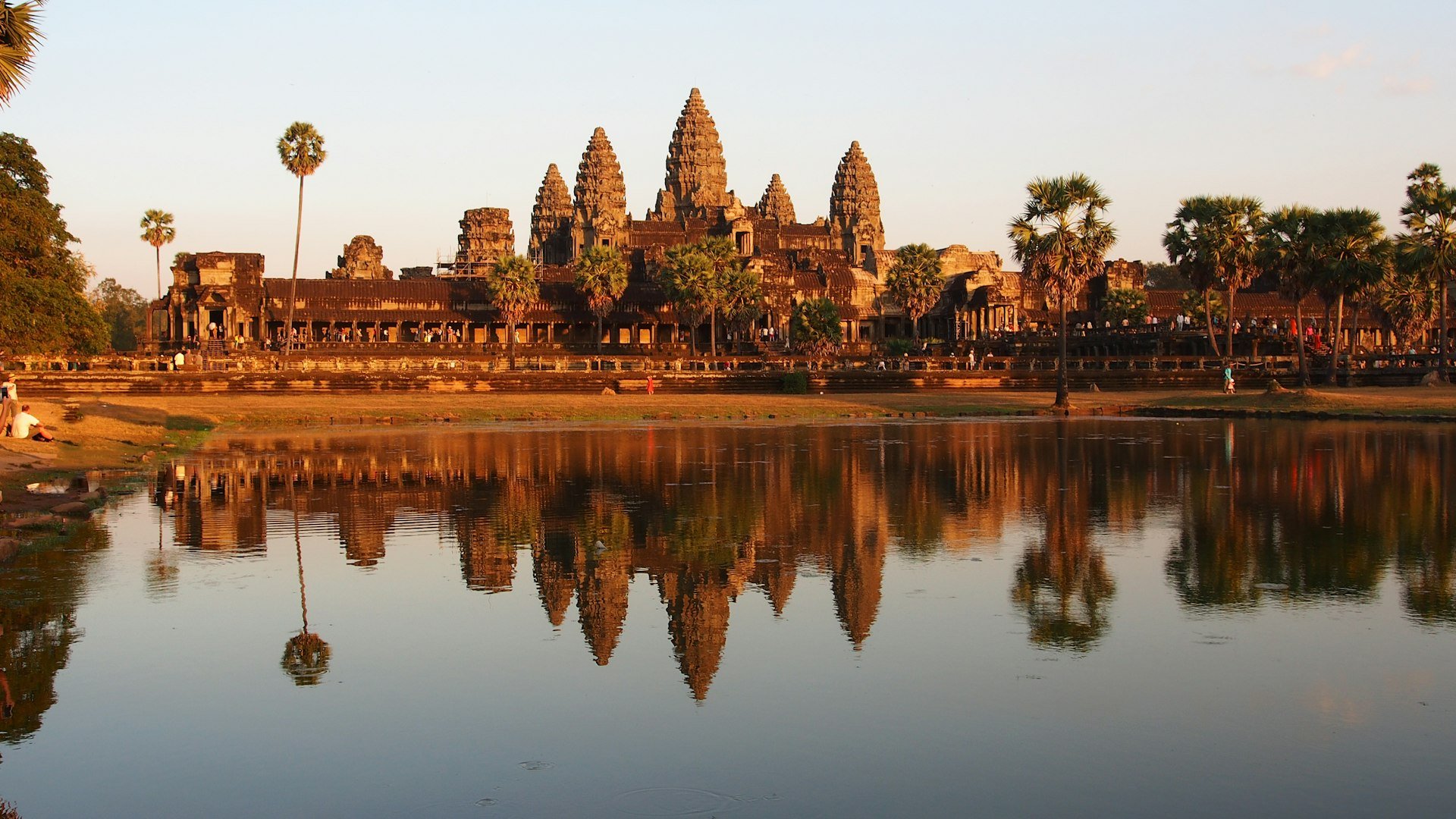
It is a cliché for a reason. Arriving before dawn and watching the five towers of Angkor Wat appear against the sky, reflected in the pond in front of the west gate, is unforgettable. Hundreds of people do it every morning, so arrive early to get a place near the north pond, and bring a torch for the walk in.
After sunrise, most people leave for breakfast. Stay instead: the temple is quieter for the next hour, and the light on the bas-reliefs of the galleries is beautiful. The Churning of the Ocean of Milk on the east gallery is one of the masterpieces of Khmer art. The upper level, the Bakan, has a dress code: shoulders and knees must be covered, and it closes on some Buddhist holy days.
02Explore Angkor Thom and the Bayon
Angkor Thom was the last great capital of the Khmer empire, a walled city of about 9 km² entered through monumental gates topped with faces. At its centre stands the Bayon, with more than 200 serene stone faces looking out in every direction. Go mid-morning or late afternoon for softer light. Nearby, walk along the Terrace of the Elephants and the Terrace of the Leper King, and climb the Baphuon, a huge temple-mountain restored stone by stone over decades.
03Get lost in Ta Prohm
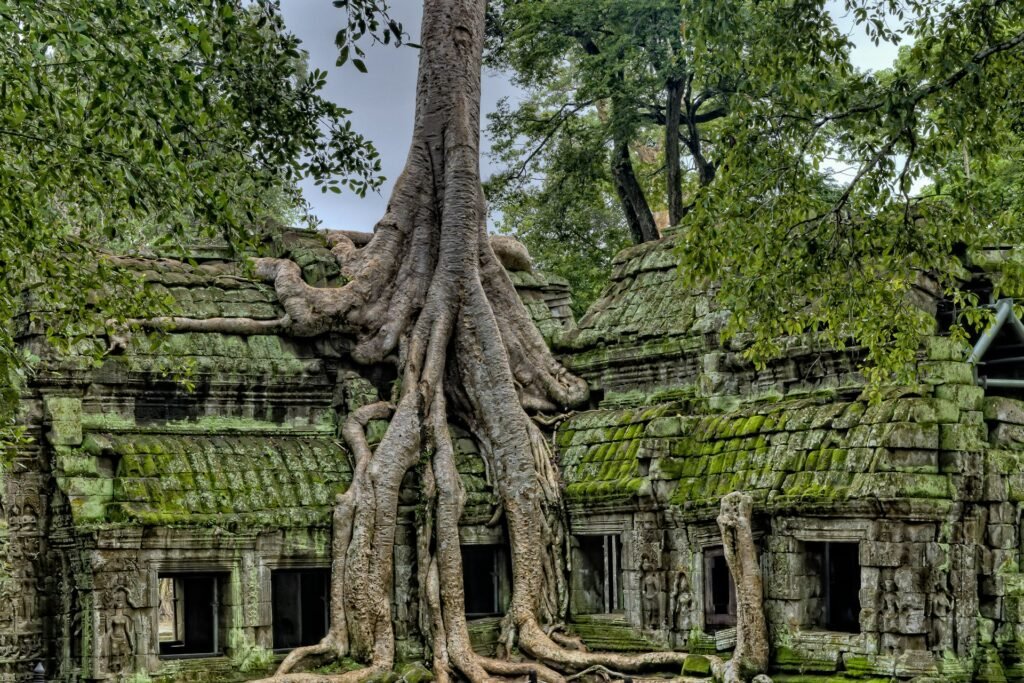
Ta Prohm has been left largely as explorers found it, with giant silk-cotton and strangler fig trees growing out of its walls and galleries. It is the temple most visitors remember. Come early or late to avoid tour groups, and follow the wooden walkways: some areas are fragile and closed for restoration.
04Take the “small” and “grand” circuits
The temples are usually visited along two classic loops. The small circuit (about 17 km) covers Angkor Wat, Angkor Thom, Ta Prohm, Ta Keo and Banteay Kdei. The grand circuit (about 26 km) adds Preah Khan, Neak Pean, Ta Som, East Mebon and Pre Rup, which is a popular place to watch sunset. With a three-day pass you can do one loop a day and add a further trip on the third.
How to get around the temples
- Tuk-tuk: the classic choice, with a driver for the whole day at a fixed price agreed in advance.
- Private car with air-conditioning: worth it from March to May, when temperatures are very high.
- Bicycle or e-bike: pleasant on the small circuit if you start early, though distances add up.
- Guided tour: a licensed guide brings the carvings and history to life. Many speak English, French and other languages.
05Visit Banteay Srei and Kbal Spean
About 35 km north-east of Siem Reap, Banteay Srei is small but extraordinary, built of pink sandstone carved so finely that it looks like lacework. It is included in the Angkor pass. Combine it with Kbal Spean, the “River of a Thousand Lingas”, where carvings line a riverbed in the forest after a walk of about 40 minutes uphill. The Cambodia Landmine Museum, founded by a former child soldier who became a deminer, is on the same road and is a moving stop.
06Go further: Beng Mealea, Koh Ker and Phnom Kulen
For a quieter experience, head out of the main park:
- Beng Mealea, about 70 km east, is a vast temple swallowed by the jungle, with collapsed galleries and walkways through the ruins. It feels like Ta Prohm without the crowds.
- Koh Ker, a former Khmer capital further north, became a UNESCO World Heritage Site in 2023. Its seven-tiered pyramid, Prasat Thom, is unlike anything at Angkor.
- Phnom Kulen, a sacred mountain north-east of Siem Reap, has a waterfall, a giant reclining Buddha and carvings in a riverbed. It is popular with Cambodian families at weekends.
These sites have their own entrance fees, which are not included in the Angkor pass. Plan a full day for each, or combine Beng Mealea with Koh Ker on a long day trip.
07Discover the Tonle Sap floating villages
The Tonle Sap is Southeast Asia’s largest lake, and its size changes dramatically between seasons. Around it, villages of houses on tall stilts and floating homes follow the water. Kampong Phluk and Kompong Khleang are the most interesting to visit, with stilt houses, flooded forest and daily life on the water. The best time is from August to December, when water levels are high.
Choose responsibly: some floating-village trips, especially at Chong Kneas close to town, have been criticised for overpriced boat tickets and pressure to donate. Book through a trusted operator, agree the price beforehand and avoid tours that include orphanage visits.
08See Phare, the Cambodian Circus
Phare is not a traditional circus but a show mixing acrobatics, theatre, music and dance, performed by artists trained at a social enterprise school in Battambang. The stories draw on Cambodian history and modern life, and the energy is extraordinary. Tickets cost roughly US$18 to 35 depending on seats, and the big top is on the Ring Road south of Sok San Road. Book a day or two ahead in high season.
09Learn about Khmer culture and history
- Angkor National Museum: a good introduction before your first temple day, with galleries on the Khmer empire and its religions.
- Artisans Angkor: a workshop training young Cambodians in stone carving, wood carving, lacquer and silk. Visits are free.
- APOPO Visitor Centre: meet the “hero rats” trained to detect landmines and learn about Cambodia’s demining work.
- Apsara dance: classical Khmer dance can be seen at several restaurants and cultural shows in the evening.
10Take a Khmer cooking class
Cambodian food is less known than Thai or Vietnamese cooking but is delicious. Fish amok, steamed in banana leaf with coconut and kroeung spice paste, lok lak beef and green mango salads are classics. Many cooking schools start with a market visit to buy ingredients, then cook three or four dishes. It is a perfect activity for a hot afternoon after a temple morning.
11Cycle the countryside
Outside town, quiet roads cross rice fields, villages and pagodas. Half-day bike tours with a guide visit rice farmers, rice-wine makers and markets, and give a feel of rural Cambodia beyond the temples. In the dry season the light in the late afternoon is beautiful. Quad-bike and horse-riding tours are also available.
12Enjoy Pub Street, the night markets and the river
In the evening, Pub Street and the lanes around the Old Market fill with bars, restaurants and live music. It is lively and a bit touristy, but fun for a night. For something calmer, walk along the Siem Reap river, try the restaurants on Wat Bo Road on the east bank, and browse the night markets for scarves, carvings, pepper from Kampot and handicrafts. Look for shops selling fair-trade products made locally.
13Relax: spas, pools and massage
After long temple days, a Khmer massage or a pool afternoon is part of the routine. Siem Reap has good-value spas and many boutique hotels with gardens and pools. Our guide to the best boutique hotels in Siem Reap lists our favourites, and where to stay in Siem Reap compares the areas.
14Choose the best sunrise and sunset spots
Angkor Wat at sunrise is the classic, but it is not the only option, and the light changes the mood of every temple.
- Angkor Wat at sunrise: the reflection pools in front of the west entrance, with the sun rising behind the towers. Best from November to March.
- Srah Srang at sunrise: the royal bathing pond opposite Banteay Kdei, calmer and very photogenic, with the sun coming up over the water.
- Pre Rup at sunset: a temple-mountain of red brick and laterite with views over rice fields; popular but less crowded than Phnom Bakheng.
- Phnom Bakheng at sunset: the hilltop temple with distant views of Angkor Wat. Visitor numbers on the top are limited, so arrive early.
- Angkor Wat in the late afternoon: the west-facing facade glows in the last light, and the crowds have often moved on to the sunset spots.
15Eat well, and eat for a good cause
Siem Reap has a lively food scene, from street stalls selling noodle soup and grilled skewers to fine dining built around Khmer flavours. Several restaurants are run as training schools for young people from disadvantaged backgrounds, so your meal helps them into jobs in hospitality. Haven and Marum are two well-known examples, and Cuisine Wat Damnak is a respected restaurant serving modern Khmer tasting menus. For a casual evening, try the food stalls near the Old Market, or a riverside café for iced coffee with condensed milk.
Ask at your hotel for current favourites and opening hours, which change often in a town where many businesses close in the hottest months.
Siem Reap with children
Children love the jungle temples, especially Ta Prohm and Beng Mealea, which feel like an adventure film. Keep temple days short, start early, and plan a pool break in the middle of the day. Phare’s circus, the APOPO rats and a bike ride through the villages are big hits with kids. Remember that children under 12 enter the Angkor temples for free, but they need their passport at the ticket office.
Sample itineraries
Two days
- Day 1: sunrise at Angkor Wat, Angkor Thom and the Bayon, Ta Prohm in the afternoon, Phare circus in the evening.
- Day 2: Banteay Srei and Kbal Spean in the morning, Preah Khan in the afternoon, sunset at Pre Rup, dinner by the river.
Three days
Add a day on the Tonle Sap at Kampong Phluk with a cooking class in the afternoon, or a countryside bike tour. Buy the three-day pass rather than two one-day passes.
Four days
Add a long day trip to Beng Mealea and Koh Ker, or Phnom Kulen. You can also visit the museum and Artisans Angkor at a slower pace.
When to go
| Season | Months | What to expect |
|---|---|---|
| Cool and dry | November to February | Best weather, high season, busiest temples |
| Hot | March to May | Very hot, quieter, start very early |
| Wet | June to October | Afternoon rain, green landscapes, fewer visitors, high lake levels from August |
Getting to Siem Reap in 2026
With the Thai land border closed, most visitors fly. There are direct flights from Bangkok (about 1 hour 15 minutes), Singapore, Kuala Lumpur, Ho Chi Minh City and other hubs. From Phnom Penh, buses and private cars take about five to six hours, and there are short domestic flights. Remember that the new airport is about 50 km from town: book a hotel transfer or the shuttle bus in advance, and allow plenty of time when you leave.
Visitors from many countries can get a Cambodian e-visa online before travelling or a visa on arrival; check the official government sites and fill in the online arrival card within seven days before you land. If you are combining Cambodia with Thailand, see our guide to the best things to do in Bangkok.
Practical tips
- Dress respectfully in the temples: shoulders and knees covered.
- Carry US dollars in small notes. Dollars are widely used for tourist prices, with change often given in riel.
- Drink plenty of water and use sun protection. Temple days are long and hot.
- Your pass has your photo on it. Buy it only at the official Angkor ticket office or online on the official site, and keep it with you: it is checked at each temple.
- Do not buy from children selling souvenirs during school hours, and avoid orphanage tourism.
- Respect the monks and the sacred spaces; ask before taking photos of people.
Frequently asked questions
How many days do you need in Siem Reap?
Three days is ideal for the main temples, a floating village and an evening show. Two days is enough for the highlights; four days lets you add the remote temples.
How much is the Angkor pass in 2026?
US$37 for one day, US$62 for three days and US$72 for seven days. Children under 12 are free.
Can I travel overland from Bangkok to Siem Reap?
As of October 2026 the main land border crossings between Thailand and Cambodia were closed. The easiest way is a direct flight from Bangkok.
Is Siem Reap safe in 2026?
Siem Reap and the Angkor temples were operating normally in 2026. Check your government’s travel advice before you go, especially about areas near the Thai border.
How far is the airport from Siem Reap?
About 50 km, roughly an hour by road.
What is the best time to visit Siem Reap?
November to February for the coolest, driest weather. August to December for the floating villages.
Prices, border information and entry rules were checked in November 2026 and may change. Confirm the latest details before you travel.
Newsletter
New stays and deals, once a month
Our latest hotel guides, new destinations and selected partner deals in Southeast Asia. No spam, unsubscribe anytime.