
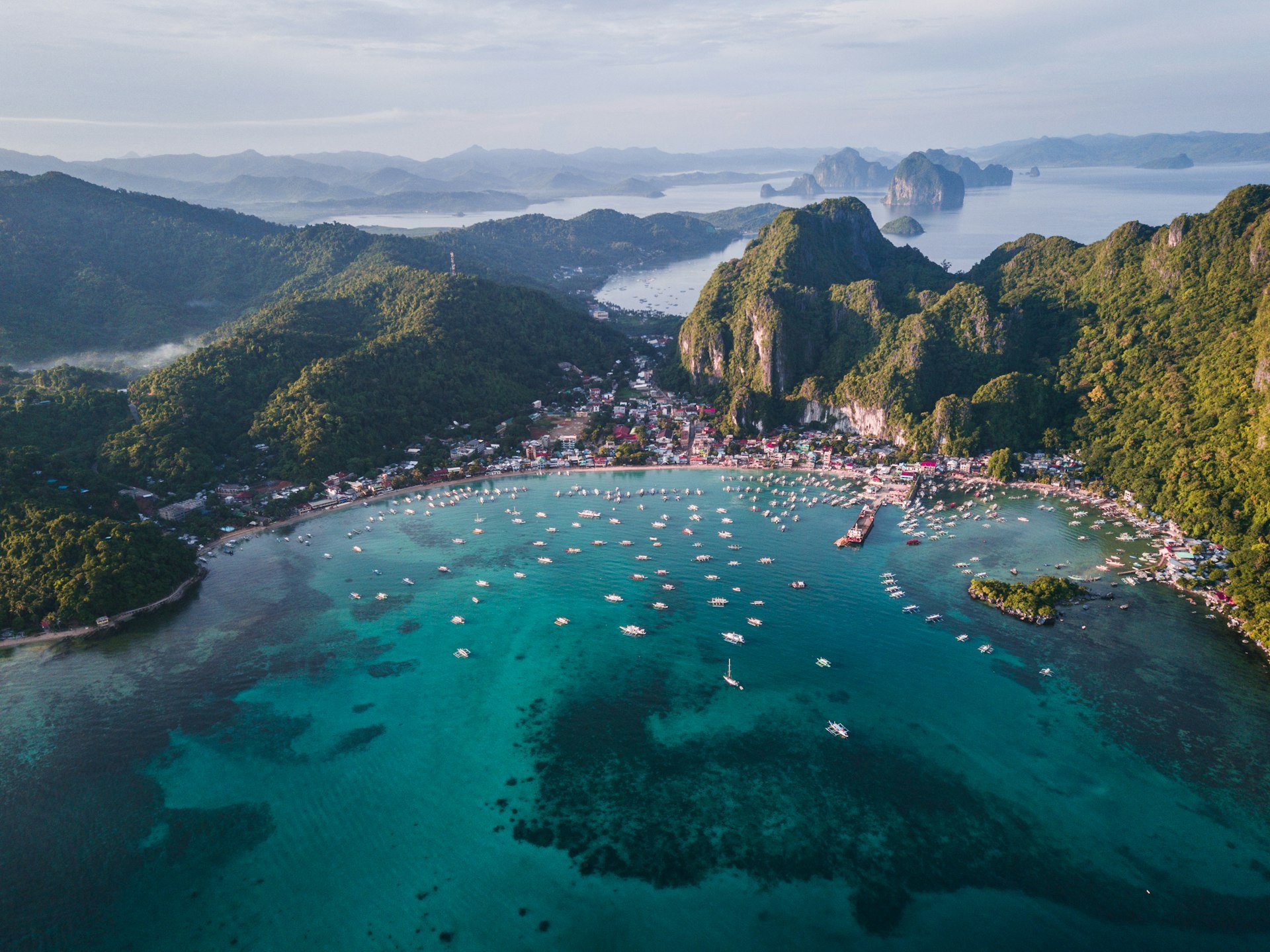
El Nido, on the northern tip of Palawan in the Philippines, is one of the most beautiful places in Southeast Asia: a bay of limestone islands, hidden lagoons, white beaches and clear water, explored by outrigger boat. It is also a small, busy town with real limits, from capped visitor numbers in the lagoons to fragile power and water supplies, and in 2026 the way most travellers get there changed.
This guide lists the best things to do in El Nido in 2026, explains the four island-hopping tours and what they really cost once fees are added, and covers how to get there now that Manila flights have moved to Clark, the best season to go and the rules to know. It ends with sample plans for three and five days.
In this guide23 sections
- —Before you go: what to know in 2026
- 01Island hopping: Tours A, B, C and D
- 02Kayak the Big and Small Lagoons
- 03Snorkel the reefs of Bacuit Bay
- 04Spend a day at Nacpan Beach
- 05Watch the sunset at Las Cabanas
- 06Walk the El Nido canopy walk
- 07Relax at Marimegmeg and Corong Corong
- 08Visit the waterfalls and the countryside
- 09Go diving
- 10Take a cooking class or a food tour
- 11Continue to Coron
- —What to pack for El Nido
- —Getting to El Nido in 2026
- —When to go
- —Budget or comfort?
- —El Nido with children
- —Travelling responsibly
- —Money and connectivity
- —Sample itineraries
- —Where to stay
- —Practical tips
- —Frequently asked questions
Before you go: what to know in 2026
- Flights have moved. Direct turboprop flights from Manila’s main airport ended on 29 March 2026. Flights to El Nido’s Lio airport now leave from Clark, north of Manila, as well as from Cebu, Caticlan (Boracay), Bohol and Coron.
- Eco-tourism fee. Every visitor pays an Eco-Tourism Development Fee of ₱400 per person, valid for ten days, usually collected by your tour operator or hotel.
- Lagoon fees. The Big Lagoon (Tour A) and Small Lagoon (Tour D) each charge ₱200 per person, with visitor caps per time slot.
- Plastic. Single-use plastic is banned in El Nido, and prohibited items are taken off you before boarding island boats.
- Philippine arrival card. Foreign visitors fill in the free eTravel form online before arriving in the Philippines.
01Island hopping: Tours A, B, C and D
Island hopping is the reason to come to El Nido. Licensed operators run four standard tours around Bacuit Bay, named A to D, on shared outrigger boats with around 24 passengers. Prices are similar everywhere, usually include lunch, snorkel gear and a guide, and run from about 9 am to 4 or 5 pm.
| Tour | Main stops | Typical shared price (2026) | Extra fees |
|---|---|---|---|
| A | Big Lagoon, Secret Lagoon, Shimizu Island, Seven Commandos Beach | ₱1,200 to 1,500 | Big Lagoon ₱200, kayak ₱300 to 400 per kayak |
| B | Snake Island sandbar, Cudugnon Cave, Cathedral Cave, Entalula, Pinagbuyutan | ₱1,300 to 1,600 | None for most stops |
| C | Helicopter Island, Hidden Beach, Secret Beach, Matinloc Shrine, Talisay or Star Beach | ₱1,400 to 1,800 | Matinloc Shrine ₱200 (optional) |
| D | Small Lagoon, Cadlao Lagoon, Pasandigan, Paradise Beach, Bukal | ₱1,200 to 1,500 | Small Lagoon ₱200, kayak ₱300 to 400 per kayak |
The eco-tourism fee and the lagoon fees are not included in most shared tour prices, so bring cash. A tip of ₱100 to 200 for the crew is customary.
Which tour should you choose?
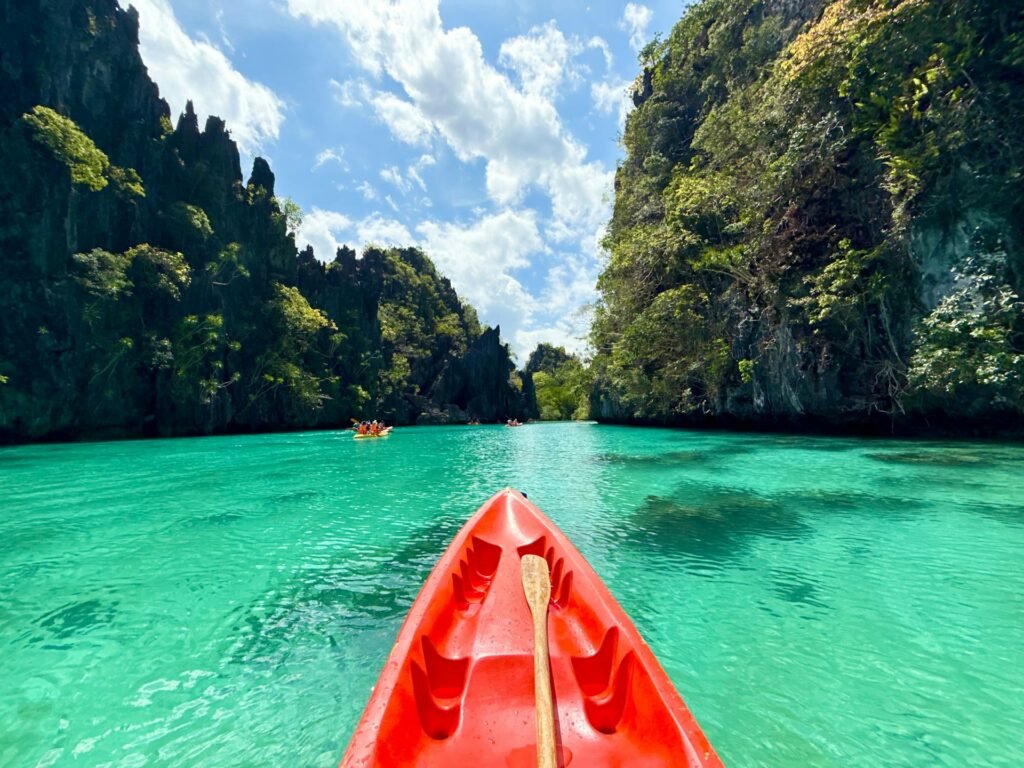
- Tour A is the classic first choice, with the Big Lagoon, where you paddle or swim through a narrow entrance into a basin of turquoise water ringed by cliffs.
- Tour C has the most dramatic scenery, including Hidden Beach and Secret Beach, reached by swimming through gaps in the rock. It goes into more open water and is the first to be cancelled in rough weather.
- Tour B is quieter, with caves and the long sandbar at Snake Island.
- Tour D stays close to town and is relaxed, with the Small Lagoon and calm beaches.
If you have two days, do A and C. If you have three, add D. Combining two tours in one day is only possible on a private charter.
Private boats
A private outrigger costs roughly ₱13,000 to 14,000 for two people in 2026, plus a supplement per extra person, and lets you leave earlier and change the order of stops to avoid the crowds. Speedboats cost about double. Private trips are worth it for families, small groups and photographers.
02Kayak the Big and Small Lagoons
The two lagoons are El Nido’s highlights. Motorised boats cannot enter; boats anchor at the mouth and visitors swim or kayak in. Visitor numbers are capped per time slot, and on a shared tour you cannot visit both lagoons on the same day. A two-seater kayak costs ₱300 to 400 per kayak. Life vests are compulsory, including when swimming into the Big Lagoon.
03Snorkel the reefs of Bacuit Bay
Every tour includes snorkelling stops on reefs with corals, turtles and reef fish. Bring your own mask if you can, as rental gear is basic, and use reef-safe sunscreen. Do not stand on or touch the coral.
04Spend a day at Nacpan Beach
Nacpan Beach, about 17 km north of town or roughly 45 minutes by road, is a 4 km curve of golden sand with coconut palms and a few beach bars. It is free to visit. Go by tricycle (₱700 to 1,500 for a negotiated round trip), on a shared shuttle or by scooter if you are an experienced rider. The road has improved but is still rough in places, especially in the wet season. Next to it, the twin beach of Calitang is often almost empty.
05Watch the sunset at Las Cabanas
Las Cabanas Beach, about 20 minutes south of town, faces west and is the best place for sunset, with bars on the sand. A zipline runs from the headland over the water to a small island; in 2026 a one-way seated ride cost ₱500 and a “superman” ride ₱700. The beach itself is free.
06Walk the El Nido canopy walk
The cliffs behind El Nido town can be explored safely on the El Nido Via Ferrata, a guided canopy walk with steel steps, a suspension bridge of about 75 m and views over the bay from around 150 m. It costs ₱400 to 450 and takes about an hour and a half. The old scramble to the summit of Taraw Cliff is restricted and discouraged after fatal accidents; do not do it.
07Relax at Marimegmeg and Corong Corong
South of town, Corong Corong has calm water, bars and sunset views, and Marimegmeg Beach is a laid-back spot to spend an afternoon. These are good alternatives to the town beach, where swimming was restricted in 2026 because of runoff from a storm drain. In El Nido, swim on the tours or at the outer beaches, not in front of town.
08Visit the waterfalls and the countryside
Inland, small waterfalls such as Nagkalit-kalit are reached by an easy walk through rice fields and forest, best in the wet season when they have water. A scooter or tricycle trip north also passes villages, cashew trees and viewpoints over the coast.
09Go diving
Diving in Bacuit Bay suits beginners and intermediate divers, with calm sites, coral gardens, turtles and caves. Several dive centres in town run courses and fun dives. Visibility and conditions are best in the dry season.
10Take a cooking class or a food tour
El Nido’s food scene has grown, with Filipino, Italian and seafood restaurants. A cooking class or food tour is a good way to try Filipino dishes such as kinilaw (fish cured in vinegar and citrus), adobo and grilled seafood, and to learn about local ingredients.
11Continue to Coron
Many travellers combine El Nido with Coron, to the north, known for wreck diving, lakes and limestone islands. Fast ferries take about three and a half hours and cost around ₱2,750 to 3,250 in 2026, with fewer crossings from June to September and frequent weather cancellations. A short flight is also possible. See our guide to where to stay in Coron.
What to pack for El Nido
- A dry bag for phones and cameras on the boats.
- Water shoes or sandals with grip for rocky beaches and cave entrances.
- Your own snorkel mask that fits well, and a rash guard for sun protection.
- Reef-safe sunscreen, a hat and sunglasses.
- A refillable water bottle, as single-use plastic is banned on the tours.
- Cash in small notes for fees, kayaks, tips and tricycles.
- A light rain jacket in the wet season.
- Motion-sickness tablets if you are prone to seasickness, especially for Tour C.
Pack light if you are flying in on a turboprop: weight limits are strict and excess baggage is expensive.
Getting to El Nido in 2026
By air
Lio Airport, about 15 to 20 minutes from El Nido town, is served by small turboprop aircraft from Clark (about 1 hour 35 minutes, several flights a day), Cebu, Caticlan, Bohol and Coron. In 2026, one-way fares from Clark ranged from about ₱3,500 to 8,000. Baggage limits are strict on these small planes: typically 15 kg checked and 7 kg in the cabin. A free shuttle runs from Manila’s NAIA Terminal 3 to Clark for passengers with a confirmed Clark departure within 24 hours.
By road from Puerto Princesa
Most international travellers fly to Puerto Princesa, the main airport of Palawan, then travel about 175 km by road to El Nido. Shared minivans take five to five and a half hours (₱720 to 790 in 2026), buses about six hours (₱651 to 998), and private vans five to six hours. Everything arrives at the transport terminal in Corong Corong, a short tricycle ride from town.
By sea from Coron
Fast ferries connect Coron and El Nido in about three and a half hours, mostly from October to May.
When to go
| Season | Months | What to expect |
|---|---|---|
| Dry and calm | December to May, best in February and March | Calm seas, most tours run, high season |
| Hot | April and May | Very hot, still calm, good for diving |
| Wet | June to November, hardest July to October | Monsoon rain, typhoon risk, frequent tour cancellations, lowest prices |
In the wet months, tours are cancelled roughly one day in five to one in three, and gale warnings ground all boats. Leave flexible days in your plan, and buy travel insurance that covers weather delays.
Budget or comfort?
El Nido suits many budgets. Backpackers stay in town in hostels and guesthouses, join shared tours and eat at local carinderias. Mid-range travellers often choose a hotel in Corong Corong or near Marimegmeg, with sunset views and a pool. At the top end, private island resorts in the bay offer a very different experience, with their own boats, lagoons and dive centres, at a high price. Whatever your budget, the island tours are the main cost, so plan for two to four of them, plus fees.
El Nido with children
Children love the lagoons and the beaches, but long days on a crowded boat can be tiring. Choose Tour A or D, which stay inside the bay and have calmer water, or charter a private boat to set your own pace and leave earlier. Bring children’s life vests if you can, as boats may only have adult sizes, plus hats, rash guards and plenty of water. The canopy walk is not suitable for small children.
Travelling responsibly
El Nido is a protected area, and its popularity puts pressure on the reefs, the lagoons and the town’s water and waste systems. Follow the plastic ban, use reef-safe sunscreen, do not stand on corals or feed fish, and respect the lagoon caps. Choose accredited tour operators and accommodation with proper wastewater treatment, and keep your showers short: water and power are limited in the dry season.
Money and connectivity
ATMs in El Nido town can run out of cash at busy times, and some charge high fees, so bring enough pesos from Manila, Clark or Puerto Princesa. Many hotels and tour agencies accept cards, but fees, tricycles and small restaurants are cash only. Mobile data works in town and on parts of the coast, but not everywhere in the bay. Power cuts happen, especially in the dry season.
Sample itineraries
Three days
- Day 1: arrive, sunset at Las Cabanas.
- Day 2: Tour A, with the Big Lagoon.
- Day 3: Tour C in the morning if the sea is calm, or Nacpan Beach.
Five days
Add Tour D, a day at Nacpan and Calitang, the canopy walk and a dive or cooking class. Keep one day free in case a tour is cancelled.
Where to stay
El Nido town is lively and walkable but crowded and noisy. Corong Corong and Marimegmeg are calmer and good for sunsets, while Nacpan and the north are the quietest. Our guide to where to stay in El Nido compares the areas. Because Palawan’s power grid is fragile, check that your hotel has a generator and reliable water.
Practical tips
- Carry cash. ATMs in town can run out, and many fees are cash only.
- Pack light. Small planes have strict baggage limits.
- Bring a dry bag, reef-safe sunscreen and your own snorkel mask.
- Leave plastic behind. Single-use plastic is banned on tours.
- Drones are restricted near Lio airport and in the protected area; ask before flying.
- Respect the caps in the lagoons and follow your guide.
For other island trips in the region, see our guides to getting from Bali to the Gili Islands and Lombok and the best things to do in Nusa Penida.
Frequently asked questions
How much does island hopping in El Nido cost in 2026?
Shared tours cost about ₱1,200 to 1,800, plus the ₱400 eco-tourism fee, ₱200 for each lagoon and ₱300 to 400 per kayak.
Which El Nido tour is the best?
Tour A for the Big Lagoon and Tour C for the most dramatic beaches. With two days, do both.
How do I get to El Nido from Manila?
Since 29 March 2026, flights to El Nido leave from Clark rather than Manila’s main airport. Alternatively, fly to Puerto Princesa and travel about five to six hours by road.
When is the best time to visit El Nido?
February and March for the calmest sea and least rain. July to October is the wettest period, with frequent tour cancellations.
Can you visit the Big and Small Lagoons on the same day?
Not on a shared tour. You need to book Tour A and Tour D on different days, or charter a private boat.
How many days do you need in El Nido?
Three days is the minimum for two tours; four or five days leaves time for Nacpan, a third tour and bad-weather backup.
Prices, routes and rules were checked in November 2026 and change often. Confirm the latest details before you travel.
Newsletter
New stays and deals, once a month
Our latest hotel guides, new destinations and selected partner deals in Southeast Asia. No spam, unsubscribe anytime.