Nusa Penida is the wild sister of Bali: a rugged limestone island, 30 to 45 minutes by fast boat from Sanur, with towering sea cliffs, manta rays, turquoise coves and some of the most photographed viewpoints in Indonesia. It is also an island that catches many visitors out, with steep roads, long drives between sights, crowds at sunrise spots and, since 2026, a new system of entrance fees.
This guide lists the best things to do in Nusa Penida in 2026, with honest advice on how much you can see in a day, how the new fees work, how to get around safely and when to stay overnight instead. We live next door on Lombok and know these islands well.
In this guide19 sections
- —Before you go: what changed in 2026
- 01Look down on Kelingking Beach
- 02Swim (carefully) at Angel’s Billabong
- 03See the arch at Broken Beach
- 04Snorkel with manta rays
- 05Dive with sunfish
- 06Relax at Crystal Bay
- 07Watch the sunrise at Diamond Beach and Atuh
- 08Visit Goa Giri Putri, the cave temple
- 09See Pura Dalem Ped
- 10Hike to Peguyangan Waterfall
- 11Walk the Teletubbies Hills
- 12Explore Nusa Lembongan and Nusa Ceningan
- —How to plan your days
- —Where to stay
- —When to go
- —Safety tips
- —Practical information
- —Frequently asked questions
Before you go: what changed in 2026
- New fees. Under a 2026 Klungkung Regency regulation, foreign visitors pay an island entry fee (reported at IDR 25,000 for adults and IDR 15,000 for children, with infants free) plus a ticket of about IDR 25,000 at each of the main sites: Kelingking Beach, Angel’s Billabong, Broken Beach, Crystal Bay, Teletubbies Hill and the Molenteng and Thousand Islands viewpoints.
- One Gate One Destination. The system, rolled out in August and September 2026, moves payment to the port and to ticket counters at each site, with QR codes checked at the entrance. The first weeks brought long queues and traffic jams at Kelingking and Crystal Bay.
- The island fee also covers Nusa Lembongan and Nusa Ceningan.
- It is separate from Bali’s IDR 150,000 tourist levy, which every foreign visitor to the province pays once per trip.
In practice, a classic west coast day with four stops costs a foreign visitor around IDR 125,000 in local fees. Many tour operators now include them; check before you book.
01Look down on Kelingking Beach
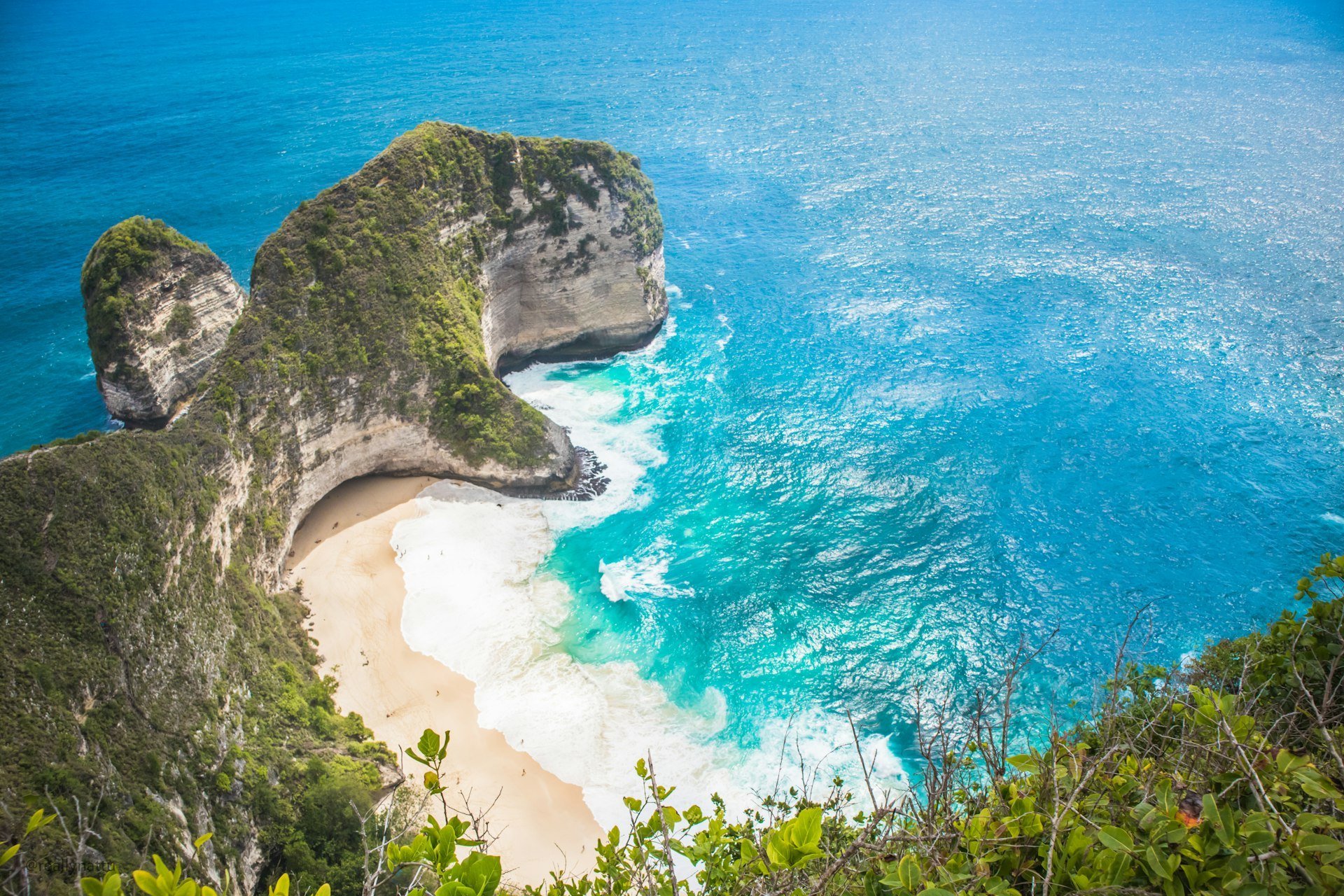
Kelingking is the image of Nusa Penida: a headland shaped like a T-Rex, plunging into a turquoise bay with a perfect crescent of white sand below. The viewpoint at the top is a short walk from the car park and is worth the trip on its own. Go early in the morning or late in the afternoon, when the light is softer and the tour groups have thinned out.
Should you hike down?
A steep path with bamboo railings leads down the spine of the cliff to the beach. It takes most fit people 30 to 60 minutes down and longer back up, in strong sun. Wear proper shoes, carry water and do not attempt it after rain, when the rock and soil are slippery. The sea at the bottom has powerful waves and currents; swimming is dangerous, and people have drowned here. If you go down, stay in the shallows or simply enjoy the view.
02Swim (carefully) at Angel’s Billabong
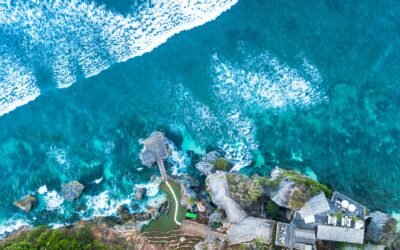
On the west coast, Angel’s Billabong is a natural infinity pool carved into the rock, with clear water opening onto the ocean. It is beautiful at low tide on a calm day, when the pool is still. It is also one of the most dangerous spots on the island: when the swell is up, waves crash over the edge without warning and have swept visitors out to sea. Look at the sea for several minutes before going near the water, and stay out if waves are breaking into the pool.
03See the arch at Broken Beach
A few minutes’ walk from Angel’s Billabong, Broken Beach (Pasih Uug) is a circular cove where the sea flows in through a giant natural arch. A path runs around the cliff top, with views down into the bay and out to the open ocean, where manta rays are sometimes seen from above. It is an easy, safe walk and one of the most impressive sights on the island.
04Snorkel with manta rays
Nusa Penida is one of the best places in the world to see reef manta rays, which gather at cleaning stations off the south-west coast, especially at Manta Point and Manta Bay. Snorkelling trips from Toyapakeh, Crystal Bay or Nusa Lembongan usually combine a manta stop with Crystal Bay, Gamat Bay and Wall Point, where the reef is rich in coral and fish. The water can be rough at Manta Point; choose an operator with life jackets and a proper boat, and do not touch or chase the rays.
05Dive with sunfish
Divers come to Nusa Penida for the mola mola, or oceanic sunfish, which rise from the deep to cleaning stations from about July to October when the water is cold. Dives at Crystal Bay and Blue Corner are known for strong, cold currents and down-currents, so they are for experienced divers with a reputable centre. Beginners can learn on the calmer sites of Nusa Lembongan.

06Relax at Crystal Bay
Crystal Bay on the west coast is one of the few easy beaches on Nusa Penida, with soft sand, warung cafés and a reef close to shore. It is a good place to end a west coast day, with a swim and a sunset over the water. On busy days snorkelling boats crowd the bay; the water is clearest in the morning.
07Watch the sunrise at Diamond Beach and Atuh
On the east coast, Diamond Beach is reached by steps cut into the cliff, leading to a white beach under limestone pinnacles. Next door, Atuh Beach sits in a sheltered bay with a rock arch offshore. Both face east, so come for sunrise, then swim when the sea is calm. Above them, the Thousand Islands viewpoint (Pulau Seribu) and the Rumah Pohon tree house look over a coast of jagged islets and are among the most dramatic views in Bali.
08Visit Goa Giri Putri, the cave temple
Goa Giri Putri is a Hindu temple inside a huge limestone cave on the north-east coast. You squeeze through a narrow opening, then the cave opens into a long hall with shrines and priests. Wear a sarong and sash (they can be borrowed at the entrance) and leave a donation. It is a peaceful, spiritual contrast to the busy viewpoints.
09See Pura Dalem Ped
Pura Dalem Ped, near Toyapakeh on the north coast, is one of the most important temples in Bali, linked to the protective deity Ratu Gede Mecaling. Balinese pilgrims come from all over the island during ceremonies. Visitors are welcome in modest clothing with a sarong, outside prayer times.
10Hike to Peguyangan Waterfall
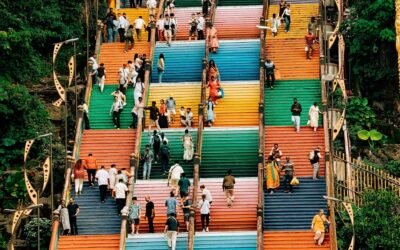
On the south-west coast, a long blue staircase clings to the cliff and leads down to a freshwater spring and a small temple by the sea. The climb is spectacular but steep and exposed, with hundreds of steps each way. It is only for people comfortable with heights, and best done in the morning before the heat.
11Walk the Teletubbies Hills
In the centre-east of the island, the round, green hills known as the Teletubbies Hills look like nothing else in Bali, especially in the wet season when the grass is fresh. They are quieter than the coast and a good stop on an east coast day.
12Explore Nusa Lembongan and Nusa Ceningan
A short boat ride away, Nusa Lembongan is smaller and easier to get around, with beaches, beach clubs and good snorkelling. A yellow suspension bridge links it to Nusa Ceningan, where you can see the Blue Lagoon and the sea crashing into Devil’s Tear, a rocky inlet where waves explode into spray. Stay well back from the edge: people have been swept away here too. Lembongan is a good base for families and for anyone who wants a slower pace; see our picks of the best boutique hotels in Nusa Lembongan.
How to plan your days
Can you do Nusa Penida as a day trip?
Yes, but you will see only one side of the island and spend a lot of the day in a car. Distances are short on the map but roads are narrow, steep and in places still rough, and the main sites are busy. Most day trips cover the west coast: Kelingking, Broken Beach, Angel’s Billabong and Crystal Bay. The east coast (Diamond Beach, Atuh, Thousand Islands) is a separate day.
| Option | What you see | Best for |
|---|---|---|
| Day trip, west coast | Kelingking, Broken Beach, Angel’s Billabong, Crystal Bay | Travellers short on time |
| Day trip, snorkelling | Manta Point, Crystal Bay, Gamat Bay | People who prefer the sea to the roads |
| Two days | West coast one day, east coast and sunrise at Diamond Beach the next | Most visitors |
| Three days or more | Both coasts, mantas, Peguyangan, Lembongan | Photographers, divers, slow travellers |
Getting there
Fast boats leave from Sanur for Nusa Penida several times a day, and the crossing takes roughly 30 to 45 minutes. In 2026, one-way fares were commonly quoted around IDR 150,000 to 300,000, depending on the company and season. Boats arrive at Toyapakeh, Banjar Nyuh or Sampalan. Some services also run from Serangan and Padang Bai, and there are boats onward to the Gili Islands and Lombok; see our guide to fast boats from Bali to the Gili Islands and Lombok.
Getting around
- Car with a driver is the safest and most popular option. Drivers know the roads, the parking rules at each site and the best order to visit.
- Scooter is cheaper, but only for confident riders with a valid licence. Roads are steep, potholed in places and busy with tour cars, and accidents are common.
- Organised tours include the boat, a driver, lunch and often the fees, which saves time with the new ticket counters.
The authorities have been upgrading the main roads, including the Sampalan–Toyapakeh road, but some approach roads to the viewpoints are still narrow and rough. Allow more time than the map suggests.
A sample two-day plan
- Day 1, west coast: early boat from Sanur, Kelingking viewpoint before the crowds, Broken Beach and Angel’s Billabong, lunch at Crystal Bay, a swim and sunset there.
- Day 2, east coast: sunrise at Diamond Beach, a swim at Atuh, the Thousand Islands viewpoint and the tree house, then Goa Giri Putri on the way back to the north coast and an afternoon boat to Bali.
If you have a third day, spend it on the water: a snorkelling trip to Manta Point, Crystal Bay and Gamat Bay, or a day on Nusa Lembongan.
Nusa Penida with children
Nusa Penida can be tiring for young children: long drives on bumpy roads, steep steps and little shade. Families usually enjoy it more from a base on Nusa Lembongan, with a single day trip to the west coast viewpoints by car, and snorkelling in calm water. Keep children well away from cliff edges, which have few barriers, and skip the Kelingking and Peguyangan descents.
Travelling responsibly
Nusa Penida’s popularity has put pressure on its roads, water supply and waste systems. Refill a water bottle instead of buying plastic ones, take your rubbish back with you, use reef-safe sunscreen and book with local drivers and guides, so more of what you spend stays on the island. The new entrance fees are meant to pay for toilets, parking, signs and road improvements at the main sites.
Where to stay
Staying overnight changes the experience: you can be at Kelingking or Diamond Beach before the day-trippers arrive and watch the sunset without rushing for the last boat. Our guide to where to stay in Nusa Penida compares the north coast, the west and the east. For Bali itself, see where to stay in Bali.
When to go
The dry season, roughly April to October, brings calmer seas and the best conditions for boats and snorkelling; it is also the busiest time. From November to March, rain is more frequent and crossings can be rough, but the island is greener and quieter. Sunfish season for divers is roughly July to October.
Safety tips
- Respect the sea. Kelingking, Angel’s Billabong and Devil’s Tear have all claimed lives. Do not swim when waves are breaking, and stay back from cliff edges for photos.
- Wear proper shoes for the Kelingking and Peguyangan paths.
- Carry cash in small notes for fees, parking and warungs, although the new counters are moving to cashless payment.
- Do not ride a scooter unless you are experienced and licensed.
- Book boats with established operators, with life jackets and a clear timetable.
- Bring water and sun protection: there is little shade at the viewpoints.
Practical information
- Money: ATMs are in Toyapakeh and Sampalan, but can run out. Bring cash from Bali.
- Connectivity: mobile data is patchy on the south and east coasts.
- Food: warungs at the main sites, and more choice around Toyapakeh, Ped and Crystal Bay.
- Dress: sarong and sash for temples.
- Fees: keep your QR codes and receipts on your phone; they are checked at the site entrances.
If you are flying into Bali, our guide to Bali and Indonesia entry requirements explains the e-VOA, the All Indonesia arrival card and the Bali levy. For more on the main island, see the best things to do in Bali.
Frequently asked questions
How much are the Nusa Penida entrance fees in 2026?
Foreign visitors pay an island entry fee, reported at IDR 25,000 for adults and IDR 15,000 for children, plus about IDR 25,000 at each of the main sites. These are separate from Bali’s IDR 150,000 tourist levy.
Is one day enough for Nusa Penida?
One day is enough for the west coast highlights, but you will spend much of it in a car. Two days lets you see both coasts at a calmer pace.
Is it safe to hike down to Kelingking Beach?
It is steep and demanding but done by many visitors. Go in dry weather with proper shoes and water, and do not swim at the bottom: the currents are dangerous.
Can you see manta rays from Nusa Penida?
Yes. Snorkelling trips visit Manta Point and Manta Bay, where reef mantas are seen most of the year, depending on conditions.
How do I get from Bali to Nusa Penida?
By fast boat from Sanur, roughly 30 to 45 minutes, with several departures a day.
Should I rent a scooter on Nusa Penida?
Only if you are an experienced rider with a valid licence. Most visitors are safer with a car and driver.
Fees, boat times and road conditions were checked in November 2026 and change often. Confirm the latest details locally before you travel.
Newsletter
New stays and deals, once a month
Our latest hotel guides, new destinations and selected partner deals in Southeast Asia. No spam, unsubscribe anytime.