
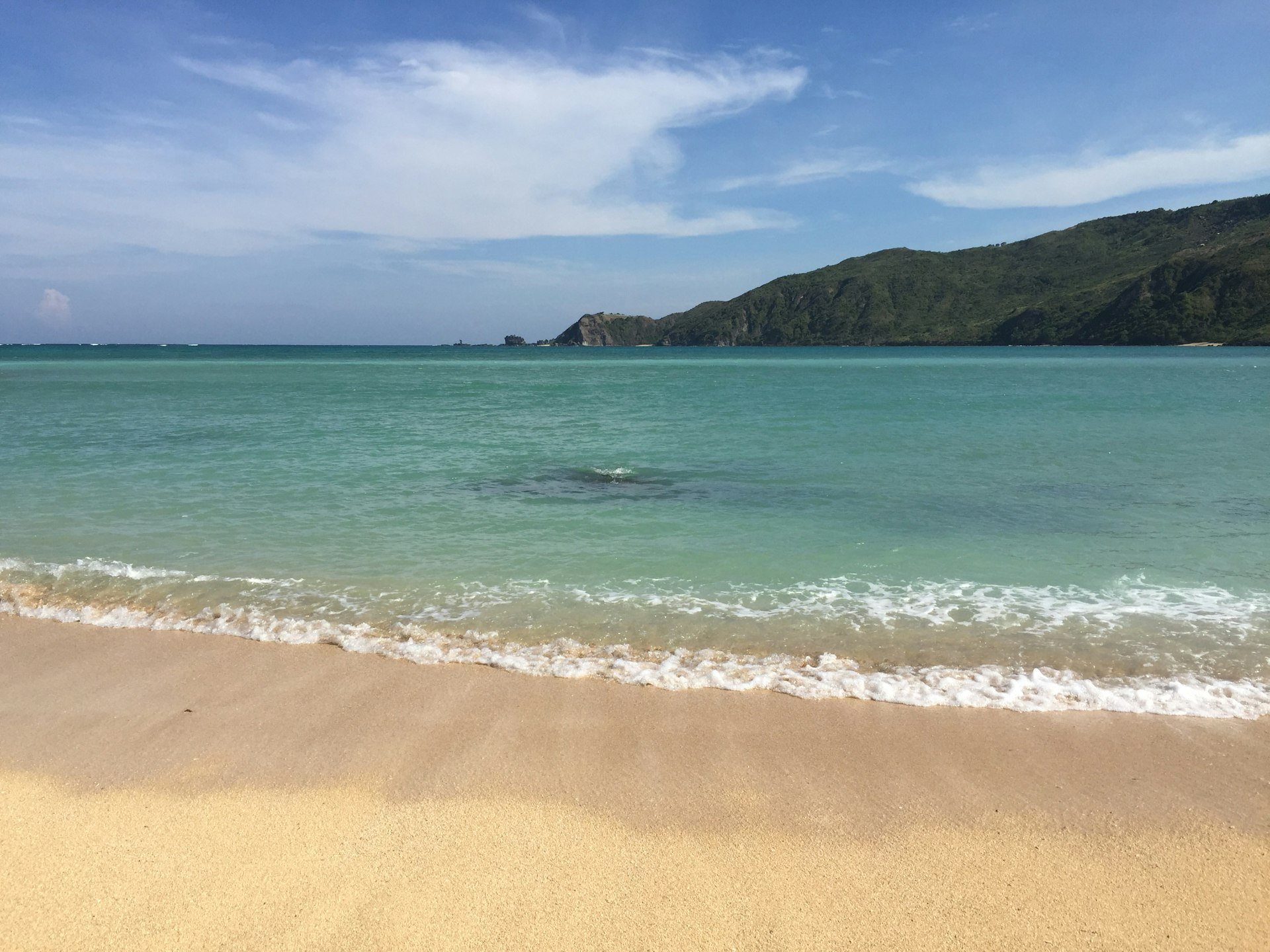
Lombok is where many people who missed Bali ten years ago are now looking. Land on the south coast still costs a fraction of Canggu prices, the international airport is 25 minutes from Kuta, and the Mandalika circuit keeps bringing visitors. But the first question every foreign buyer asks is the same: can I actually own land here? The short answer is no, not in your own name as freehold. The longer answer is that there are four legal ways to hold land or a villa, and one very popular illegal way that you should avoid.
This guide explains each route, what land costs in the main areas in 2026, the checks to run before you pay anything, the taxes on both sides of the deal, and the red flags that should make you walk away. We wrote it for people buying a holiday home, a plot to build a rental villa, or land for a small hotel.
This guide is general information, not legal advice. Land law in Indonesia changes, and each plot has its own history. Always work with an independent notary (PPAT) and a lawyer who acts for you, not for the seller.
In this guide12 sections
- —The short answer
- —The four legal routes, side by side
- —The route to avoid: nominee freehold
- —Where foreigners buy in Lombok
- —What land costs in 2026
- —How buying works, step by step
- —The due diligence checklist
- —What it costs on top of the price
- —Red flags
- —Should you buy leasehold or set up a company?
- —Frequently asked questions
- —Looking to buy or sell in Lombok?
The short answer
- Freehold (Hak Milik) is for Indonesian citizens only. A foreigner cannot hold it, and arrangements that try to get around this are void.
- Leasehold (Hak Sewa) is open to any foreigner, with no visa needed. It is the most common route in Lombok.
- Right to Use (Hak Pakai) lets a foreigner with a stay permit (KITAS or KITAP) hold a registered title to a house for personal use.
- A foreign-owned company (PT PMA) can hold a Right to Build (Hak Guna Bangunan, HGB) title. This is the route for rental villas, hotels and development.
- Strata title applies to apartments, which are rare in Lombok outside Mataram.
The four legal routes, side by side
| Route | Who can hold it | Typical length | Best for | Main limits |
|---|---|---|---|---|
| Leasehold (Hak Sewa) | Any foreigner or company | Usually 25 to 30 years, with extension clauses | Holiday homes, rental villas, first purchases | A private contract, not a land certificate; cannot be mortgaged |
| Right to Use (Hak Pakai) | Foreigners with KITAS or KITAP | 30 years, then 20, then 30 (up to 80) | A home you live in | One plot per person or family, up to 2,000 m², minimum price by province |
| PT PMA with HGB | A foreign-owned Indonesian company | 30 years, then 20, then 30 (up to 80) | Rental businesses, hotels, development | Capital rules, licences, accounting and reporting every quarter |
| Strata title | Foreigners, on qualifying projects | Tied to the building’s land title | Apartments | Very few qualifying projects in Lombok |
Leasehold (Hak Sewa)
A leasehold is a contract between you and the Indonesian landowner, signed before a notary. You pay the full rent for the whole term up front, usually 25 or 30 years, and you can build, live in and rent out the property within the limits of the contract and the local permits. No residency is required, which is why most foreign buyers in Kuta and Selong Belanak start here.
The weakness of a leasehold is that it is a private agreement, not a title registered as a certificate at the National Land Agency (BPN). It cannot be used as security for a bank loan. Its value also falls each year as the remaining term shrinks, so the extension clause matters as much as the price. A good lease fixes the price or the formula for the extension, gives you first right to extend, lets you sell or transfer the lease without new consent, and passes to your heirs. We cover this in detail in our guide to leasehold, Hak Pakai and PT PMA.
Right to Use (Hak Pakai)
Hak Pakai is a registered title in your own name. It is the cleanest way for an individual foreigner to hold a home, but it comes with conditions. You need a valid stay permit (KITAS or KITAP). The property must be for living in, not for business. You can hold one plot per person or family, up to 2,000 square metres. And the house must be above a minimum price set for each province by the land ministry. In Bali that minimum is IDR 5 billion for a landed house. Lombok sits in the province of West Nusa Tenggara (NTB), which has its own, lower threshold; ask your notary for the current figure before you make an offer.
If your stay permit lapses and you leave Indonesia, you have a limited time to sell or transfer the property to someone eligible. Plan for that before you buy.
A foreign-owned company (PT PMA) with HGB
If you want to run the villa as a business, buy several plots or build a hotel, the company route is the standard. A PT PMA can hold HGB, a registered title to build on and use land for 30 years, renewable for 20 and then 30 more. Since October 2025 the minimum paid-up capital for a PT PMA is IDR 2.5 billion (about US$150,000), down from IDR 10 billion, under BKPM Regulation 5 of 2025. The company must still present an investment plan of more than IDR 10 billion per business activity and location, not counting land and buildings. A PT PMA also needs an accountant, tax filings and regular investment reports, so budget for running costs every year, not only the setup.
Strata title
Foreigners can buy apartments on Hak Pakai or HGB land in qualifying projects. In Lombok this is a niche route, as there are few apartment buildings outside Mataram and the Mandalika area.
The route to avoid: nominee freehold
For years, many foreigners bought freehold land in the name of an Indonesian friend or partner, then signed side agreements (a loan, a power of attorney, a lease) to keep control. It is still offered in Lombok, often with the line that everyone does it.
It is not safe. Under the Basic Agrarian Law, any arrangement that passes freehold land to a foreigner, directly or indirectly, is void, the land can fall to the state, and the money paid is not returned. The nominee is the legal owner: if they die, divorce, fall into debt or simply change their mind, you have little you can enforce. In Bali, a provincial regulation signed in February 2026 (Perda 4/2026) went further and made nominee land arrangements a criminal matter. That regulation applies to Bali, not Lombok, but it shows where the authorities are heading.
If an agent tells you that you can own freehold in Lombok as a foreigner, treat it as a red flag and walk away.
Where foreigners buy in Lombok
Kuta and Mandalika
The centre of the south coast, with cafes, surf schools, coworking spaces, clinics and an international school. It has the deepest demand for holiday rentals and the highest prices. Plots close to the Mandalika circuit and Kuta bay are listed at IDR 350 to 500 million per are in 2026 (one are is 100 m²). Off-plan villas here are often priced from about US$150,000 to US$350,000.
Selong Belanak and Mawun
A wide, gentle bay 30 minutes west of Kuta, popular with families and beginner surfers. Prices are lower than Kuta but rising fast, and luxury beachfront homes can pass US$1 million. Roads are improving, but water and power still need checking plot by plot.
Are Guling, Gerupuk and Tampah
Quieter bays around Kuta, liked by surfers and by buyers who want views without Kuta prices. Listings at Are Guling start around IDR 125 million per are.
Senggigi and the west coast
The older tourist strip north of Mataram. It is closer to the city, the harbour and the boats to the Gili Islands, and it has more resale houses and fewer new projects. It accounts for about a quarter of the island’s foreign property market.
Sekotong and the southwest
Big plots and small islands at low prices, but far from services. A long-term bet for patient buyers.
The Gili Islands
Small, busy and expensive, with no motor vehicles. Title is a special case on the Gilis: a large part of Gili Trawangan is government land that is leased out, and some plots have competing claims. Only buy there with a lawyer who has handled Gili deals before.
What land costs in 2026
These are asking prices from public listings in November 2026, converted at roughly Rp 17,000 to the US dollar. Final prices are often lower, and leasehold prices depend on the length of the lease.
| Area | Asking price per are (100 m²) | Roughly per are in US$ | Notes |
|---|---|---|---|
| Kuta, near Mandalika and the bay | IDR 350 to 500 million | US$20,600 to 29,400 | Highest demand for rentals |
| Lombok in general, near beaches and roads | IDR 50 to 300 million | US$2,900 to 17,600 | Wide range by access and view |
| Are Guling | From about IDR 125 million | From about US$7,400 | Surf area, 10 minutes from Kuta |
| Off-plan villas, Kuta and Selong Belanak | US$150,000 to 350,000 per villa | n/a | Fixed designs, sold before building |
For comparison, prime land in Canggu or Seminyak in Bali is listed at up to IDR 5 billion per are, ten times the top of the Lombok market.
How buying works, step by step
- Agree the main terms. Price, title type, lease length and extension terms, payment schedule and handover date, set out in a letter of intent.
- Pay a deposit only into a safe channel. Deposits of 5 to 10 percent are common. Pay through the notary or under a signed agreement that says when it is refunded.
- Run the due diligence. Your notary and lawyer check the certificate, the owner, the zoning and the permits (see the checklist below).
- Sign the deed. A sale and purchase deed (AJB) for freehold or HGB, or a notarial lease deed for leasehold, signed before the notary with all owners present.
- Pay the taxes. The seller’s income tax and the buyer’s acquisition tax are paid before the deed is finalised.
- Register. The notary files the transfer with the land office (BPN), which issues the certificate in the new holder’s name. For a lease, the notary keeps the deed and you get a certified copy.
The due diligence checklist
Most problems in Lombok come from the land’s history, not from the contract. Ask your notary and lawyer to confirm each point in writing.
- The certificate is real and matches the land. The notary checks it at the land office (BPN). Avoid land that has no certificate, only an old tax letter or a village document, unless the seller certifies it before you pay.
- The seller is the owner, and everyone who must sign will sign. Inherited land often belongs to several family members. All heirs, and the seller’s spouse, must consent.
- The boundaries are measured. Ask for a recent survey by the land office, and walk the boundaries with the neighbours.
- No mortgage, seizure or dispute is registered. The land office record shows mortgages (hak tanggungan) and blocks.
- The zoning allows what you plan. Check the local spatial plan. Green-belt and agricultural land may not allow a villa, and coastal plots usually need a setback from the high-tide line.
- There is legal road access. A path across a neighbour’s land is not access. Get it in writing or buy the strip.
- Water and power can reach the plot. Ask the utility for the cost and timing of a connection, or plan for a well and solar.
- Land and building tax (PBB) is paid. Ask for the last five years of receipts.
- Building permits exist for any house. Since 2021 the building permit is called PBG, and a certificate of fitness (SLF) confirms the finished building.
- Rental use is allowed. Renting to tourists needs a business licence. A lease that allows you to sublet does not by itself let you run tourist accommodation.
What it costs on top of the price
| Cost | Who pays | Typical amount |
|---|---|---|
| Land and building acquisition tax (BPHTB) | Buyer | 5 percent of the price or the official value (NJOP), whichever is higher, minus a small tax-free allowance |
| Final income tax on the sale (PPh) | Seller | 2.5 percent for a freehold or HGB sale |
| Notary and land deed official (PPAT) | Usually the buyer | Up to 1 percent of the value, negotiable |
| Lawyer for your own due diligence | Buyer | Often 0.5 to 1.5 percent, or a fixed fee |
| Agent commission | Usually the seller | Often 3 to 5 percent |
| Company setup (PT PMA route only) | Buyer | Setup fees, plus accounting and reporting every year |
In total, buyers should expect to add 6.5 to 9 percent to the price, and sellers to give up 3 to 5 percent. Leases have their own tax treatment: the landowner owes final tax on the rent, which is often withheld from the payment. Your notary will tell you how it is split in your deal.
Red flags
- You are told a foreigner can hold freehold, or that a nominee is the normal way.
- The seller pushes for a large deposit straight to a personal account before any checks.
- The certificate name does not match the person selling, or some family members are not available to sign.
- The price is far below nearby plots, with no clear reason.
- The lease has no extension clause, or the extension price is left open.
- The plot sits in a green belt or agricultural zone, and you are told the permit can be arranged later.
- The agent refuses to let you use your own notary.
Should you buy leasehold or set up a company?
For a holiday home or a single villa you will rent out part of the year, a well-written leasehold is usually the simplest and cheapest route, as long as you get the business licence right if you rent to tourists. If you live in Lombok on a KITAS and want a home in your own name, look at Hak Pakai. If you plan several villas, a hotel, or a business that needs to last beyond one lease, a PT PMA holding HGB gives you a registered title and a proper structure for the business. Many investors combine the two: a PT PMA that holds long leases.
Whatever you choose, think about the exit before you buy. Who will you sell to, and what will they be able to hold? Our guide to selling a villa or land explains how buyers look at remaining lease terms and titles.
Frequently asked questions
Can a foreigner buy land in Lombok?
Not as freehold in their own name. A foreigner can lease land, hold a Right to Use (Hak Pakai) title on a home with a stay permit, or hold land through a foreign-owned company (PT PMA) with a Right to Build (HGB) title.
Is buying through an Indonesian spouse safe?
Marriage does not give a foreigner the right to hold freehold land. Land bought during a marriage without a prenuptial agreement can be treated as joint property, which may break the rules. Speak to a lawyer before you buy in a spouse’s name.
How long can a leasehold last?
Most Lombok leases run 25 to 30 years. Longer terms and extensions can be written into the contract, but they are only as strong as the contract and the landowner’s family. Fix the extension price or formula in the deed.
What is an are?
One are is 100 square metres. Land in Lombok is usually priced per are, so a 10-are plot is 1,000 m².
How long does a purchase take?
A clean leasehold can be signed in a few weeks. A freehold or HGB transfer with registration at the land office usually takes one to three months, longer if the certificate needs work.
Can I get a mortgage?
Local banks rarely lend to foreigners for property, and a leasehold cannot be used as security. Most foreign buyers pay cash or borrow in their home country.
Looking to buy or sell in Lombok?
We know the island and work with local notaries and owners. Tell us what you are looking for, or what you want to sell, on our property page and we will get back to you by email or WhatsApp.
Prices, rules and tax rates were checked in November 2026 and change often. This guide does not replace advice from a notary or lawyer on your specific purchase.
Newsletter
New stays and deals, once a month
Our latest hotel guides, new destinations and selected partner deals in Southeast Asia. No spam, unsubscribe anytime.