

Selling property in Lombok or Bali is slower and more technical than most owners expect. The buyer is often a foreigner who cannot hold every kind of title, the price depends on how many years are left on a lease, and the sale only closes once a notary is satisfied that every signature, tax and permit is in order. Owners who prepare these points before they list sell faster and closer to their asking price.
This guide is for owners of villas, houses and land, whether you are an Indonesian landowner, a foreigner holding a lease, or the shareholder of a company that owns a villa. It covers what you can sell, how buyers price it, the documents to gather, the taxes you will pay, and the steps from first offer to money in your account.
This is general information, not legal or tax advice. Use a notary (PPAT) for the transfer and a tax consultant for your own position, especially if you live outside Indonesia.
In this guide14 sections
- —First, what exactly are you selling?
- —How buyers price a villa or plot
- —Setting the asking price
- —The documents buyers will ask for
- —Taxes and costs for the seller
- —How the sale goes, step by step
- —Getting your money out
- —Mistakes that cost sellers money
- —Preparing the villa for viewings
- —Working with an agent
- —Extra points when you sell a plot of land
- —Should you sell to a foreigner or an Indonesian buyer?
- —Frequently asked questions
- —Want to sell your villa or land?
First, what exactly are you selling?
Your title decides who can buy from you and how the transfer works.
| What you hold | What you sell | Who can buy | How it transfers |
|---|---|---|---|
| Freehold (Hak Milik), as an Indonesian citizen | The land and buildings | Indonesian citizens; a company, after the title is changed to HGB; or a foreigner as a lease | Sale deed (AJB) before a PPAT, then registration at the land office |
| Leasehold (Hak Sewa) | The remaining years of the lease | Anyone, including foreigners on a visa | Transfer or assignment of the lease before a notary, usually with the landowner informed or consenting, depending on the contract |
| Right to Build (HGB), held by a company | The land title, or the company that holds it | Indonesian companies, including foreign-owned ones | Sale deed and registration, or a sale of the company’s shares |
| Right to Use (Hak Pakai), held by a foreigner | The home and the title | Eligible buyers: Indonesians, or foreigners with a stay permit, above the minimum price | Sale deed and registration |
Two points catch owners out. A foreigner selling a lease may need the landowner’s consent, depending on what the lease says. And a company that owns a villa can be sold either as an asset sale or as a share sale, which have very different taxes and paperwork.
How buyers price a villa or plot
Location and access
Buyers in Lombok compare by area first: Kuta and Mandalika, Selong Belanak, the bays around Kuta such as Are Guling and Gerupuk, Senggigi and the Gili Islands. In Bali the gap between areas is even larger. Within an area, legal road access, a sea or rice-field view, and distance to the beach move the price the most. Land is quoted per are (100 m²).
Remaining lease years
For a leasehold, the remaining term is the single biggest factor after location. Buyers want time to earn back their money and to sell again. A villa with 25 years left is far easier to sell than the same villa with 10. A fixed extension price written into the lease adds real value, because it removes the buyer’s biggest unknown. If your extension terms are open, consider negotiating them with the landowner before you list.
Rental history
If the villa has been rented, a clear record of nights booked, average nightly rate and running costs helps buyers who see it as an investment. Twelve months of statements from booking platforms or the manager are more convincing than a forecast.
Condition and permits
A villa with a building permit (PBG, or the older IMB) and a certificate of fitness (SLF) sells more easily than one without. Missing permits are not always fatal, but buyers will price in the cost and the risk of fixing them.
Setting the asking price
Look at what similar properties have actually sold for, not only at asking prices on listing sites, which are often optimistic. Local notaries and agents usually know recent prices. For a lease, compare price per remaining year, not only the total. An independent valuation costs little next to the value of a villa, and it gives you something concrete to show buyers.
Price for the market you are selling to. A Lombok villa aimed at foreign buyers is often quoted in US dollars, but the deed and taxes are in rupiah at the notary’s rate on the day.
The documents buyers will ask for
Gather these before you list. A complete file makes you look serious and shortens due diligence.
- The certificate or the lease deed, original and copies, plus any earlier deeds if the land changed hands.
- Identity documents of every owner. For family land, the documents of all heirs and the spouse, who must consent.
- A recent land survey from the land office showing the boundaries.
- Land and building tax (PBB) receipts for the last five years.
- Building permit (PBG or IMB) and certificate of fitness (SLF) for any buildings.
- Zoning information showing what the land can be used for.
- Business licences if the villa is rented to tourists, and the management contract if there is one.
- Utility details: power capacity, water source, internet, and recent bills.
- Rental records for the last 12 months, if the villa is rented.
- For a company sale: the deed of establishment and its amendments, the list of shareholders, the business registration, tax filings and investment reports (LKPM).
Taxes and costs for the seller
| Cost | Applies to | Typical amount |
|---|---|---|
| Final income tax on the sale (PPh) | Sale of freehold or HGB land and buildings | 2.5 percent of the sale price or the official value (NJOP), whichever is higher |
| Tax on a lease transfer | Sale of the remaining years of a lease | Often treated as rental income, commonly cited at 10 percent, higher without an Indonesian tax number; check with a tax consultant |
| Tax on a share sale | Sale of shares in a PT PMA | For a non-resident seller, often 5 percent of the gross price, subject to tax treaties |
| Agent commission | If an agent finds the buyer | Usually 3 to 5 percent, paid by the seller |
| Notary fees | Your share, if agreed | Often paid by the buyer, but negotiable |
| Outstanding PBB and bills | All sales | Must be cleared before the deed |
The seller’s 2.5 percent tax must be paid before the notary can finalise the sale deed, so plan the cash flow. The buyer pays the 5 percent acquisition tax (BPHTB) on their side. Check whether your home country also taxes the gain.
How the sale goes, step by step
- Prepare the file. Gather the documents above, fix any gaps, and get a valuation.
- List the property. Through one or more agents, local listing sites such as Rumah123, Lamudi or 99.co, your own network, or a platform like ours. Good photos and a short video matter more than a long description.
- Receive offers and agree terms. Price, what is included (furniture, vehicles, the rental business), payment schedule and handover date, set out in a letter of intent.
- Take a deposit. Usually 5 to 10 percent, paid through the notary or under a signed agreement that says when it is refunded.
- Buyer’s due diligence. The buyer’s notary and lawyer check the certificate, permits and zoning. Answer their questions quickly; delays here lose buyers.
- Pay your tax and sign. You pay the seller’s tax, both sides sign the deed before the notary, and the buyer pays the balance, often through the notary or an escrow arrangement.
- Registration and handover. The notary registers the transfer at the land office, and you hand over keys, documents, utility accounts and any rental bookings.
A clean leasehold sale can close in a few weeks. A freehold or HGB sale with registration usually takes one to three months, and a company share sale can take longer.
Getting your money out
If you are a foreign seller, the proceeds will normally land in an Indonesian bank account and then be transferred abroad. Banks may ask for the sale deed and proof that the tax was paid before they send a large transfer, so keep those documents ready. Ask your bank about limits and timing before the closing date.
Mistakes that cost sellers money
- Listing before the paperwork is ready, then losing the buyer during due diligence.
- Pricing a lease on the total, not on the years left.
- Selling family land without every heir’s consent, which can void the sale.
- Taking a deposit straight into a personal account with no written terms.
- Signing an exclusive deal with an agent for many months without a clear marketing plan.
- Forgetting that the buyer must be able to hold your title, for example offering a Hak Pakai home to a tourist with no stay permit.
- Underestimating the tax on a lease transfer or a share sale.
Preparing the villa for viewings
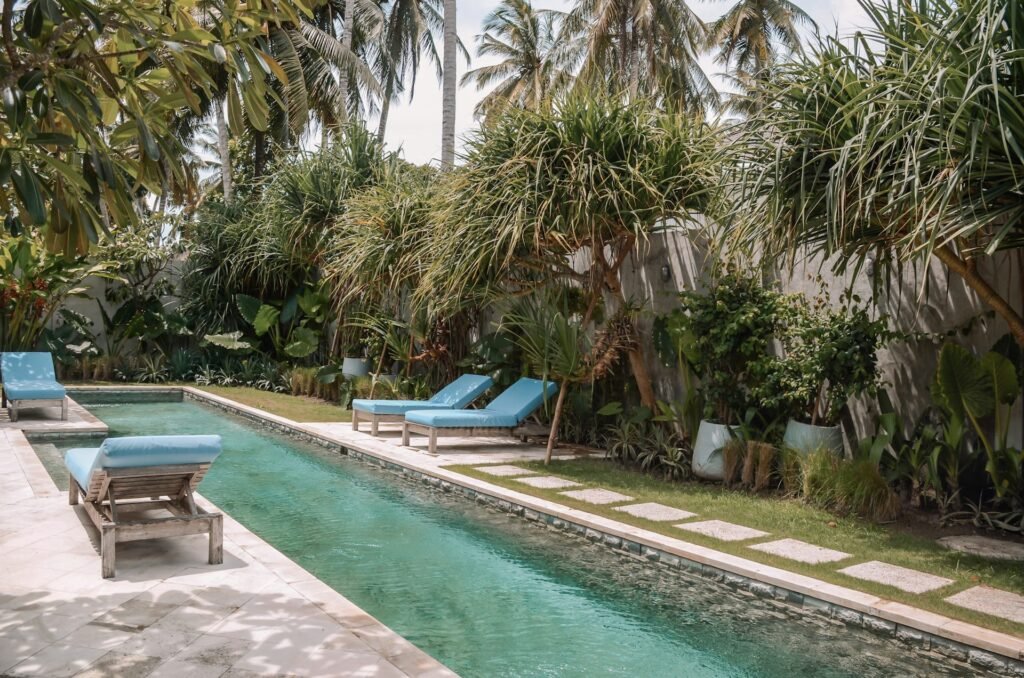
Many buyers see the villa first on a phone screen, often from abroad, so the listing does the first viewing for you. Hire a photographer for an hour on a clear morning, shoot the pool, the view and each bedroom, and add a short walk-through video. Show the land boundary and the access road, not only the interior. A simple floor plan with room sizes saves dozens of messages.
Before buyers visit in person, fix the small things that make them doubt the rest: stains on the ceiling, a green pool, broken lights, overgrown garden. Clear personal items and stock the villa the way a guest would find it. If the villa is rented, agree with the manager when viewings can happen so you do not lose bookings or upset guests.
Have a one-page summary ready: title type and remaining years, land and building size, number of bedrooms, permits held, power capacity, water source, rental income for the last 12 months and the asking price. Buyers forward this page to partners and lawyers, so keep it factual.
Working with an agent
A good agent brings buyers you would not reach yourself, filters out people who are not serious, and handles viewings when you are away. Ask any agent how many similar properties they sold in the last year, where they will advertise yours, and what they think it will sell for and why. Be wary of an agent who quotes a price far above everyone else just to win the listing.
Agree the commission and the length of any exclusive period in writing. Three months is a reasonable first term for an exclusive listing. Make sure the agreement says what happens if you find a buyer yourself, and that the agent cannot take deposits on your behalf without your written approval.
Extra points when you sell a plot of land
Land buyers look harder at the paperwork than villa buyers, because they are planning to build. Have the zoning confirmed in writing, so a buyer knows a villa or guesthouse is allowed. Show where power and water can be connected and roughly what it costs. Mark the boundaries on the ground with posts that match the survey. If the plot is part of a larger family holding, have the split certificate issued before you sell, rather than promising it later. A plot with clean papers and clear access will usually sell well before a cheaper plot with questions.
Should you sell to a foreigner or an Indonesian buyer?
Foreign buyers drive much of the market for villas in Kuta, Selong Belanak and the Gilis in Lombok, and in Canggu, Uluwatu and Ubud in Bali. They usually buy leaseholds or buy through companies, so a lease with a long remaining term and fixed extension terms is your strongest selling point. Indonesian buyers can take freehold, which gives a landowner more options. If you own freehold land, you can also lease it to a foreign buyer instead of selling it, keeping the land in the family and earning the rent up front.
Frequently asked questions
Can a foreigner sell a leasehold villa?
Yes. You sell the remaining years of the lease. Check what your lease says about transfers: some need the landowner’s consent, and some require a fee to the landowner.
Who pays the notary?
It is negotiable. In many deals the buyer pays the notary and the acquisition tax, and the seller pays the income tax on the sale and any agent commission.
Do I have to use an agent?
No. Many owners sell directly, especially through their network or to tenants and neighbours. An agent helps you reach foreign buyers and handle viewings, for a commission of about 3 to 5 percent.
Can I sell a villa that has no building permit?
It is possible, but buyers will offer less, and some notaries will want the issue explained in the deed. It is usually better to start the permit process before you list.
How long does it take to sell?
It depends on the price and the paperwork. A correctly priced villa with a complete file can find a buyer in a few months; a plot with title questions can wait for years.
Can I sell my company instead of the villa?
Yes, if the villa is held by a PT PMA, you can sell the shares. The buyer then takes the company with its history, so expect a deeper review of its taxes, licences and reports.
Want to sell your villa or land?
We are based in Lombok and connect owners with buyers looking for villas and land on the island and in Bali. Send us the details on our property page and we will get back to you by email or WhatsApp. Buyers can read our guides to buying land in Lombok as a foreigner and to choosing between leasehold, Hak Pakai and a PT PMA.
Tax rates and rules were checked in November 2026 and change often. This guide does not replace advice from a notary, lawyer or tax consultant on your sale.
Newsletter
New stays and deals, once a month
Our latest hotel guides, new destinations and selected partner deals in Southeast Asia. No spam, unsubscribe anytime.