
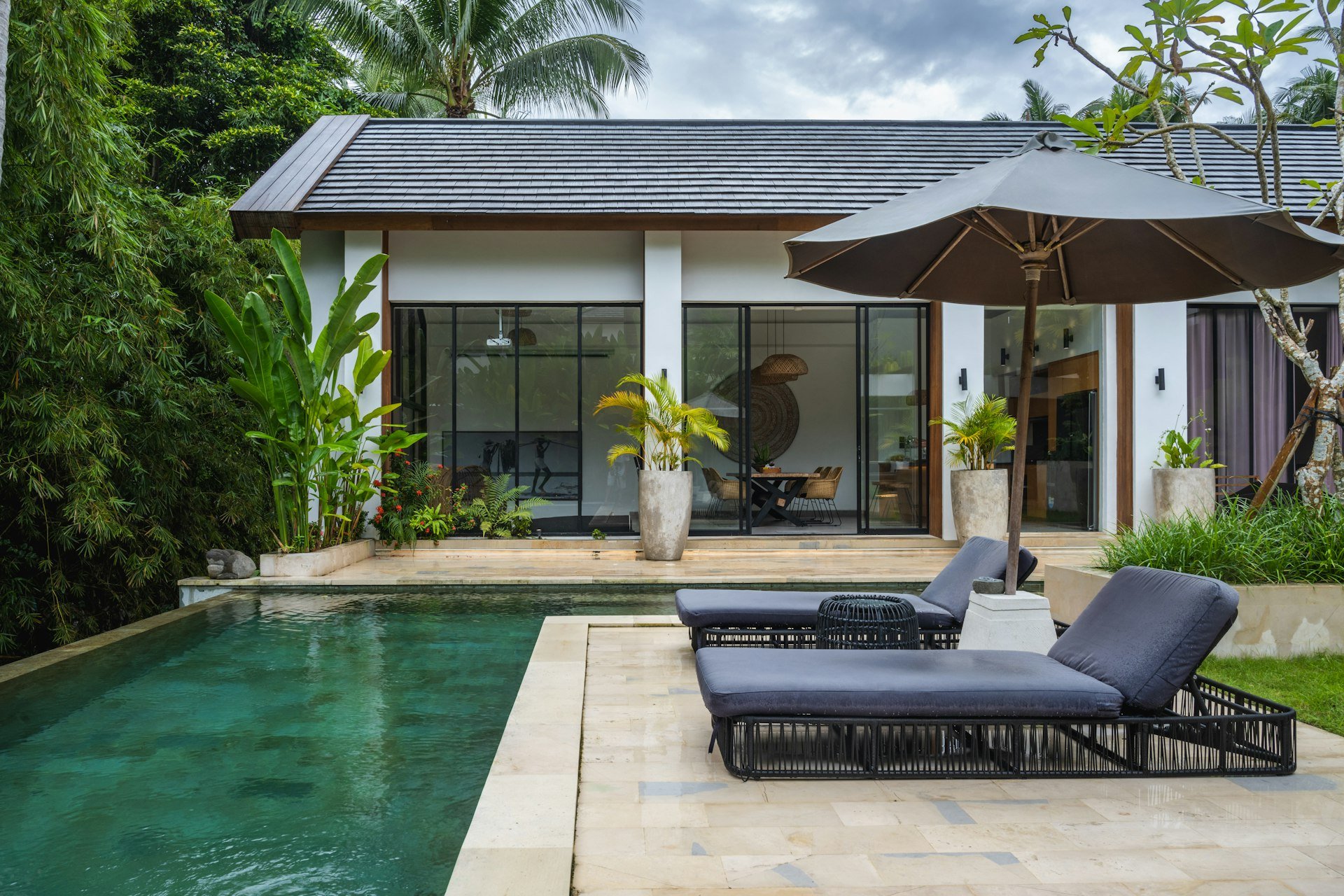
Bali villa developers advertise rental yields of 12%, 15%, even 17% a year. Independent analysts are more cautious, and the 2026 data explains why: more villas are competing for guests, average nightly rates have fallen, and the government is tightening the rules on licences and ownership structures. Villas can still be a good investment in Bali, and in Lombok, but only if you run the numbers honestly.
This guide sets out what the market data says in 2026, how to calculate the real return on a villa (including the cost that most brochures leave out), three worked scenarios, and the factors that separate a good villa investment from a disappointing one. We are based in Lombok and help investors check projects in Lombok and Bali before they commit.
This article is general information, not financial, legal or tax advice. Figures are illustrative or come from published market reports, and returns are never guaranteed. Get independent advice for your own situation.
In this guide12 sections
- —The Bali villa market in 2026, in numbers
- —What developers promise, and what analysts say
- —How to calculate the real return on a villa
- —Three worked scenarios
- —What makes a villa investment work
- —Short-term or long-term rental?
- —Documents to request before you buy
- —Bali or Lombok?
- —Questions to ask before you buy an “investment villa”
- —Common mistakes
- —Is a Bali villa still a good investment in 2026?
- —Frequently asked questions
The Bali villa market in 2026, in numbers
| Indicator | 2026 figure | What it tells you |
|---|---|---|
| Villa sales, 12 months to H1 2026 | 4,220 | Still an active market |
| Change in number of sales | Down 21% | Buyers have become more selective |
| Median sold price | About IDR 5.27 billion (around US$316,000), up 3.1% a year | Prices are rising slowly, not booming |
| Average nightly rate (market-wide) | About US$125, down 23% | More competition for guests |
| Average occupancy (market-wide) | About 52% | Roughly half the nights are empty on average |
| Short-term rental supply | About 44,750 properties, up 5% | Supply is still growing |
| Total short-term rental revenue | About US$544 million, down 16% | The pie is shared among more villas |
These sales figures come from REID data cited in Bali Home Immo’s H1 2026 market review, and the rental figures from the same review. Two-bedroom villas made up about 31.8% of sales and three-bedroom villas 26.5%, so most buyers are choosing small, rentable villas.
Demand from visitors remains strong. According to Indonesia’s statistics office, Bali received about 6.95 million foreign arrivals in 2025, up 9.7%, and hotel occupancy averaged around 61% for the year. The issue is not a lack of tourists; it is that the number of villas has grown faster than demand in some areas, pushing nightly rates down.
What developers promise, and what analysts say
Many Bali developers market projected yields of up to 17% a year. Analysts at Colliers Indonesia have warned that double-digit yields often reflect best-case scenarios and that some sub-markets risk oversupply. The chairman of the Bali Villa Rental and Management Association has also warned that unchecked short-term rental growth risks zoning violations and encroachment on protected rice fields and coastal buffer zones.
In practice, the gap between the brochure and reality usually comes from four assumptions:
- Occupancy. Projections often assume 75 to 85% all year. The market-wide average was about 52% in 2026.
- Nightly rate. Projections use peak-season rates for the whole year.
- Costs. Management fees, booking platform commissions, taxes, staff, utilities and maintenance are underestimated or left out.
- The lease. Most foreign buyers hold leasehold villas, which lose value as the lease runs down. Projections rarely count this.
How to calculate the real return on a villa
Gross yield
Gross yield is the annual rental revenue divided by the price you paid. A villa bought for US$300,000 that earns US$33,000 a year has a gross yield of 11%. This is the number brochures like to show, and it says very little.
Net yield
Net yield subtracts the costs of running the villa:
- Management fees, often around 15 to 25% of revenue in Bali for a full-service manager.
- Booking platform commissions, often around 15% when you include the major travel sites.
- Local tax on accommodation, 10% of room revenue if it is included in your rates rather than added on top.
- Staff: housekeeping, garden and pool care.
- Utilities: electricity (the biggest bill with air-conditioning and a pool pump), water, internet.
- Maintenance and replacement: tropical humidity and rain wear materials fast.
- Licences, insurance and accounting.
Income tax depends on how you hold the property (personally or through a company) and is not included in the examples below.
The cost most brochures forget: the lease
Foreigners usually buy villas on leasehold, typically 25 to 30 years. When the lease ends, the land and the building return to the landowner unless you have a clear right to extend. That means part of every year’s income is really the return of your own capital. A simple way to account for it is to divide the price by the number of years left on the lease. A US$300,000 villa with 25 years remaining “uses up” about US$12,000 of value a year.
Our guide to leasehold, Hak Pakai and PT PMA explains the ownership options and what happens at the end of a lease.
Three worked scenarios
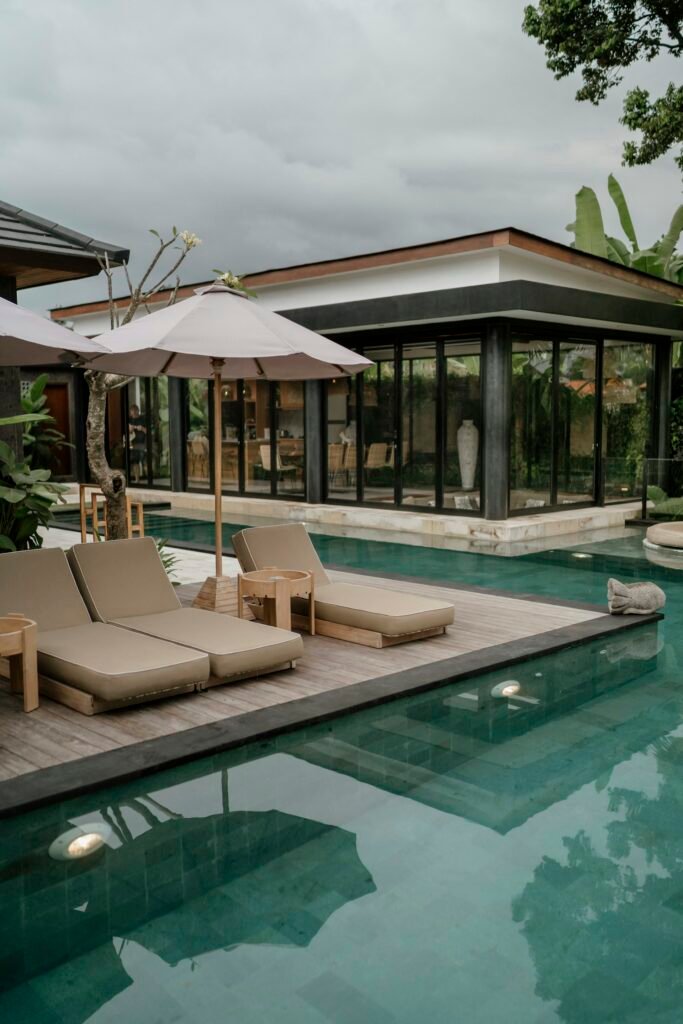
To make this concrete, here is an illustrative two-bedroom leasehold villa bought for US$300,000, close to the H1 2026 median sold price, with 25 years left on the lease. We assume management at 20% of revenue, booking commissions at 15%, local accommodation tax at 10%, and fixed costs (staff, utilities, maintenance, licences, insurance) of about US$10,000 a year.
| Scenario | Average nightly rate | Occupancy | Revenue per year | Net income after costs | Net cash yield | After lease cost (US$12,000) |
|---|---|---|---|---|---|---|
| Cautious | US$120 | 50% | US$21,900 | US$2,045 | 0.7% | -US$9,955 (-3.3%) |
| Typical well-run villa | US$150 | 60% | US$32,850 | US$8,068 | 2.7% | -US$3,932 (-1.3%) |
| Strong location and management | US$190 | 72% | US$49,932 | US$17,463 | 5.8% | US$5,463 (1.8%) |
These are not forecasts. They show how sensitive villa returns are to two numbers, the nightly rate and occupancy, and how much the lease matters. A villa with a “13% gross yield” can still lose money in real terms if it is bought at the wrong price, in the wrong place, with a short lease.
Capital growth can change the picture. With median prices rising about 3% a year in 2026, a villa on a long lease in a strong location can gain value. But a leasehold villa’s value tends to fall as its remaining term shortens, unless the lease includes a guaranteed extension at a fixed price. Bali Home Immo’s own illustration combines a 4% net rental return with 3% appreciation to reach roughly 7% total return before transaction costs.
What makes a villa investment work
Location, at the right level
Areas with strong demand, such as parts of Canggu, Pererenan, Seminyak and Uluwatu, support higher nightly rates, but entry prices are also higher and competition is intense. One analysis of more than 600 listings, reported in mid-2026, found the strongest projected returns in Nusa Dua and Ubud, with more conservative returns in Seminyak and Pererenan despite higher prices. Look at what similar villas within a few hundred metres actually earn, not at area averages.
The right product
Two- and three-bedroom villas are the most liquid, both for guests and for resale. Design matters more than size: a private pool, good air-conditioning, fast internet, a workspace and quiet bedrooms are what guests pay for. A villa that photographs well earns more on every platform.
Buying at the right price
The purchase price is the one number you control, and it drives everything else. Compare the asking price with recent sales of similar villas, not with other listings, and calculate the price per year of remaining lease: a villa at US$300,000 with 25 years left costs US$12,000 per year of use, while the same villa at US$300,000 with 15 years left costs US$20,000. Off-plan villas can be cheaper, but you take the risk of delays and of the developer’s finances. Negotiate, and walk away if the numbers only work with optimistic assumptions.
A long, extendable lease
The longer the remaining term, and the clearer the right to extend, the better your resale value. Check the lease with a notary: the term, the extension price, who can transfer it, and what happens to the building at the end.
Licences and legal structure
Since 2026 the authorities have tightened enforcement. Bali introduced Regional Regulation No. 4/2026 in February 2026 to curb the conversion of productive farmland and ban nominee-style ownership arrangements. The Tourism Ministry set a deadline of 31 May 2026 for accommodation providers to obtain operating permits, and unlicensed villas face crackdowns. An unlicensed villa can be delisted from booking platforms or closed, which wipes out the yield. Read our guide to Bali villa rental rules in 2026 before buying anything advertised as an “investment villa”.
Management and direct bookings
Good management is the difference between 50% and 70% occupancy. Ask managers for real owner statements from villas they already run, not projections. Reducing dependence on booking platforms also raises your margin; our guide to direct bookings for villas in Bali and Lombok explains how.
Short-term or long-term rental?
Most investment villas in Bali are marketed as holiday rentals, booked night by night. There is another model: renting by the month, or by the year, to remote workers, families and long-stay visitors. Nightly rates are lower, but occupancy is higher and steadier, there are fewer platform commissions, cleaning and check-ins are less frequent, and management is simpler.
- Short-term rental suits villas in strong tourist locations with good design and professional management. Revenue is higher in good years, but so are costs and volatility.
- Monthly rental suits villas in residential areas, near schools, coworking spaces or supermarkets. Income is lower but more predictable, and the villa wears less.
- A mixed strategy, with nightly rentals in high season and monthly rentals in the quieter months, can smooth income.
Whichever you choose, check which licence applies to your villa and your rental model, and keep your contracts and tax filings in order.
Documents to request before you buy
Ask the seller, developer or agent for these documents and have a notary or lawyer check them:
- The land certificate and the landowner’s identity.
- The lease agreement, with its term, extension terms and transfer rules.
- The building approval (PBG) and, for finished villas, the certificate of fitness for use (SLF).
- The business and accommodation licences and the name of the company that holds them.
- Twelve to twenty-four months of real booking statements from the platforms, and the management contract.
- The utility bills and maintenance records for the last year.
- Confirmation of the zoning for tourist accommodation.
If any of these is missing, ask why, and treat the projected yield with even more caution.
Bali or Lombok?
Lombok attracts investors who find Bali too crowded or too expensive. Entry prices for land and villas are usually much lower, and supply is far smaller, so a well-designed villa can stand out. On the other hand, the rental market is more seasonal, peaks are linked to events at the Mandalika circuit and the dry season, and infrastructure varies widely from one plot to the next. There is also less reliable market data, so due diligence matters even more.
If you are considering Lombok, read our guide to buying land in Lombok as a foreigner. If you are thinking of building rather than buying, our article on the cost to build a villa in Bali or Lombok breaks down construction budgets line by line.
Questions to ask before you buy an “investment villa”
- What did this villa, or comparable villas nearby, actually earn last year? Ask for platform statements, not spreadsheets.
- What nightly rate and occupancy does the projection assume in the low season?
- What exactly is included in the management fee, and who pays the booking commissions?
- Does the villa have all the required business and accommodation licences, in the name of the right party?
- How many years are left on the lease, and what does an extension cost?
- Is the ownership structure legal, or does it rely on a nominee?
- What are the fixed annual costs: staff, utilities, maintenance, insurance?
- How many new villas are being built within a few hundred metres?
- What will the villa be worth with ten fewer years on the lease?
Common mistakes
- Buying on a projected yield instead of real figures. Projections are marketing.
- Ignoring the lease cost. A shrinking lease is a real cost, even if it does not appear on a monthly statement.
- Paying a premium for a “guaranteed return”. Guarantees are only as good as the company behind them, and the price often already includes them.
- Using nominee structures. They are risky and increasingly targeted by the authorities.
- Underestimating competition. Dozens of similar villas may open nearby within two years.
- Forgetting exit costs. Agent fees, taxes and notary costs reduce what you keep when you sell. Our guide to selling a villa or land in Lombok and Bali explains the process.
Is a Bali villa still a good investment in 2026?
It can be, for the right buyer. A villa bought at a fair price, on a long lease, in a location with real demand, with proper licences and good management, can produce a reasonable income and give you a place to stay. It is rarely the 15% “passive income” machine shown in brochures. Think of it as a small hospitality business that needs attention, rather than a savings account.
Test your own numbers with our investment resources and calculator, tell us about a project you are considering on our property page, or book a consultation and we will review the figures with you.
Need a company to run your villa? See our guide to setting up a PT PMA in Indonesia in 2026.
Frequently asked questions
What is a realistic rental yield for a Bali villa in 2026?
For a well-run villa, a net cash yield of a few per cent a year is realistic; strong villas in excellent locations do better. Market-wide figures for 2026 showed average occupancy of about 52% and average nightly rates of about US$125.
Why are developers’ yields so high?
Projections often assume high occupancy all year, peak-season rates, low costs and no allowance for the shrinking value of a leasehold.
What occupancy should I assume for a Bali villa?
Use the real performance of similar villas nearby. As a reference, the 2026 market-wide average was about 52%, while Bali hotels averaged around 61% in 2025.
How much does it cost to run a villa in Bali?
Management fees of around 15 to 25% of revenue, booking commissions, local tax, plus fixed costs for staff, utilities, maintenance and licences.
Is Lombok a better investment than Bali?
Lombok offers lower entry prices and less competition, but a smaller, more seasonal rental market. It suits patient investors who do thorough due diligence.
Can foreigners own a villa in Bali?
Foreigners usually hold villas on leasehold or through an Indonesian foreign-investment company (PT PMA). Nominee arrangements are risky and banned under new Bali rules.
Figures from published 2026 market reports and illustrative calculations, checked in November 2026. Returns are not guaranteed. Obtain independent financial, legal and tax advice before investing.
Newsletter
New stays and deals, once a month
Our latest hotel guides, new destinations and selected partner deals in Southeast Asia. No spam, unsubscribe anytime.