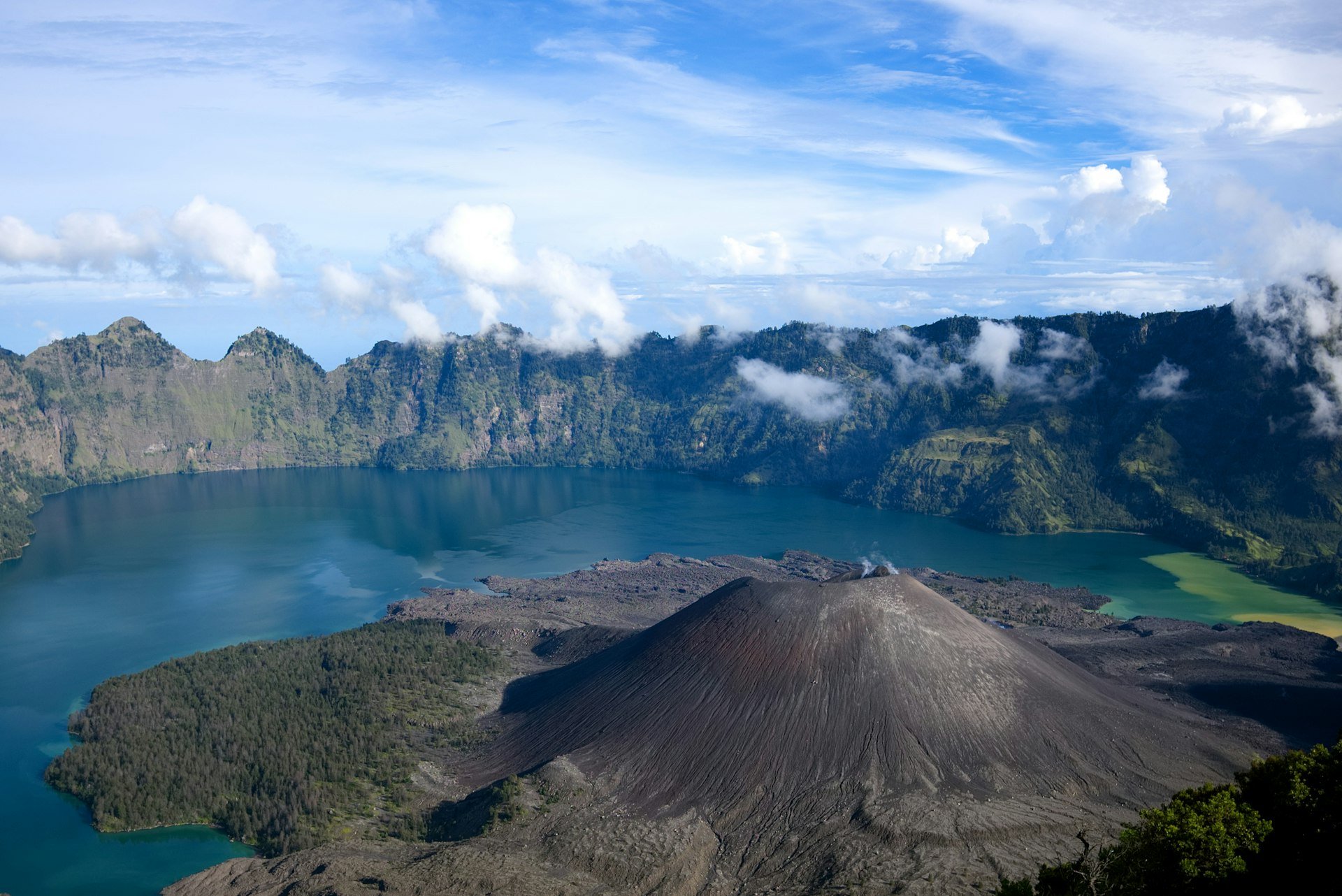
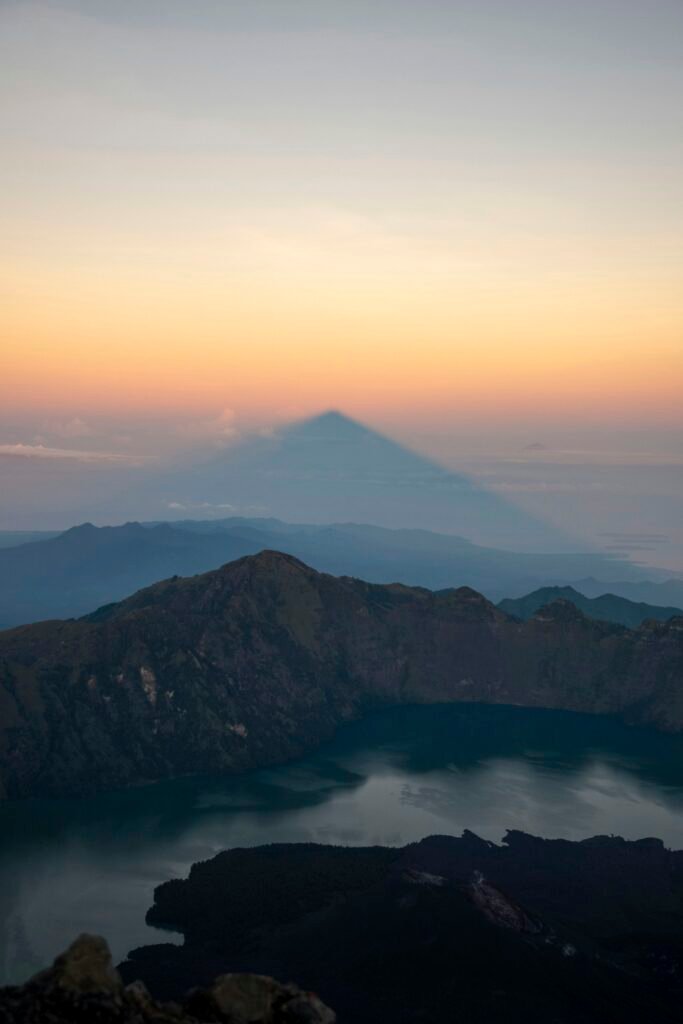
Mount Rinjani is the volcano that rules Lombok: a 3,726-metre giant with a vast caldera, a turquoise crater lake called Segara Anak and a young cone, Gunung Barujari, still smoking in the middle of it. Climbing it is one of the great treks of Southeast Asia, and one of the hardest. The view from the crater rim at sunrise, with the Gili Islands and Bali’s Mount Agung floating above the clouds, stays with people for life.
The rules changed a lot after a run of accidents in 2025, and they keep evolving. This guide explains how the Rinjani trek works in 2026: the routes and trek lengths, the new fees and safety requirements, what a licensed trek really costs, the best months to go and how to prepare. We are based on Lombok and see the mountain from our office every day, so we also tell you what most guides leave out.
In this guide15 sections
- —Before you go: what changed for 2026
- —Is the Rinjani trek right for you?
- —The routes up Rinjani
- —Which trek should you choose?
- —What a Rinjani trek costs in 2026
- —How to choose a trekking organiser
- —The classic 3-day trek, day by day
- —The summit push: how hard is it really?
- —When to climb Rinjani
- —What to pack
- —Staying safe on the mountain
- —Where to stay before and after the trek
- —Getting to the trailheads
- —Not ready for the summit? Easier ways to see Rinjani
- —Frequently asked questions
Before you go: what changed for 2026
- Higher park fees. Since 3 November 2025, foreign trekkers pay IDR 250,000 per person per day on the main Sembalun, Senaru and Torean routes, and IDR 200,000 on the quieter Timbanuh, Tetebatu and Aik Berik routes. Most trek packages include the fee.
- A licensed organiser is compulsory. Foreign visitors must book through a licensed trekking organiser, and since 1 January 2026 the rule is at least one guide for every four trekkers.
- Registration, health check and insurance. Every climber is registered on the official eRinjani system, needs a medical certificate issued the day before the trek and must hold insurance that covers high-altitude trekking and evacuation.
- Proof of experience. Rinjani is now classed as a demanding mountain, and organisers ask for evidence of previous climbs, such as a certificate or photos.
- Tracking on the trail. Climbers are monitored with RFID wristbands and tracking beacons, introduced to speed up rescues.
- Seasonal closures. The park closes every year from 1 January to 31 March, and it can also close at short notice for fires, storms or rescue operations.
In 2026 the trekking season reopened at the end of March. From 1 September access was limited because of the fire risk, and online bookings were briefly suspended. A forest fire that broke out near Torean on 22 September burned more than 1,000 hectares and closed the northern side for several days. The Senaru route reopened on 3 October, and five routes were operating again by early October. Always check the latest status with your organiser before you book flights around a trek.
Is the Rinjani trek right for you?
Rinjani is not a gentle hike. The classic three-day trek gains more than 2,500 metres of altitude, crosses long exposed slopes in strong sun, and the final climb to the summit is a steep slog up loose volcanic gravel in the dark, often in cold wind. Nights at the crater rim can drop to a few degrees above freezing. Most fit people who walk, run or cycle regularly manage it well, but it is harder than most travellers expect, and the national park itself says Rinjani is not suitable for novice climbers.
Be honest about your fitness, your knees and your experience at altitude. If you have never done a multi-day hike, choose a two-day trek to the crater rim rather than the summit, or train on hills and stairs for a few weeks before you come. The rim alone is spectacular, and many people consider it the best part of the whole trip.
The accidents of 2025 are a reminder that this is a serious mountain. The death of a Brazilian hiker who fell near the summit in June 2025 led to a temporary closure, a full review of safety procedures and the stricter rules now in force. Most of the changes, from guide ratios to insurance, make the trek safer, and they are worth respecting rather than working around.
The routes up Rinjani
Six routes lead into the national park. Three are the main trekking routes used by almost all foreign visitors, and three are quieter routes on the southern and eastern slopes. Your choice of route shapes the whole experience, from the scenery to the difficulty of each day.
Sembalun (east)
Sembalun is the most popular starting point and the most direct way to the summit. The village sits at around 1,150 metres in a high valley of farms, garlic fields and strawberry plots. The trail crosses open savannah with little shade, then climbs long and steep to the Sembalun crater rim at roughly 2,640 metres, the base camp for the summit. It is the route to choose if reaching the top is your priority.
Senaru (north)
Senaru, at around 600 metres on the northern slope, starts in thick rainforest, with monkeys, birdsong and welcome shade. The climb to the Senaru crater rim is steady and long, and the view over the lake from this side is among the finest on the mountain. Many treks start in Sembalun and finish in Senaru, so you walk up the open side and down through the forest. Senaru is also home to two of Lombok’s best waterfalls, Sendang Gile and Tiu Kelep.
Torean (north)
Torean is the wildest of the three main routes: a dramatic descent from the lake through a deep canyon with waterfalls and warm streams. It is usually used as the way down after the summit and the lake. It is steeper and more exposed in places, and it is the route most affected by closures. The September 2026 fire started near Torean, so check its status carefully before you commit to it.
The quieter routes: Timbanuh, Tetebatu and Aik Berik
These southern and eastern routes see far fewer climbers, cost slightly less in park fees and pass through farmland and forest. They are longer and less developed, and only a few organisers run them. They suit experienced hikers who want solitude more than the classic views, and they make sense if you are staying in central or east Lombok.
Which trek should you choose?
Organisers sell treks by length. The most common options are:
| Trek | Typical route | What you see | Best for |
|---|---|---|---|
| 2 days, 1 night (crater rim) | Sembalun or Senaru, up and down | Sunset and sunrise over the crater and the lake | First-timers, limited time, anyone who wants the views without the summit |
| 2 days, 1 night (summit) | Sembalun, up and down | Crater rim, then the summit at sunrise | Very fit hikers in a hurry |
| 3 days, 2 nights (summit and lake) | Sembalun to Senaru or Torean | Rim, summit, crater lake, hot springs, forest descent | Most visitors who want the full experience |
| 4 days, 3 nights | Sembalun to Senaru, with an extra night | The same as the 3-day trek, at an easier pace | Photographers, slower walkers, anyone who wants a buffer for bad weather |
Our honest advice: if you are fit and want the full Rinjani experience, the three-day summit-and-lake trek is the one to do. If you are unsure about the summit, a two-day crater rim trek is not a lesser option; it gives you the view most people remember, without the hardest climb. The two-day summit trek is brutal and leaves little time to enjoy the mountain, so we only recommend it to experienced hikers.
What a Rinjani trek costs in 2026
Prices vary a lot between operators, group sizes and comfort levels. As a rough guide, licensed organisers commonly quote:
| Item | Typical cost | Notes |
|---|---|---|
| 2 days, 1 night | about US$110 to US$275 per person | Cheaper in bigger groups, more for private treks |
| 3 days, 2 nights | about US$160 to US$350 per person | The most popular option |
| 4 days, 3 nights | about US$220 to US$400 or more per person | An extra night at the lake or on the rim |
| Park fee for foreigners | IDR 250,000 per day on the main routes | Usually included in the package |
| Porter and guide tips | At your discretion | Porters carry the camp; tip them directly |
A good package should include transfers from your hotel on Lombok, the park fees, a licensed guide, porters, tents, sleeping mats and bags, all meals and drinking water, and a night in a guesthouse before or after the trek if needed. Check what insurance is included or what you must buy separately, and whether you need to rent warm clothes or trekking poles.
Very cheap offers usually mean thin sleeping bags, too few porters, poor food and no toilet tent, or worse, an operator without a licence. On a mountain like Rinjani, the difference in price is small compared with what is at stake.
How to choose a trekking organiser
- Check the licence. Foreign trekkers must go through a licensed trekking organiser registered with the national park. Ask for the company’s licence number and make sure your booking appears on eRinjani.
- Ask about the guide ratio. At least one guide for every four trekkers is the rule, and good operators add guides on summit night.
- Ask who carries what. Porters should have proper shoes and enough people to carry the camp without being overloaded.
- Look at the sleeping bags. Ask for their temperature rating; nights on the rim are cold.
- Ask about safety. Does the guide carry a first-aid kit and a radio or satellite device, and what is the turnaround time on summit night?
- Check the waste policy. The park enforces pack-in, pack-out, so your crew must carry all rubbish down.
- Read recent reviews from the current season rather than from years ago, and favour operators who answer questions clearly before you pay.
The classic 3-day trek, day by day
This is the typical summit-and-lake itinerary from Sembalun. Exact timings depend on the group, the season and the weather.
Day 1: Sembalun to the crater rim
After registration and a safety briefing in Sembalun, you walk across the savannah towards the mountain, with lunch at one of the rest posts. The afternoon brings the hardest part of the day, a long and relentless climb that locals call the hills of regret, up to the Sembalun crater rim. Expect six to eight hours of walking. Camp is set up on the rim, with the lake more than 600 metres below and the summit cone rising behind you. Sunset here is the moment that makes the trek famous.
Day 2: summit, lake and hot springs
The wake-up call comes around 2 am. The summit push takes three to four hours along a narrow ridge of loose gravel, where every two steps forward can feel like one step back. If the weather and your guide allow it, you reach the summit around sunrise, with Lombok, the Gili Islands, Bali and Sumbawa spread out below. After breakfast back at camp, you descend steeply into the caldera to the shores of Segara Anak, with time to rest and soak in the natural hot springs nearby. Camp is either at the lake or on the Senaru rim.
Day 3: down to Senaru or Torean
On the Senaru route, a short climb to the Senaru crater rim gives you one last view over the lake, then a long descent through the forest brings you down to the village by early afternoon. Torean, when it is open, follows its dramatic canyon instead. Transfers usually take you back to your hotel the same evening, tired, dusty and very happy.
The summit push: how hard is it really?
The summit is where most people struggle and where most serious accidents happen. The final section is steep, exposed to the wind and covered in loose volcanic sand and rock. In the dark, by headlamp, it is easy to drift off the main path. Your guide will set a turnaround time; respect it, even if the top looks close. If the wind is too strong or the cloud too thick, there is no shame in staying at the rim, where sunrise is extraordinary too.
Walking poles, gloves, a buff against the dust and warm layers make a real difference. Go at your own pace, drink regularly and eat something before you start. Coming down takes around two hours and is hard on the knees, so keep some energy for it.
When to climb Rinjani
The park is open from April to December and closes every year from January to March, for the rainy season and the recovery of the ecosystem.
- April and May: the green season ends, the landscape is lush and the trails are quieter, with some afternoon rain still possible.
- June to August: the dry season and the busiest period, with the clearest skies but cold nights and crowded camps on the rim.
- September and October: still dry, with fewer people, but this is also the peak of the fire risk; in 2026 access was limited from September and a fire near Torean closed the northern side for several days.
- November and December: the rains return, the trails get slippery and clouds often hide the views, although some treks run until late December.
If you can, keep a spare day in your plans so that you can postpone the trek if the weather turns or a route closes.
What to pack
Your organiser provides the camp, but you bring your personal kit. Pack light, in a soft bag or a backpack the porters can manage.
- Good hiking shoes with grip, already worn in, and gaiters for the scree if you have them.
- Warm layers: a fleece, a down or synthetic jacket, a hat and gloves for the rim and the summit.
- A rain jacket, even in the dry season.
- A headlamp with spare batteries for summit night.
- Sun protection: a hat, sunglasses and high-factor sunscreen for the savannah.
- Trekking poles, which you can usually rent in Sembalun or Senaru.
- Water bottles or a hydration bladder, plus electrolyte sachets.
- Snacks you enjoy, a small first-aid kit, blister plasters and any personal medication.
- Your passport, medical certificate and insurance documents, which the organiser needs for registration.
Staying safe on the mountain
- Stay with your guide and never leave the marked trail, especially near the crater edges and on the summit ridge.
- Respect the weather. Wind, rain and cloud change conditions fast at altitude, and your guide decides when to turn back.
- Watch for altitude sickness. A headache, nausea or dizziness that gets worse means you should go down.
- Keep away from the edges for photos, on the rim and on the summit; falls are the most common cause of serious accidents.
- Swim with care in the lake and around the hot springs, and never alone.
- No drones without a permit. In April 2026 two foreign hikers were detained for flying drones in the park.
- Leave nothing behind. Fires are strictly forbidden, and all rubbish comes back down with you.
Where to stay before and after the trek
Most treks start early, so it makes sense to sleep in Sembalun or Senaru the night before, especially if you are coming from the south of the island or from Bali. Sembalun has simple guesthouses and lodges with views of the mountain, while Senaru has small hotels near the waterfalls. Your organiser can usually arrange this as part of the package.
After the trek, most people head for the coast to recover. The Gili Islands are a short drive and boat ride from Senaru, Senggigi is around two hours away, and Kuta and the south coast take about three hours. Our guide to where to stay in Lombok compares the areas, and our list of the best boutique hotels in Lombok has places to rest your legs in style.
Getting to the trailheads
Lombok International Airport, in the south of the island, is about two and a half to three hours by road from Sembalun and Senaru. From Senggigi, allow around two hours to Senaru and a little longer to Sembalun. Most trek packages include transfers from hotels in Senggigi, Mataram and the Gili harbour at Bangsal, and sometimes from the south coast.
Coming from Bali, you can fly to Lombok in about 40 minutes, take the public ferry from Padang Bai to Lembar, or take a fast boat to the Gili Islands or north Lombok. Our guide to the fast boats from Bali to the Gili Islands and Lombok compares the options, and our guide to Bali and Indonesia entry requirements covers the e-VOA and the arrival card.
Not ready for the summit? Easier ways to see Rinjani
- Pergasingan Hill in Sembalun: a short, steep hike to a viewpoint over the patchwork fields of the valley, beautiful at sunrise.
- Bukit Selong, also in Sembalun: an easy walk to a classic view of rice fields and traditional houses with the volcano behind.
- Sendang Gile and Tiu Kelep in Senaru: an easy-to-moderate walk through the forest to two of Lombok’s finest waterfalls.
- Benang Stokel and Benang Kelambu: waterfalls on the southern slopes, easy to combine with a day in central Lombok.
- The Sembalun valley by car or bike, with its farms, traditional villages and viewpoints over the crater walls.
Some of these sites charge their own entry fees, and those inside the national park follow its rules. For more ideas around the island, see our guide to the best things to do in Lombok, and our guide to the best things to do in the Gili Islands if you are heading for the beach afterwards.
Frequently asked questions
Do you need a guide to climb Mount Rinjani?
Yes. Foreign trekkers must book through a licensed trekking organiser and be accompanied by a licensed guide, with at least one guide for every four trekkers since January 2026.
How much does it cost to climb Rinjani in 2026?
The park fee for foreigners is IDR 250,000 per day on the main routes. Licensed treks commonly cost from around US$110 for two days to US$350 or more for three days, depending on the group size and the level of comfort.
How hard is the Rinjani trek?
Hard. Expect long days, steep climbs on loose ground and cold nights. Fit hikers manage it well, but it is not suitable for beginners, and the summit climb is by far the toughest part.
When is Mount Rinjani closed?
Every year from 1 January to 31 March. The park can also close at short notice during the dry season because of the fire risk, or for safety reasons.
Can you climb Rinjani in one day?
No. The summit needs at least two days, with a night at the crater rim. The walks around Sembalun and Senaru are good alternatives if you only have one day.
Is it safe to climb Rinjani?
Rinjani is a serious mountain and there have been fatal accidents. With a licensed organiser, proper equipment, good fitness and respect for the guide’s decisions, thousands of people climb it safely every season.
Fees, rules and route openings were checked in November 2026 and change often. Confirm the latest information with your trekking organiser and on the official eRinjani system before you travel.
Newsletter
New stays and deals, once a month
Our latest hotel guides, new destinations and selected partner deals in Southeast Asia. No spam, unsubscribe anytime.